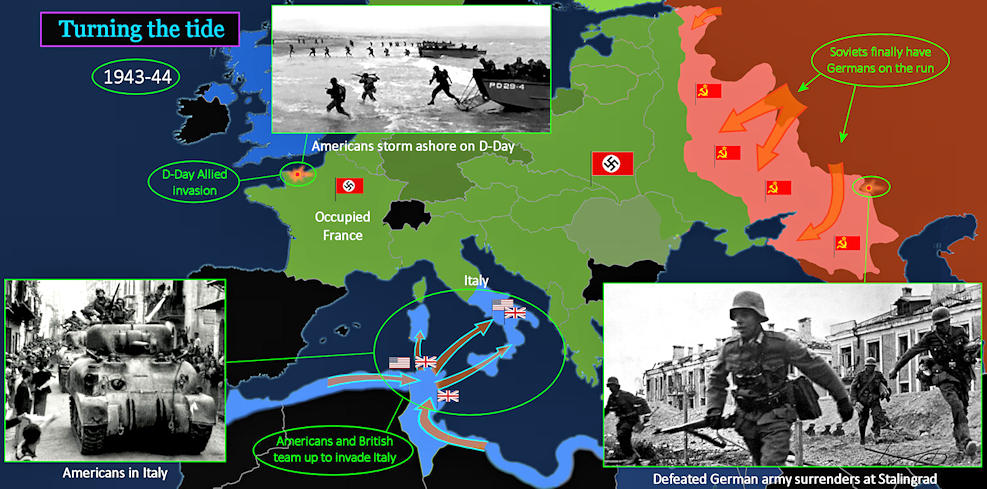
Germany on the RunBy the middle of 1943, the Allies are beginning to believe that they might actually be able to win this war. The Soviets not only hold their ground at Stalingrad, but are able to turn the tables and capture the attacking Germans. Hitler's army in Russia is exhausted, and stretched far too thin, with most of its heavy equipment destroyed. The proud Panzer beast had been battered and beaten, and the bulk of Hitler's war machine is now in retreat. Things are also going badly for the Germans in Italy, where the British and Americans have teamed up to drive towards the Nazi heartland from the south. The Germans are still holding, but the pressure is mounting. The final blow is the Allied D-Day invasion of France, which catches the Germans off-guard. This is a proud moment for the Americans, who lead the assault. But Hitler's war machine has already been broken, by the Soviets. |
| ||||||||||||||||
| |||||||||
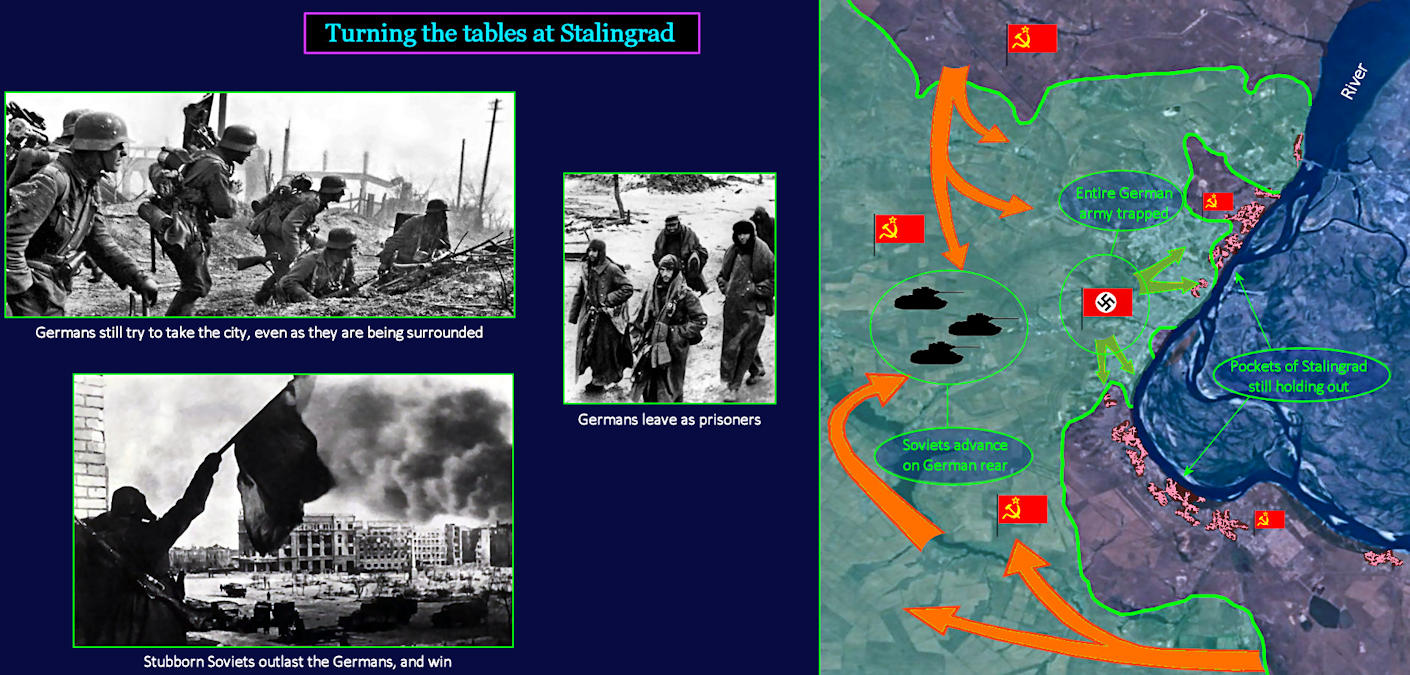
Final, Desperate Push In their dash to Stalingrad, Hitler's Panzers sweep quickly across the vast expanse of Ukraine to trap the Soviets in Stalingrad, with their backs against the Volga River. This prevents escape, and appears to spell doom. But the difficult process of rooting out pockets of Soviet resistance in the accumulating rubble, street by street, proves tedious and costly. Soviets are able to bring in supplies from the rear, when the river freezes over. As Soviet reinforcements approach, the Germans want to pull back, but Hitler demands that they persist. In the end, it's the Germans who are surrounded. Most historians consider the Battle of Stalingrad to be the turning point in the war, though the great tank battle at Kursk, several months later, is also pivotal. | |||||||||
| |||||||||
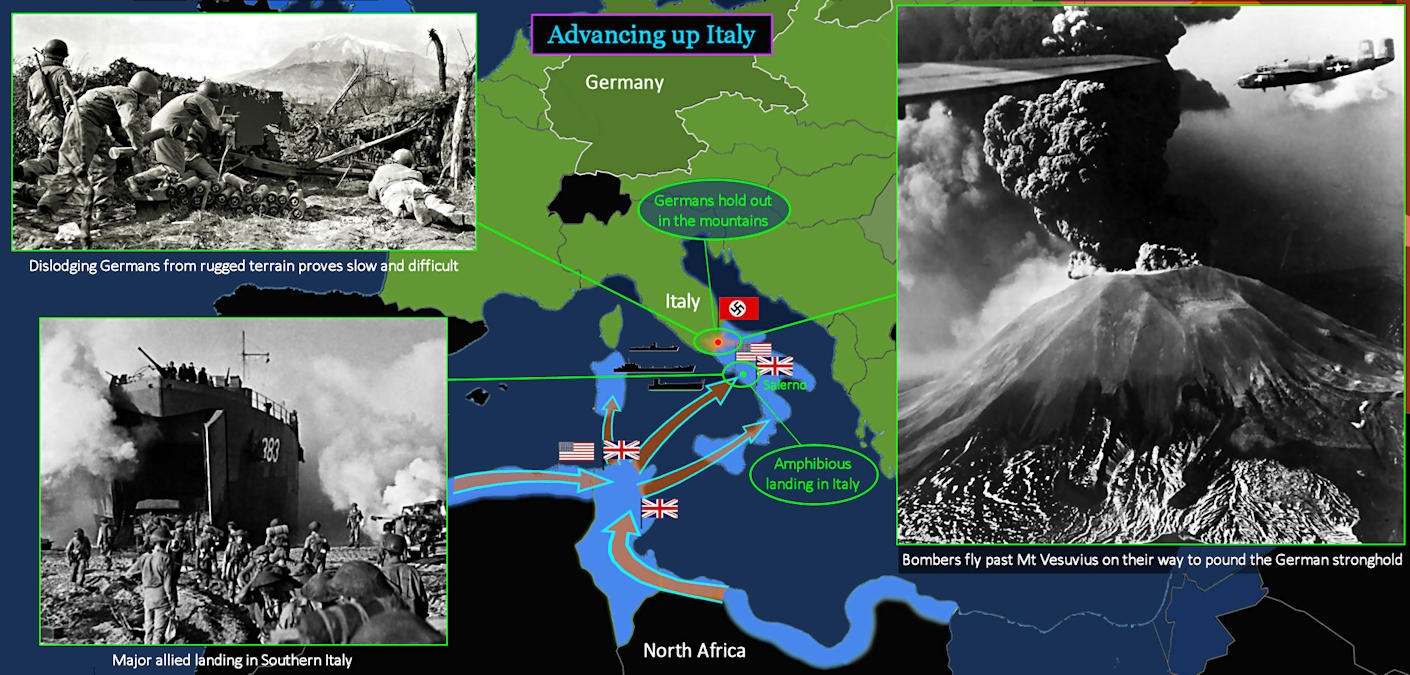
Up From the South While the Germans are becoming increasingly alarmed over the deteriorating situation in Russia, an Allied advance up the Italian peninsula presents fresh concerns. Starting from North Africa, the Allies first take the island of Sicily. They then bypass much of southern Italy to land directly at Salerno (see map). After that, the going gets more difficult, as the Germans fortify a strong position between rugged mountain ridges, blocking the main road north. It takes four separate, costly attacks to dislodge them, which stalls the Allied advance until the following year. Still, the Italian campaign effectively pins down a large German force, preventing it from being shifted north when the D-Day invasion is launched, in the summer. | |||||||||
| |||||||||
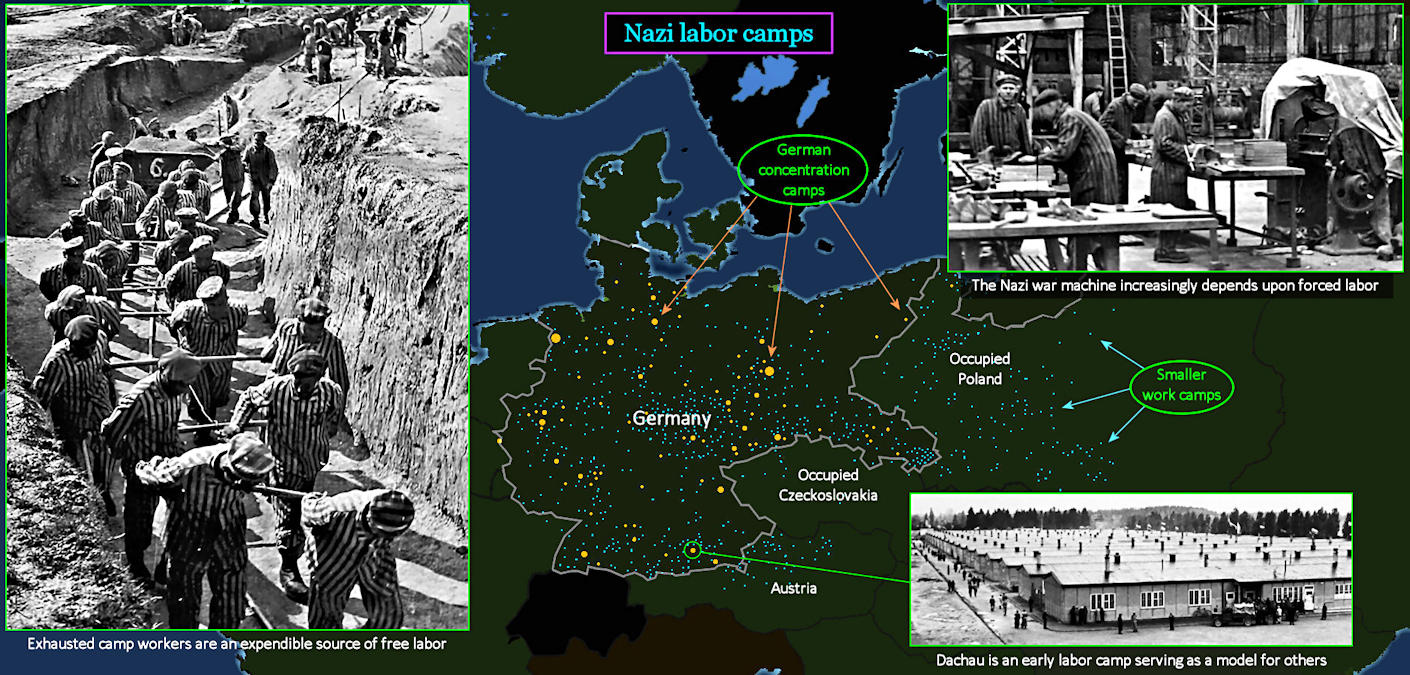
Forced Labor One reason Hitler is able to continue his attack so long, is his ability to extract support from each of the nations he conquers. Nazi party officials run the local economies, diverting much activity into war-related production. In addition, 12 million people in these countries are seized, and sent to work at camps within Germany. As equipment is lost in battle, camp laborers are pressed to produce replacements. Work camps are spread all over Germany (BLUE dots), while larger concentration camps (ORANGE) also enslave jews, homosexuals and other non-desirables. Many in these camps are literally worked to death, intentionally. True 'extermination camps,' with their gas-chamber horrors, come a little later. | |||||||||
| |||||||||
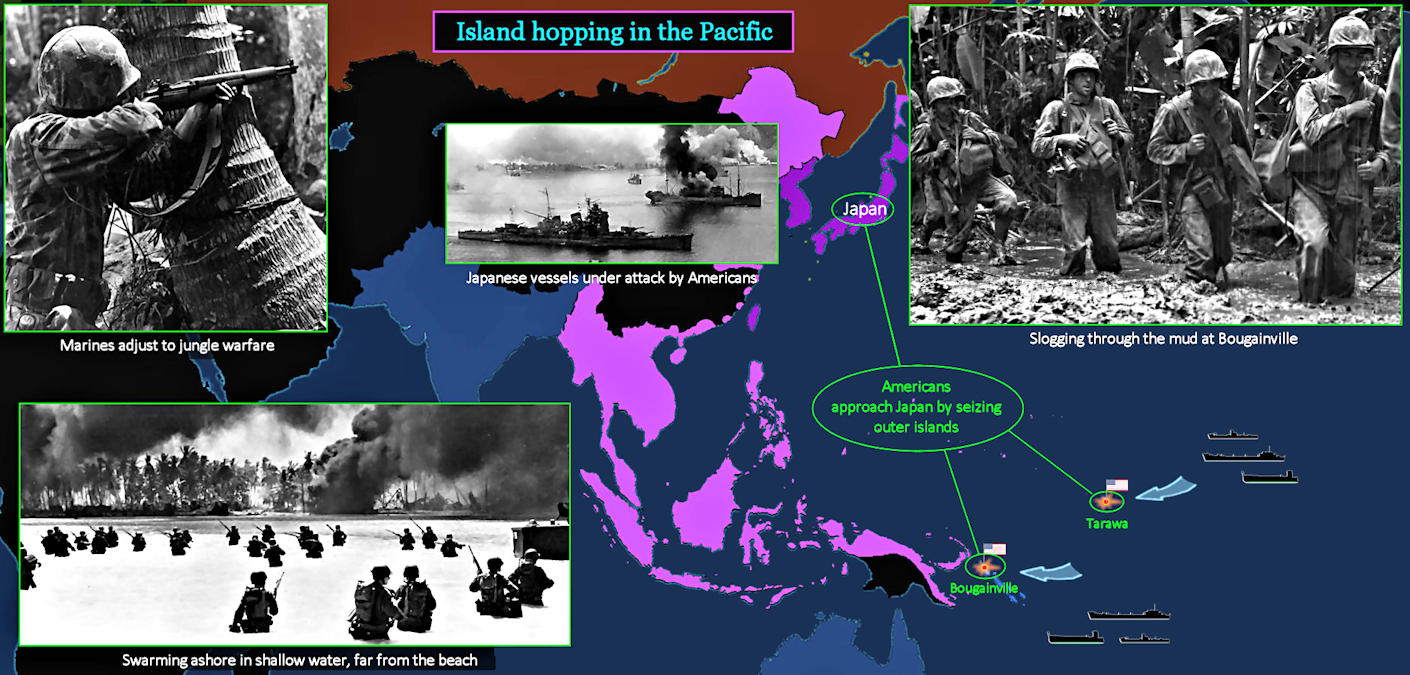
Nasty Business In the Pacific War against the Japanese, things are progressing painfully slowly. It takes a lot of preparation, and war material, to support each beach landing by young Marines. Every island has to be bombed before being invaded, which involves getting additional aircraft to the battle zone to supplement carrier-based forces. Some islands are defended more vigorously than others. Marines on Guadalcanal, which was attacked the previous year, are still busy rooting out the enemy . In addition, they fight mud, heat, mosquitos, malaria, dysentery and jungle rot. The Japanese have lost their main carrier fleet, but keep up the pressure with battleships and cruisers, conducting bombing raids where they can. | |||||||||
| |||||||||
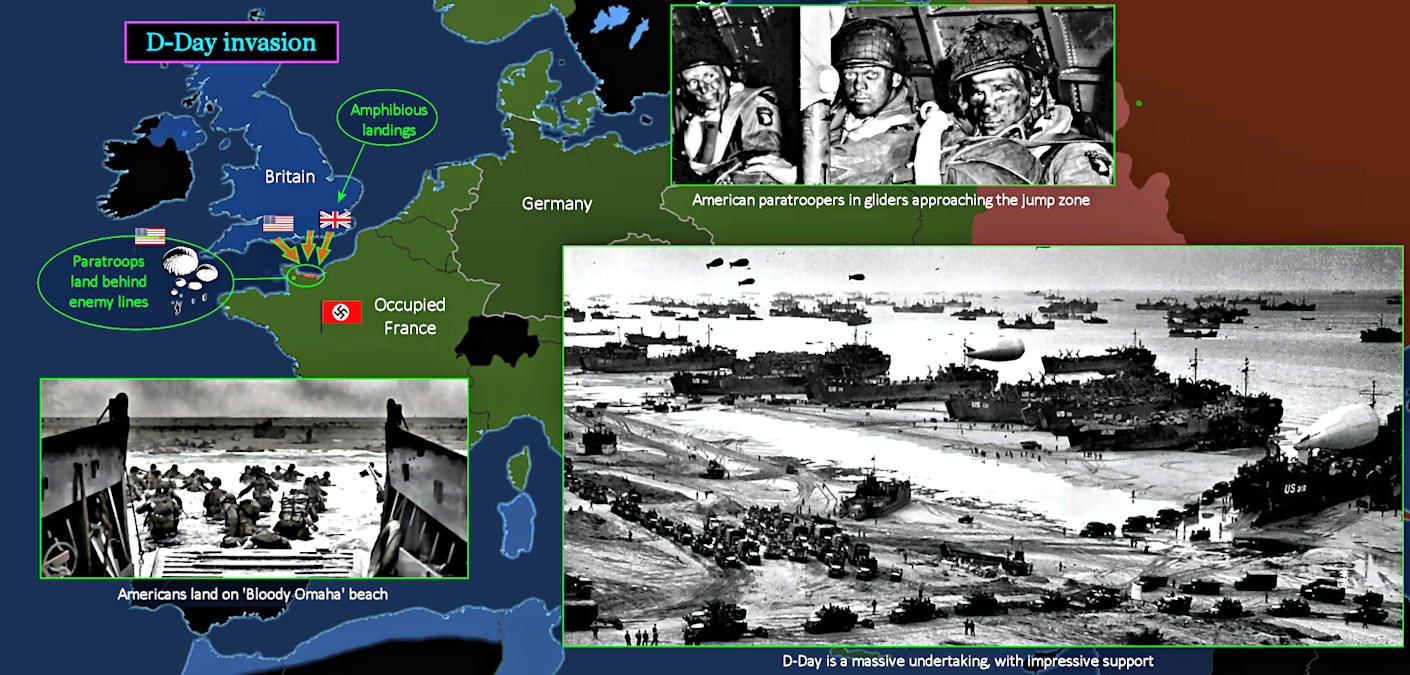
Massive Assault The D-Day invasion is a joint Allied effort, with Britain and Canada contributing just as many troops as the US, and storming three of the five beaches. It isn't the great turning point in the war, which came more than a year earlier, at Stalingrad. Total Allied ground forces are just one-tenth of those involved in the Battle of Moscow. Still, it's a grand spectacle, and a real nail-biter in the early going. The beaches can only be assaulted during periods of unusually low tide, which are infrequent. The planned day of the assault comes in the last hours of a terrible Atlantic storm. General Eisenhower, the overall commander and future US President, waits until the last minute before giving the go-ahead. Still, landing craft have to operate in heavy, confused seas. | |||||||||