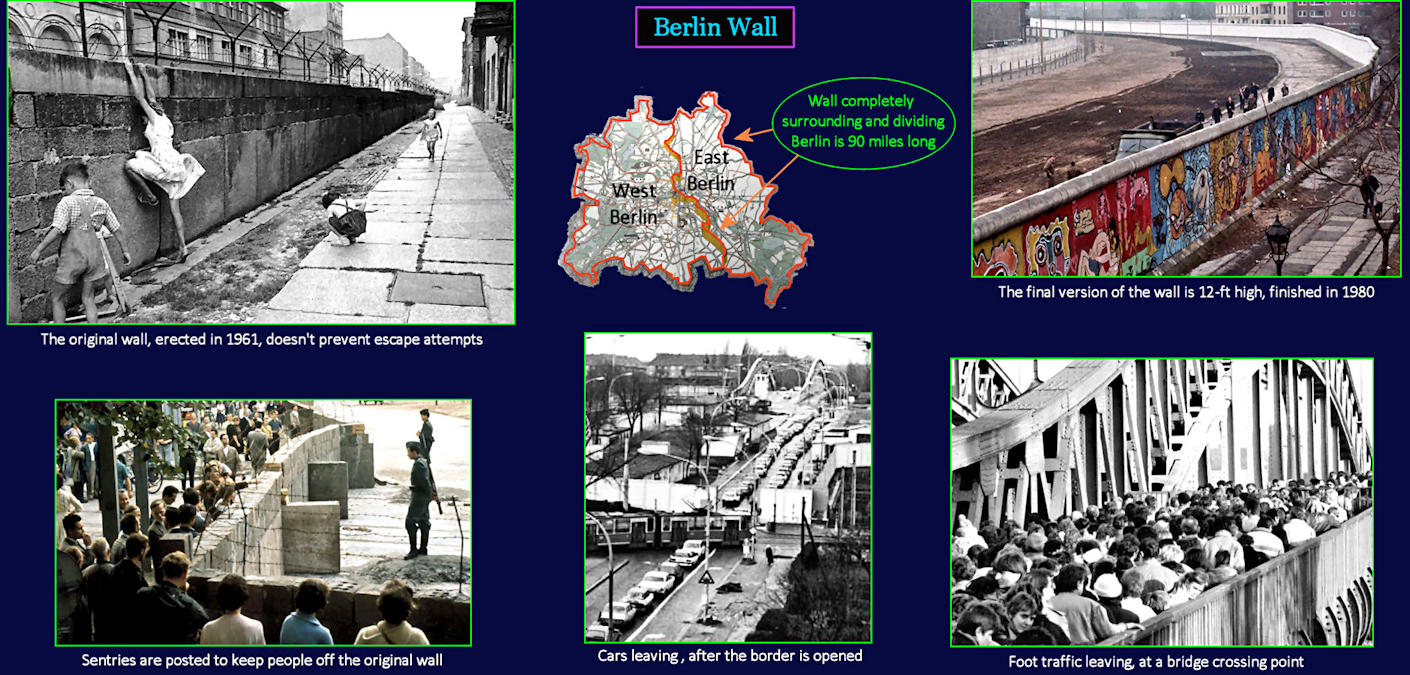
Tipping pointThe demise of the Soviet Union begins suddenly, and accidently, in East Germany. The capital city of Berlin has been divided for years by the Berlin Wall, a menacing concrete barrier designed to keep East Germans contained. When East Germans hold a routine press briefing in 1989, however, a minor official makes the startling statement that a new draft proposal will soon allow East Germans to leave the country, at all border crossings. This surprises and confuses everyone, including border guards. Crowds gather at border checkpoints, asking questions, but no one seems to have answers. By midnight, outnumbered guards simply allow Berliners to pass. And just like that, the Berlin Wall is no longer a barrier to East Germans wishing to escape to the West, though it still stands. It takes time for matters to sort themselves out, but within two years, the Soviet Union itself ceases to exist. |
| ||||||||||||||||
| |||||||||
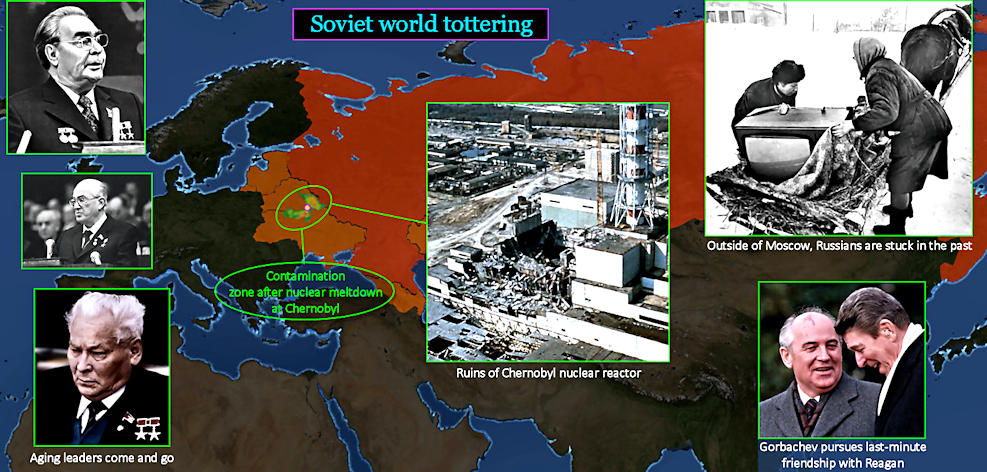
Glasnost is Not Enough The last leader of the Soviet Union is Mikhail Gorbachev, who works to the very end to try to soften Soviet rule with something called 'Glasnost.' This means 'open-ness,' and is intended to win back citizens who are becoming increasingly dissatisfied with rigid communist rule. He famously tries to patch up relations with America, meeting with Reagan at the Geneva Summit in 1985 in an attempt to find common ground. Reagan is sympathetic, and both men agree that nuclear missile stockpiles should be reduced before something goes wrong. In the end, however, it's not enough. Hard-liners in Moscow eventually force Gorbachev to resign, and then stand by passively while the Soviet Union self-destructs. | |||||||||
| |||||||||
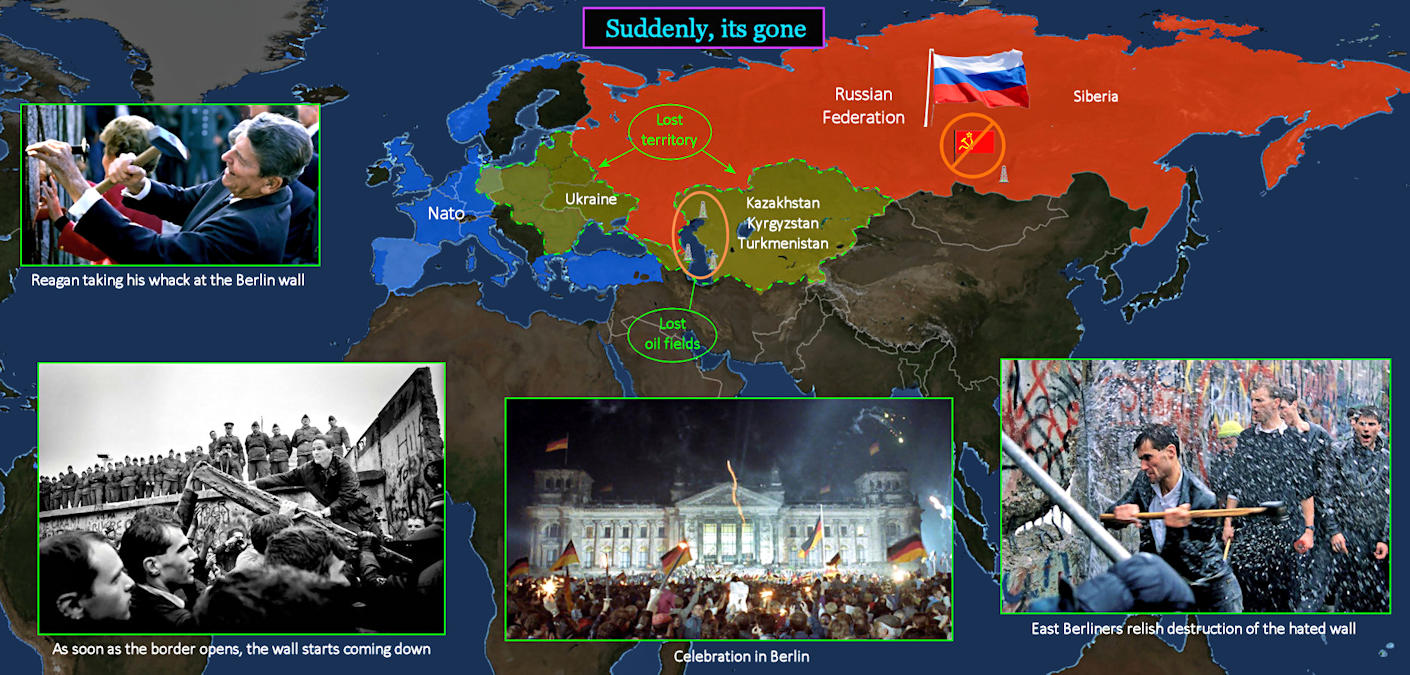
Russia Reduced The map shows the reduced footprint of the new Russian Federation (RED), which replaces the old Soviet Union. The portions in GREEN (inside dotted lines) are areas no longer under Russian control, including Ukraine and all the Eastern European countries overrun by Stalin during World War Two. Also missing is a large chunk of non-Russian-speaking Muslim countries that had voluntarily joined the Soviet Union, but no longer want to remain (the right-most GREEN area). This includes oil-rich regions (marked with oil derricks) which had been Hitler's target in the Second World War. Russia is left with just the native Russian-speaking regions, including all of thinly-populated Siberia, extending east to the Pacific Ocean. | |||||||||
| |||||||||
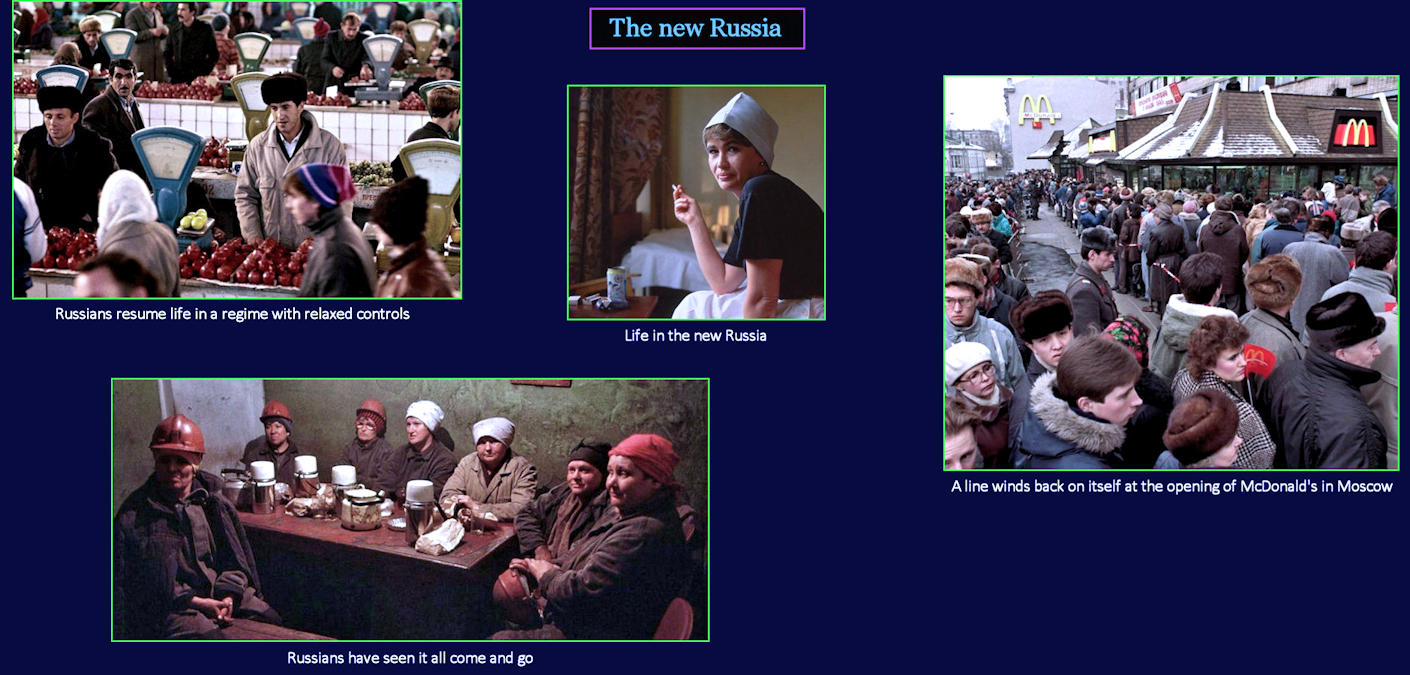
Making Do After the Soviet regime collapses, Russians are left with a somewhat diminished world. No longer the world's 'other' leading power, they get a small taste of western culture when McDonald's opens in Moscow. Elsewhere, change is less evident. | |||||||||
| |||||||||
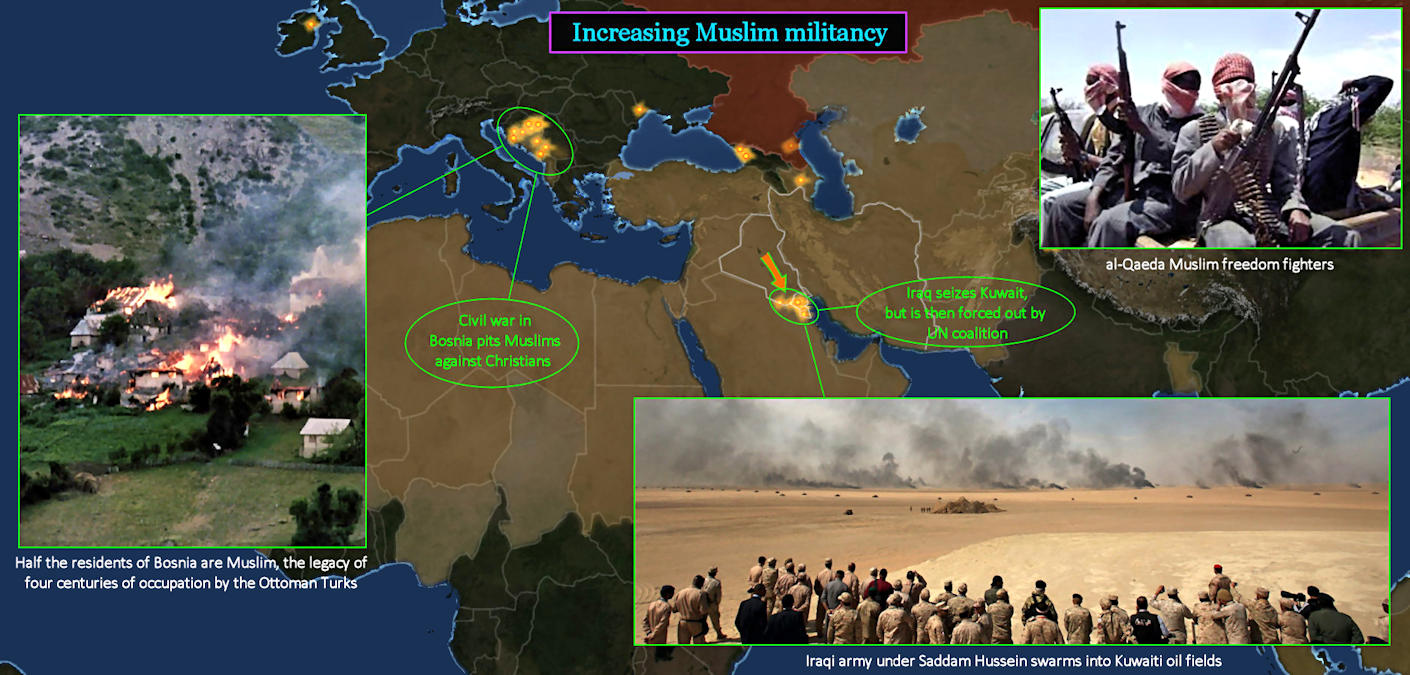
Muslims Unleashed With the Soviet Union now gone, there is a massive power vacuum in the buffer zone between Russian and Muslim populations. Soon, open warfare begins to erupt in Muslim-contested areas. The three-year Bosnian War breaks out within the former borders of the old Soviet-aligned Yugoslavia. Muslims battle Christians for control of new states being carved out of this chaotic region. In Iraq, Saddam Hussein has suddenly lost the Soviet financial backing he previously relied upon. He attempts to fill the void by seizing oil fields in neighboring Kuwait, which is nearly defenseless. His army rolls in, basically unopposed. Elsewhere, radical Muslim terrorists flying the al-Qaeda banner are gaining strength. | |||||||||
| |||||||||
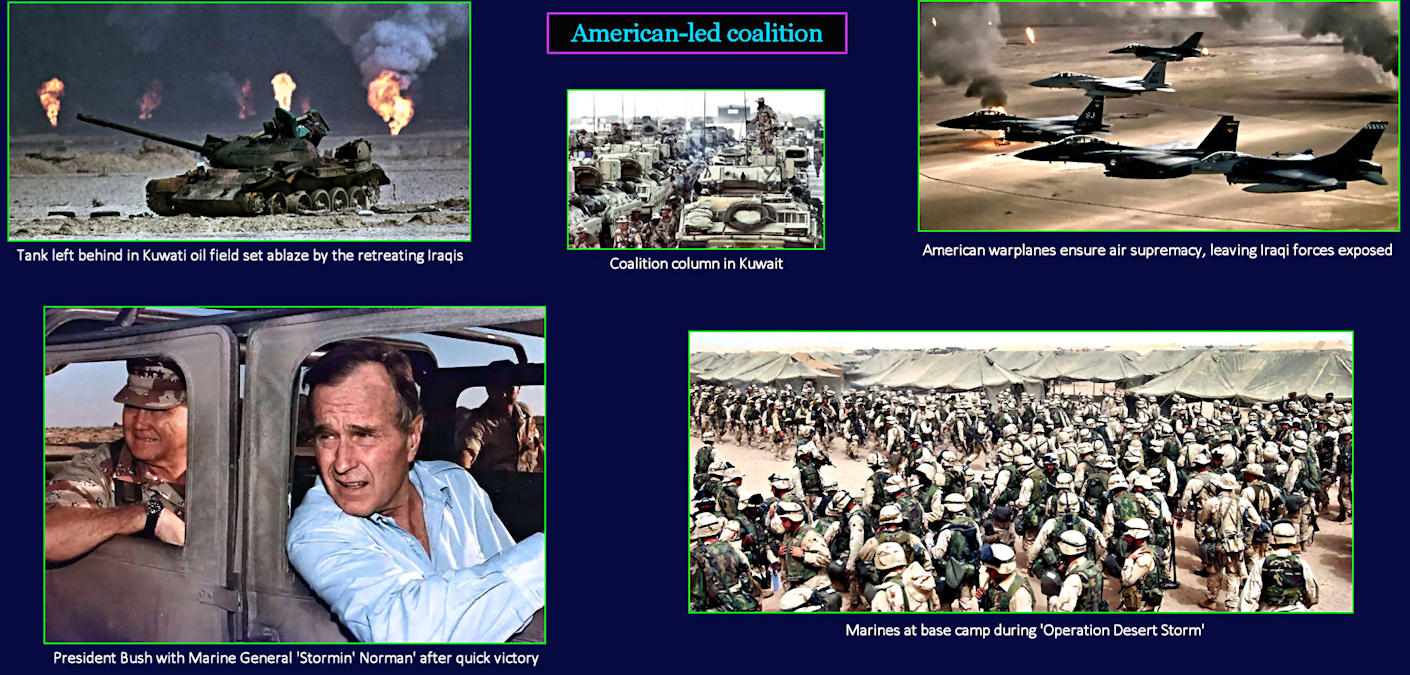
Here Come the Yanks When Iraq grabs the Kuwaiti oil fields, President Bush is at first inclined to keep the US out of the conflict, and just let Iraq keep the oil. Then, he's contacted by Britain's 'Iron-Lady' Margaret Thatcher, who points out that this will leave Saddam with control of 65% of total Mideast oil supply. She urges Bush not to 'go wobbly' by taking the 'appeasement' route, which had led to Hitler gaining control of Europe, 60 years earlier. This persuades Bush to put together a 53-nation UN coalition to push Saddam out. Iraq has a substantial military, but after coalition warplanes take out its command-and-control network, Iraqi commanders are left wandering blind in the desert. The trail of wrecked Iraqi vehicles stretches all the way back to Baghdad. | |||||||||