Moving FrontierFilling in the Ohio River Valley 1825 Erie Canal 1830 China Trade Indian Removal Act Northern Indian removal Cotton plantations 1840 Cotton replaces Indians |
| ||||||||||||||||
| |||||||||
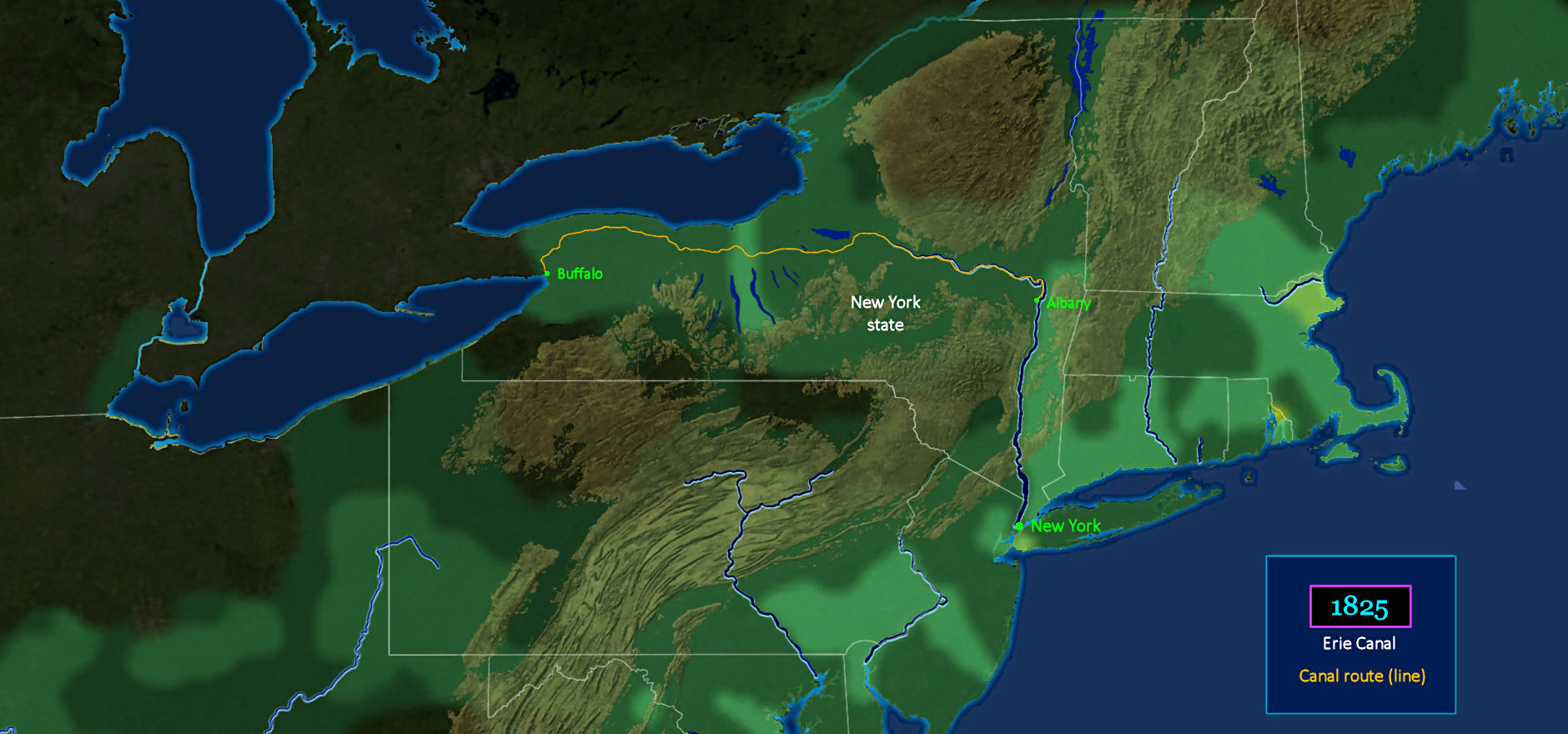
Smashing Success A brief but explosive canal era begins with the opening of the Erie Canal in 1825, financed by the New York state legislature. The canal is just a ditch, barely four feet deep, but stretching 350 miles from Albany all the way to Buffalo. This allows cargo to be floated from one end to the other at twice the speed of wagons, and one-tenth the cost. It requires 34 locks to get over hills, and 32 aqueducts to cross rivers, but even so is able to pay off construction costs in just eight years. Canals are the next BIG THING. | |||||||||
| |||||||||
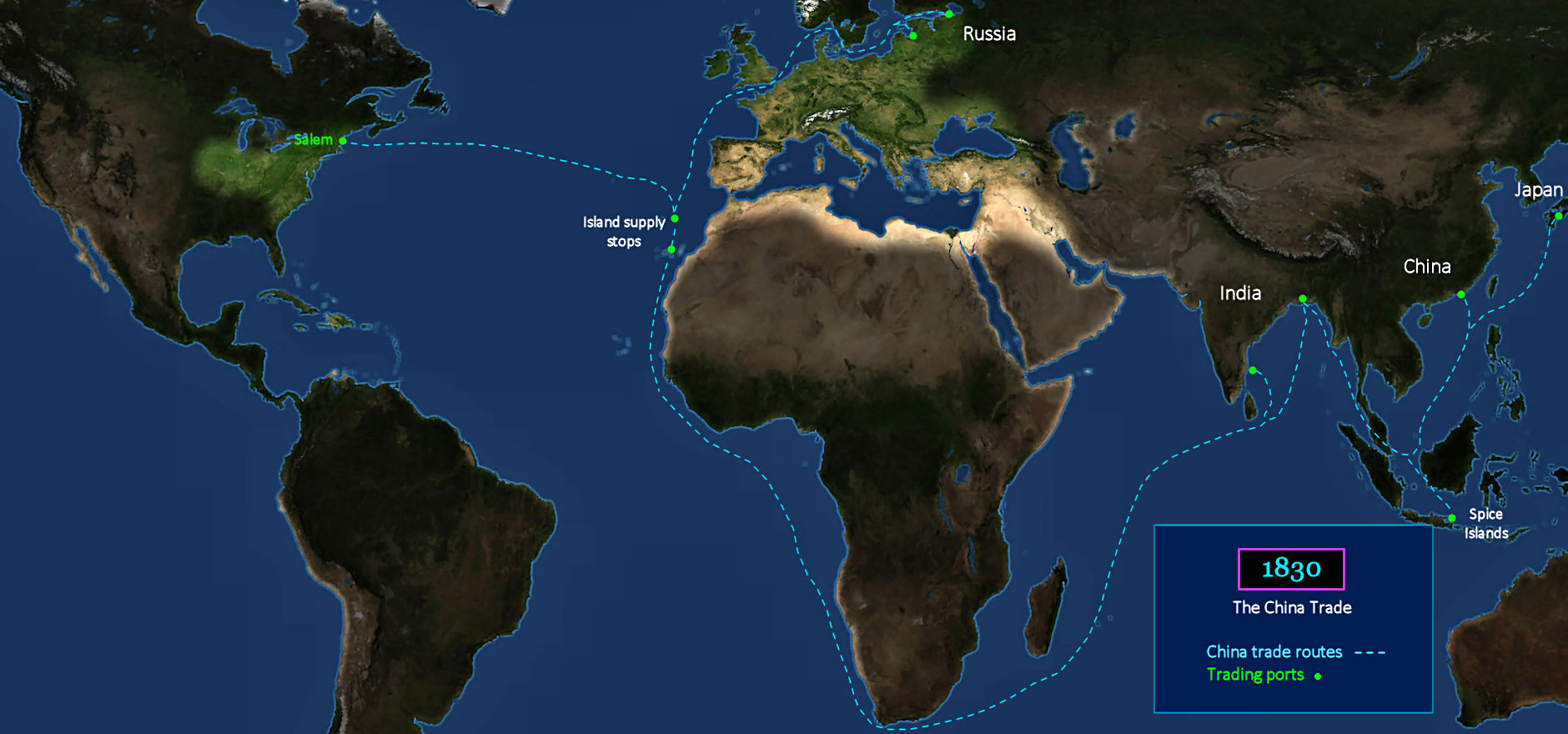
Distant Voyages Meanwhile, American ship captains are getting more ambitious, taking yearly trips to far-away India, China and even Japan. High-profit items include tea, coffee, silk, porcelain and spices. On the return trip, captains might trade some items in Russia. | |||||||||
| |||||||||
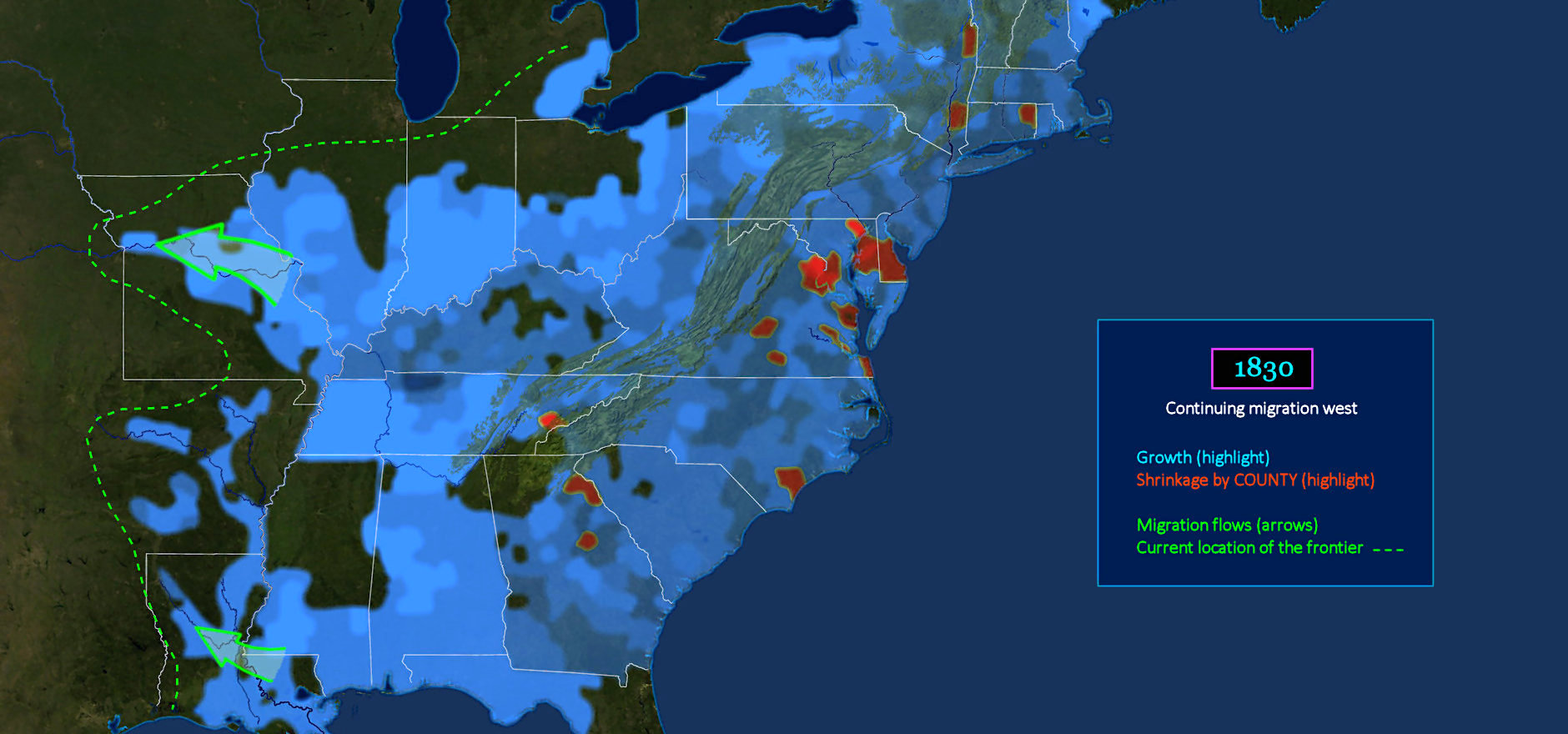
Pushing the Frontier The highlights shown here indicate the rate of population growth. The brightest BLUE indicates fastest growth. RED highlights indicate counties where population is actually shrinking. These are mostly concentrated in the Chesapeake Bay area, where tobacco plantations are wearing out the thin Virginia soil, and causing planters to move out. Most take their slaves with them. The GREEN dashed line indicates the current edge of the frontier, which is continually shifting westward. | |||||||||
| |||||||||
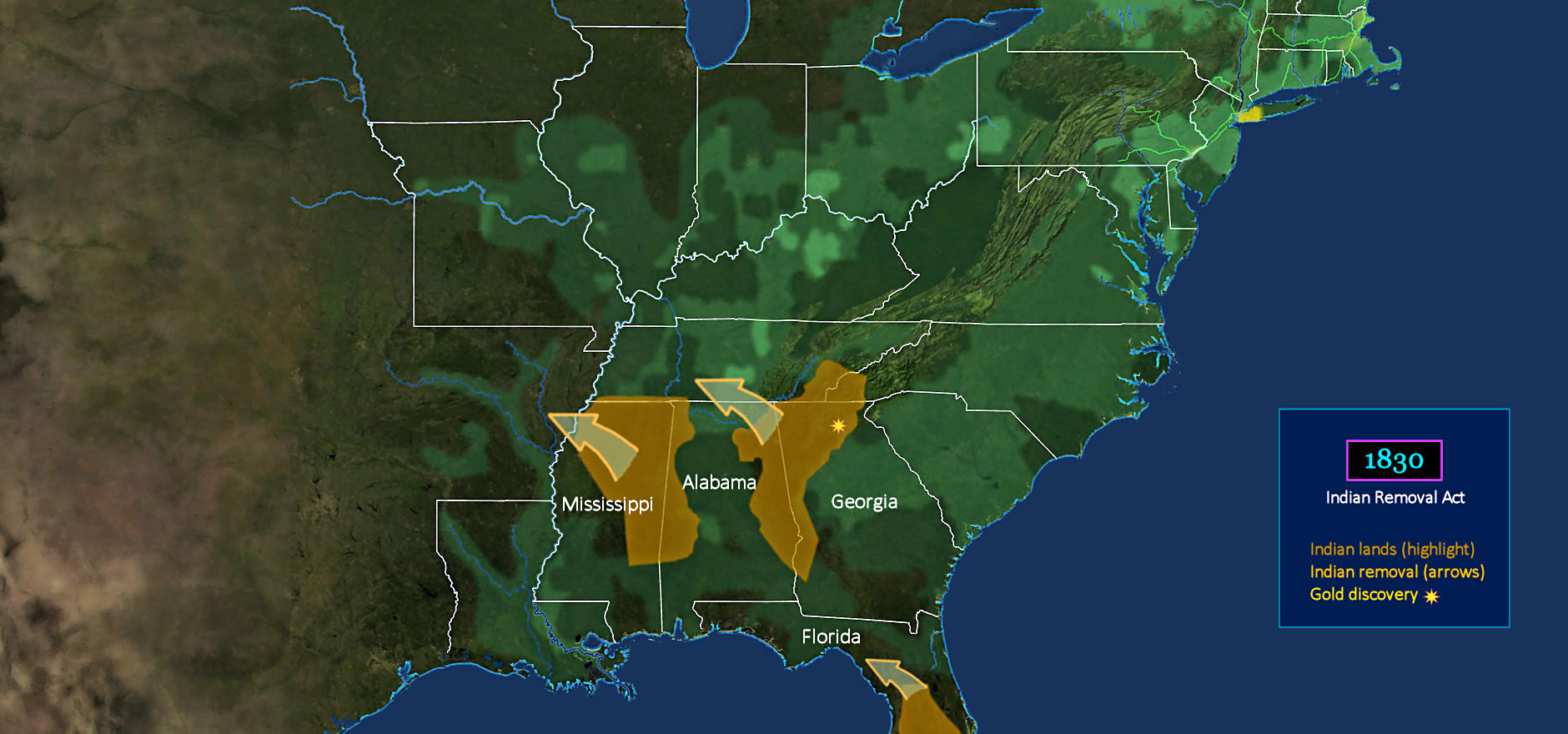
Clearing Them Out By this time, there is continuing friction between Indian tribes in the Deep South and encroaching white settlers. This land is growing increasingly valuable, as it's perfectly suited to large-scale cotton plantations. When a small gold deposit is discovered in Georgia in 1828 (YELLOW star), the clamor to acquire Indian lands becomes irresistible. Within two years, Congress passes the Indian Removal Act, authorizing the army to move all the southern Indians out to Oklahoma, to clear the way for whites. | |||||||||
| |||||||||
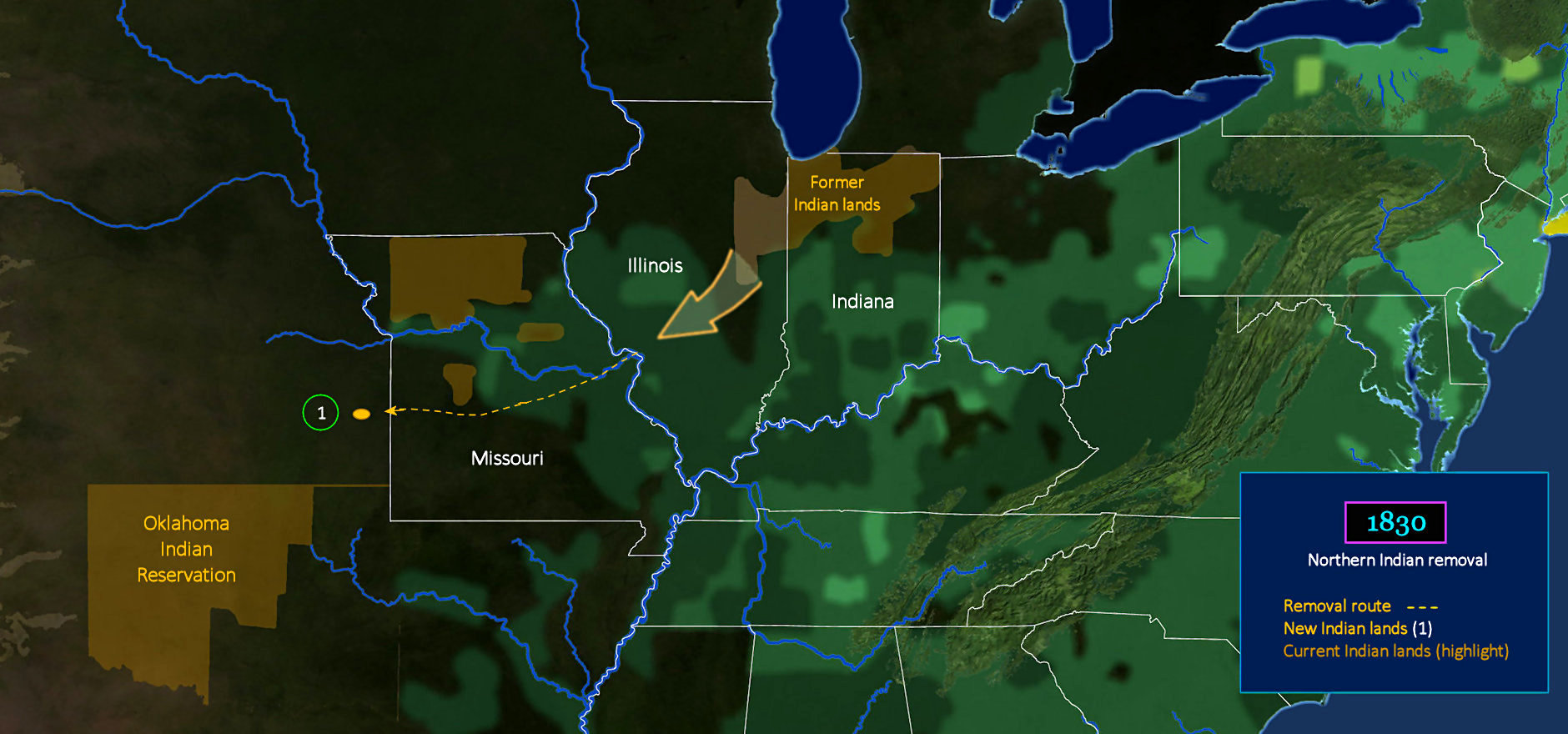
Northern Indians, Too During this same period, Indian lands in Illinois and Indiana are also gradually whittled down, by dozens of minor treaties promising the Indians food and other items in return for land. These promises are seldom honored for very long, however, and all remaining northern Indians are eventually shipped out to a location in what will become Kansas. | |||||||||