Manufacturing LaborUrban areas Irish immigrants German immigrants Scandinavian immigrants British and Canadian immigrants |
| ||||||||||||||||
| |||||||||
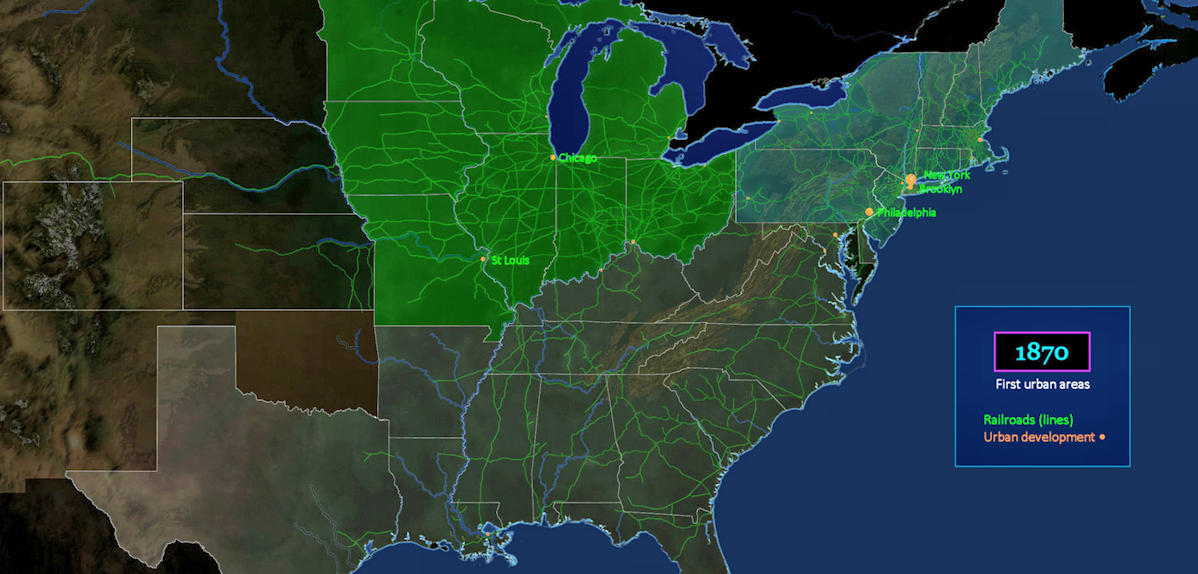
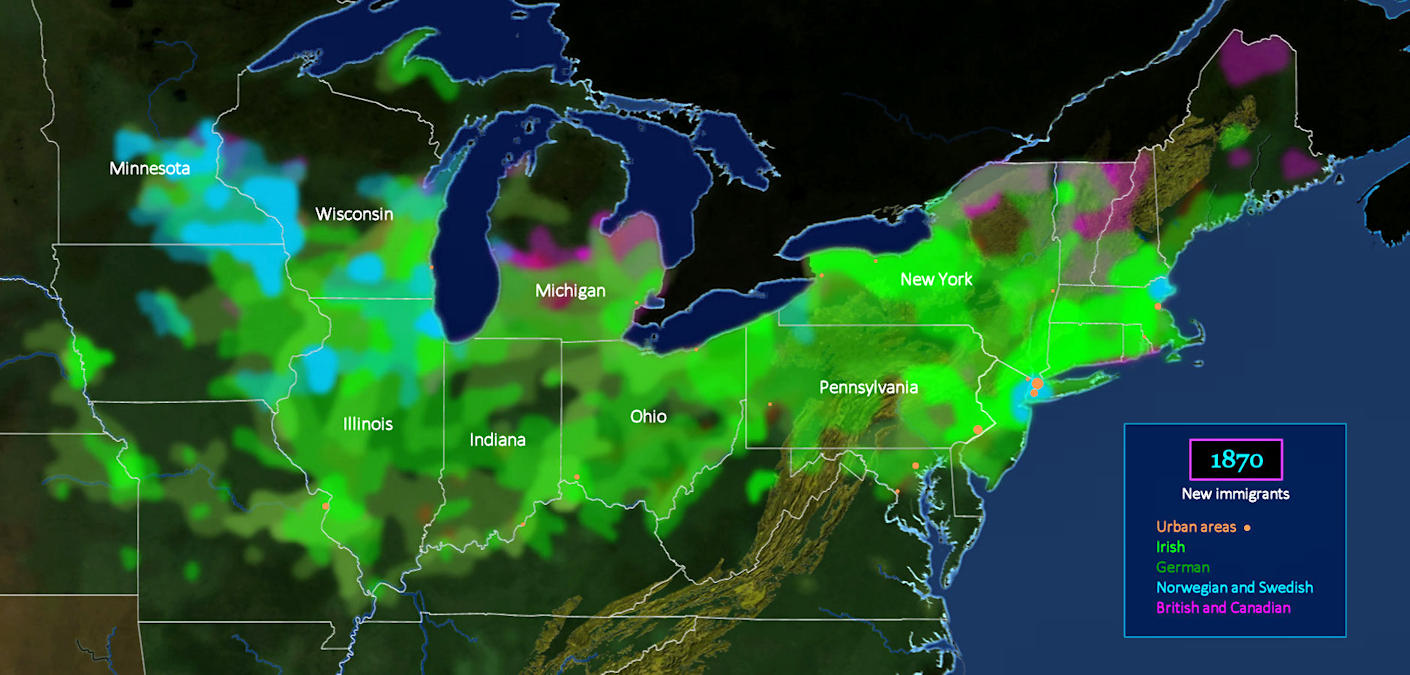
A Strictly Northern Phenomenon America absorbed previous waves of immigrants, particularly from Germany. But the industrial period after the Civil War is powered largely by a fresh wave of immigration from northern Europe. This includes new arrivals from Britain and Canada, but a much larger flood of Irish refugees from the Great Potato Famine. In addition, there are continuing streams of immigrants arriving from Germany and (somewhat later) Norway and Sweden. Almost all settle in the North. | |||||||||
| |||||||||
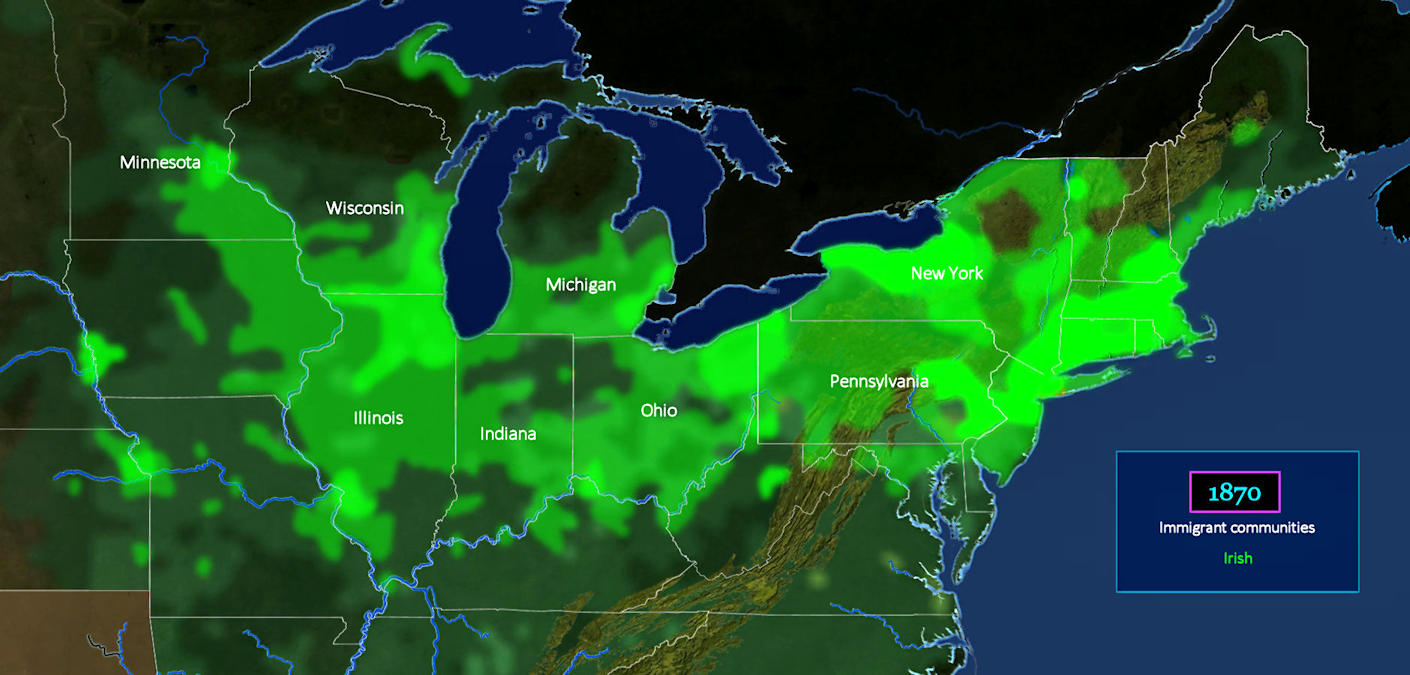
Luck of the Irish The terrible seven-year famine in Ireland prior to the Civil War produces an initial wave of two million starving Irish immigrant destinations, almost all arriving in Boston and New York. But the following 40 years brings an additional half-million every 10 years. That's a lot of new mouths to feed, but factories and mines soak up the vast majority, with little difficulty. Even those who arrive unable to speak English blend in fairly quickly. | |||||||||
| |||||||||
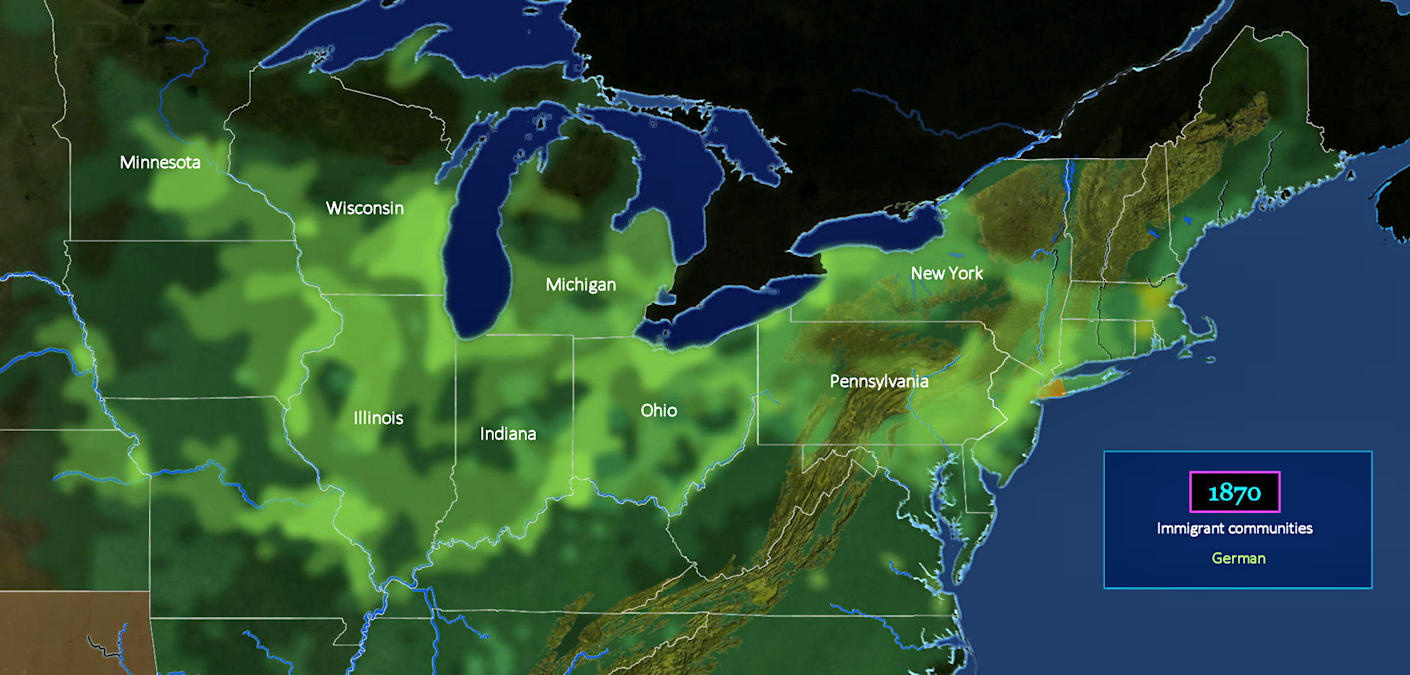
Beer Comes to America To this day, Americans with at least partial German blood now outnumber those whose ancestors came from any other country. Although they soon spread across most northern states, many Germans select Wisconsin as their new home. They leverage their knowledge of beer-making to make Milwaukee the beer capital of America (and some claim, the world). Many also work in factories and mines. | |||||||||
| |||||||||
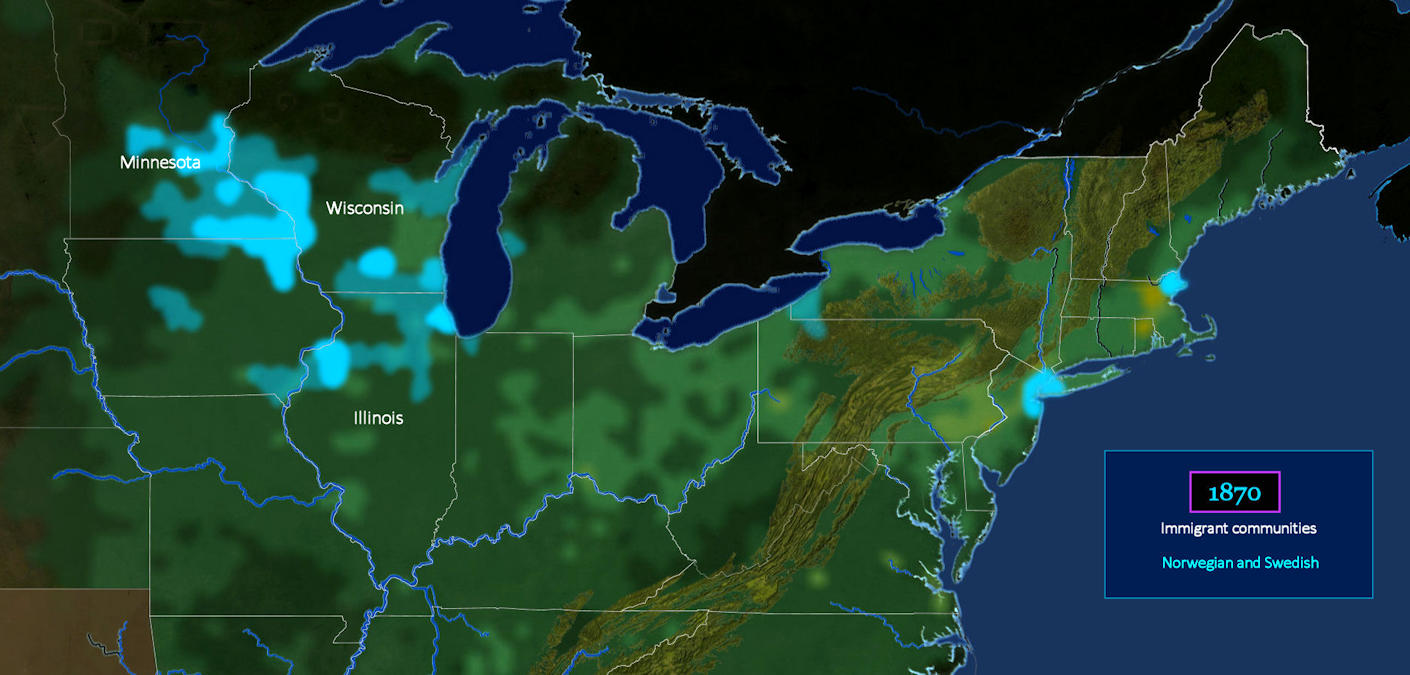
Late to the Party Immigrants from the Scandinavian countries of Norway and Sweden arrive just a bit later, reaching a peak in 1870, and again in 1890. Coming from far northern lands with long winters and short summers, they find Minnesota and Wisconsin to their liking. They often remain in tight-knit communities, with little outreach to surrounding areas. Most are farmers, including a small subset of Norwegian 'bachelor' farmers. | |||||||||
| |||||||||
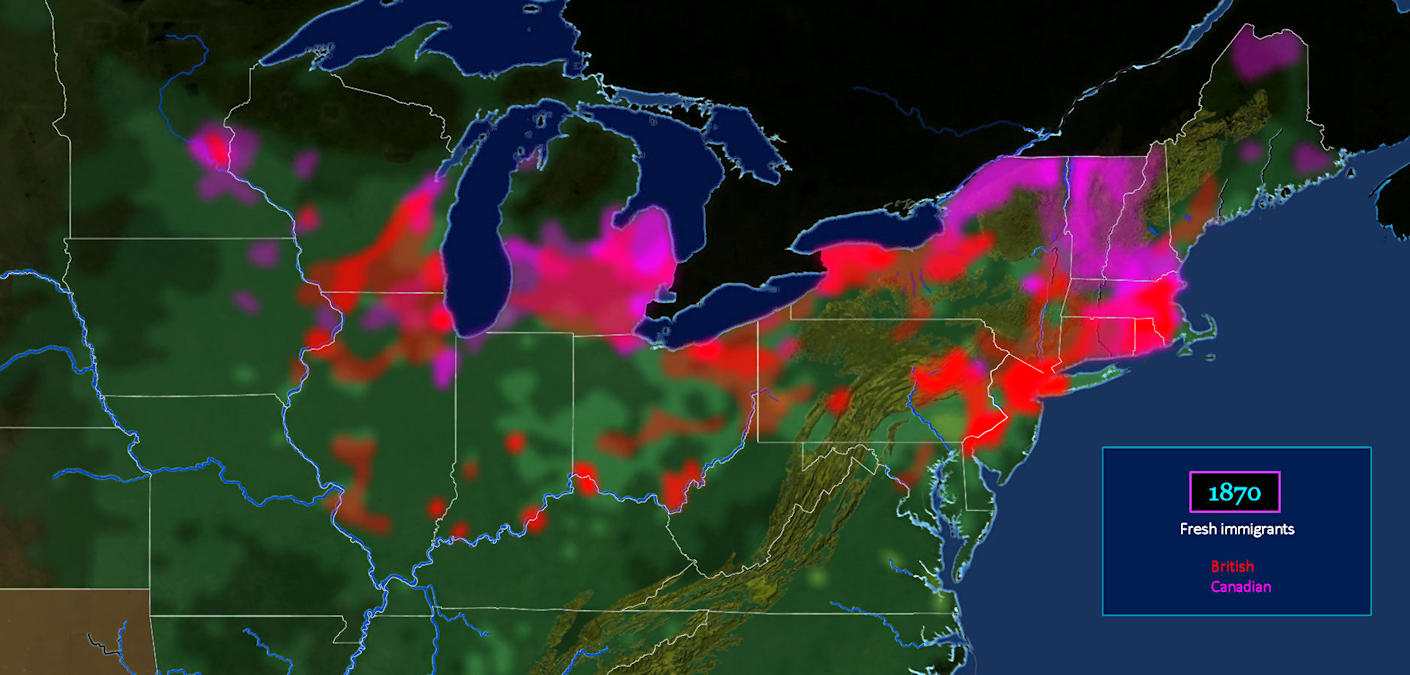
Brits as Well There is also a continuing stream of immigrants from Canada, Britain and Wales and Canada. Canada formally declared independence from Britain right after the Civil War. As native-English-speakers, they blend in so easily that their arrival is seldom noticed. | |||||||||