FarmingRainfall patterns Prime farmland Corn Wheat Sheep Hay |
| ||||||||||||||||
| |||||||||
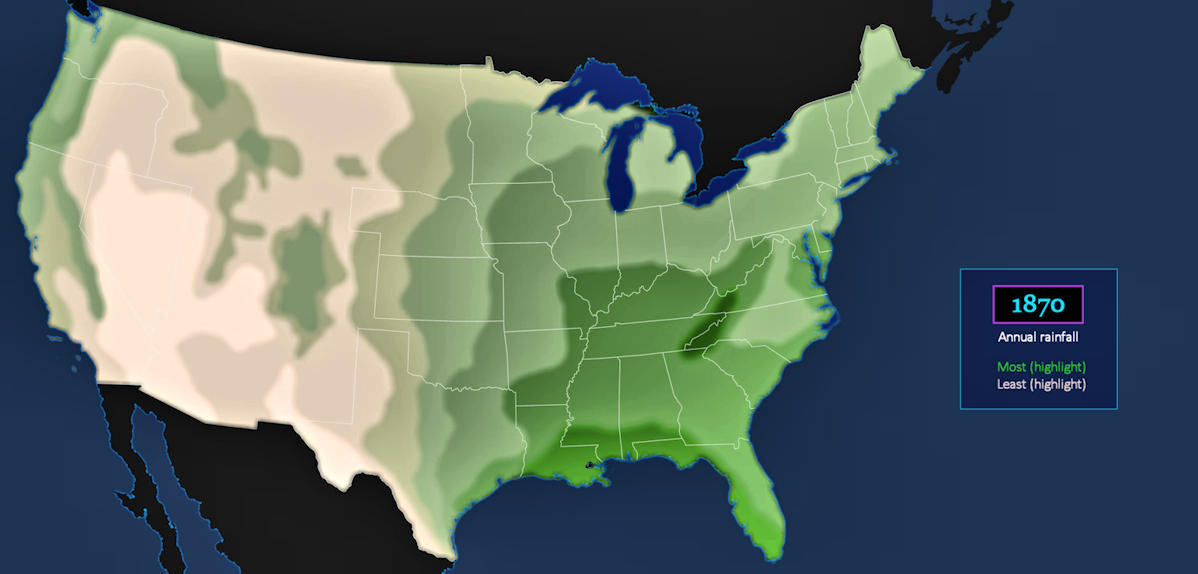
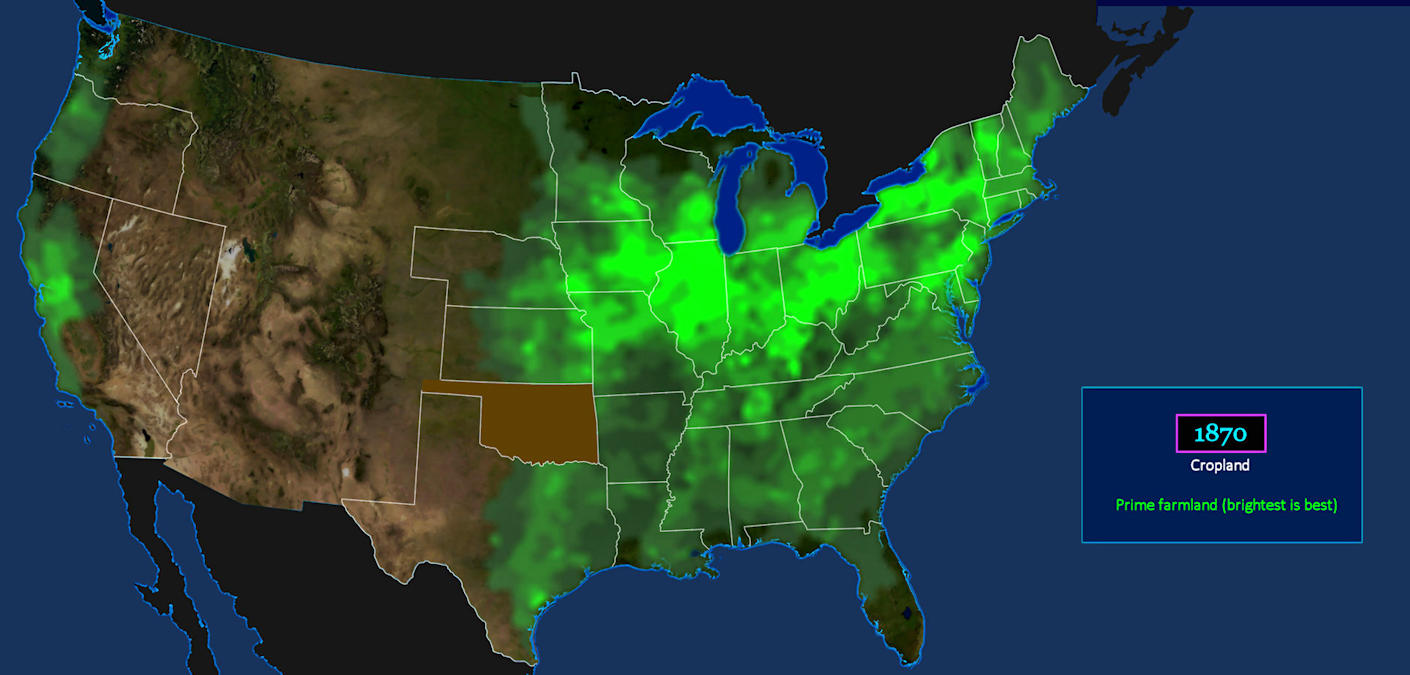
Temperature Also Important A moderate temperature range is also important for successful farming. Note that the bright GREEN areas above end just short of the Canadian border, to the north, and about midway down to the Gulf of Mexico, to the south. The South actually gets plenty of rain (see previous map), but sweltering summer weather is tough on most crops. Cotton (native to Mexico) and rice (native to southern China) are prominent exceptions. Still, it's brutal working cotton fields in July and August. | |||||||||
| |||||||||
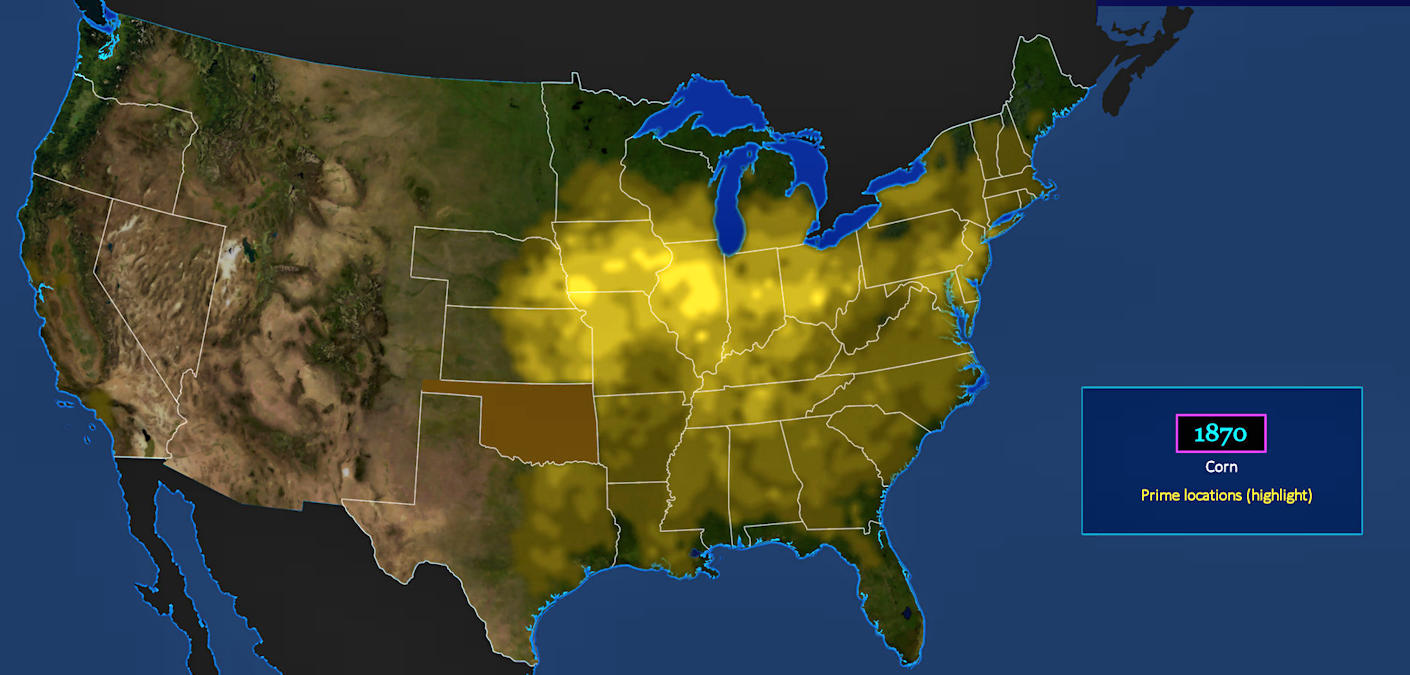
Dominant Corn Corn is the most important cash crop, and an increasingly important export product. Corn is actually a member of the grass family, as is wheat, rice and most grains. What makes it dominant is the large size of the corn kernel. From the beginning, however, it is grown mainly as food for livestock. Unlike sweet corn, popular at picnics, most corn is 'feed' corn, which is usually cut and left to dry on the stalk. This results in starchy kernels which are dry and nearly flavorless, but an important feed for beef cattle. | |||||||||
| |||||||||
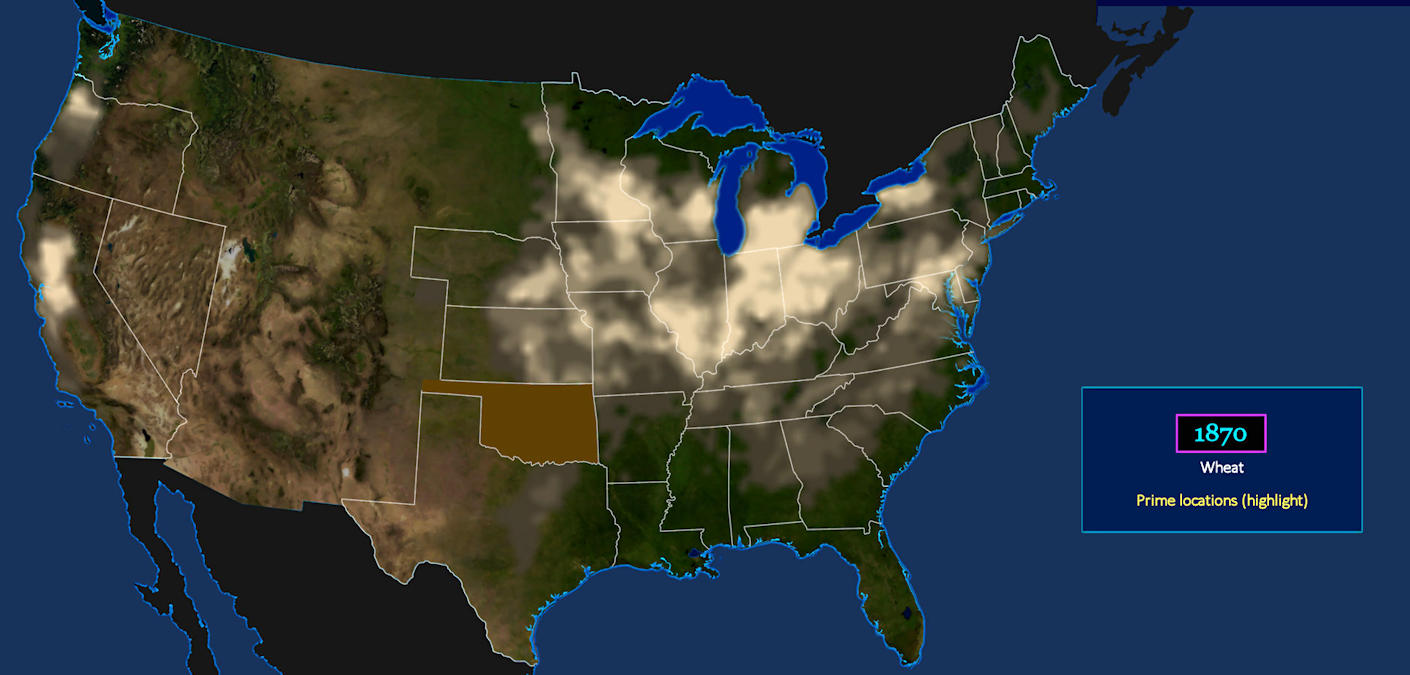
Wheat for Bread Unlike corn, wheat is grown mostly to feed people. It has been the principle cereal crop since the 1700s, with several distinct advantages. Kernel size is second only to corn. Wheat is easily dried, and can be stored for up to 10 years. It's normally ground into flour after drying, for use in making bread. Even today, wheat is the main food crop for the entire northern industrial world, while rice is more important in semi-tropical regions, like South Asia. | |||||||||
| |||||||||
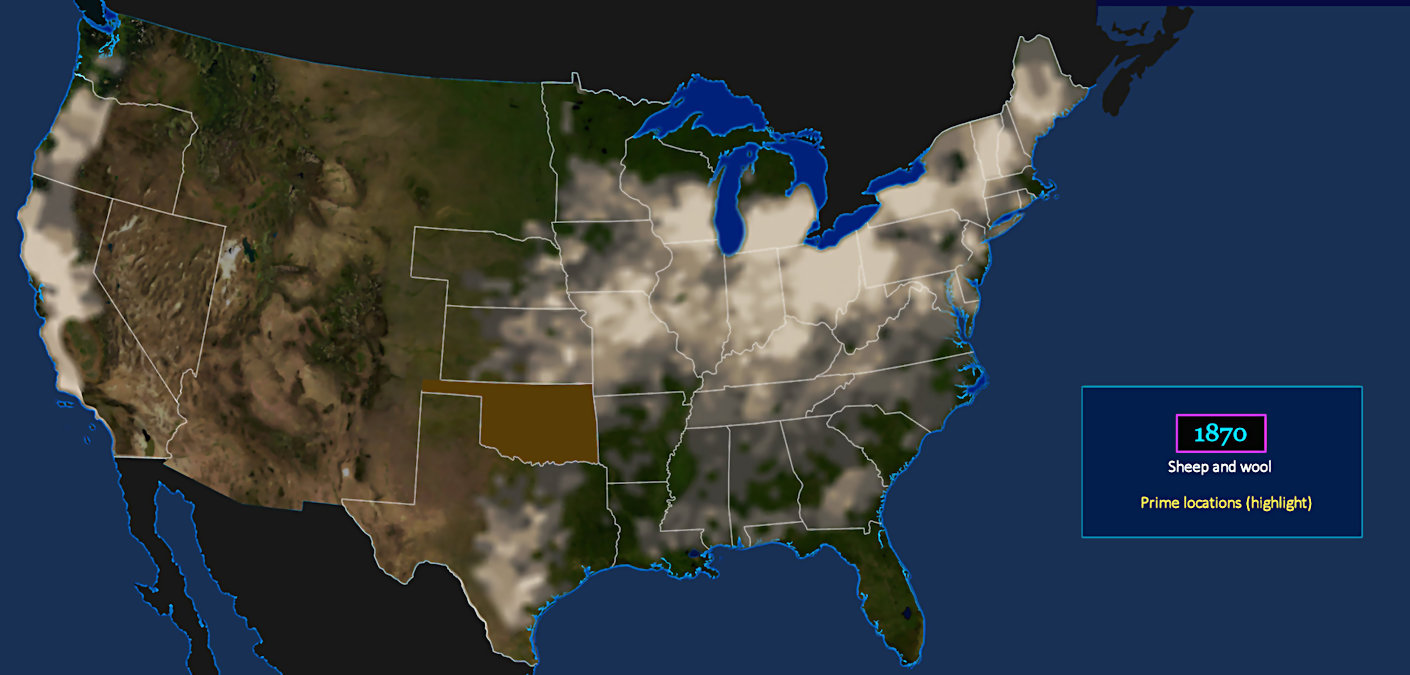
Crop on the Hoof While cattle and pigs are raised primarily as a food source, sheep are normally kept to produce twice-yearly crops of wool, which is used to make woolen fabrics. Cotton became the most important textile fiber in the period before the Civil War, but wool remains important to this day. Sheep are small, docile and require very little tending. Herds of sheep are relatively easy to move and manage, and sheep are better adapted to surviving winter than most other livestock. | |||||||||
| |||||||||
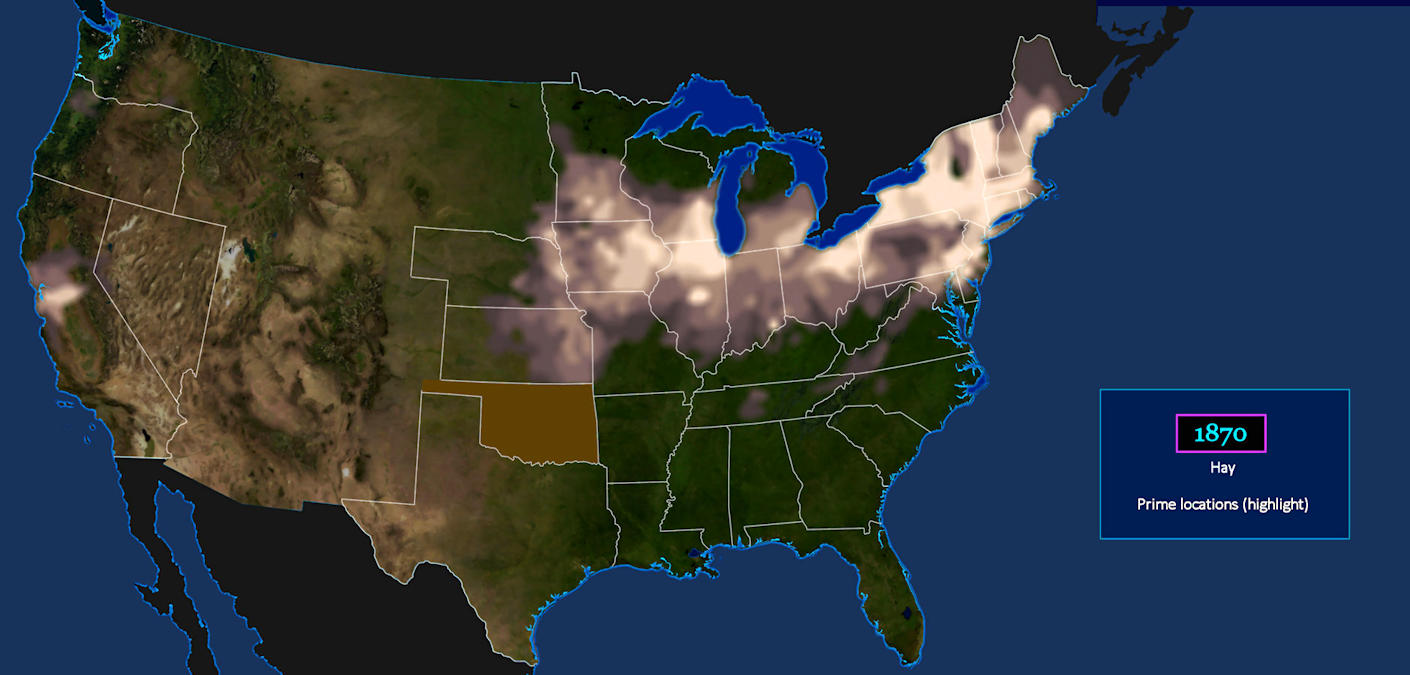
Hay for Livestock Almost every farm in America grows hay, as the easiest of all crops to manage. Like all grasses, it will come back year after year, without plowing or reseeding, even after periods of drought. Hay is grown to feed livestock over the winter, after the grazing season ends in the fall. Before the time of mechanical hay balers, it is piled into great haystacks in the field, to be later pitched into wagons. Haystacks are sometimes left in the field during the early winter months, so livestock can continue to feed themselves. | |||||||||