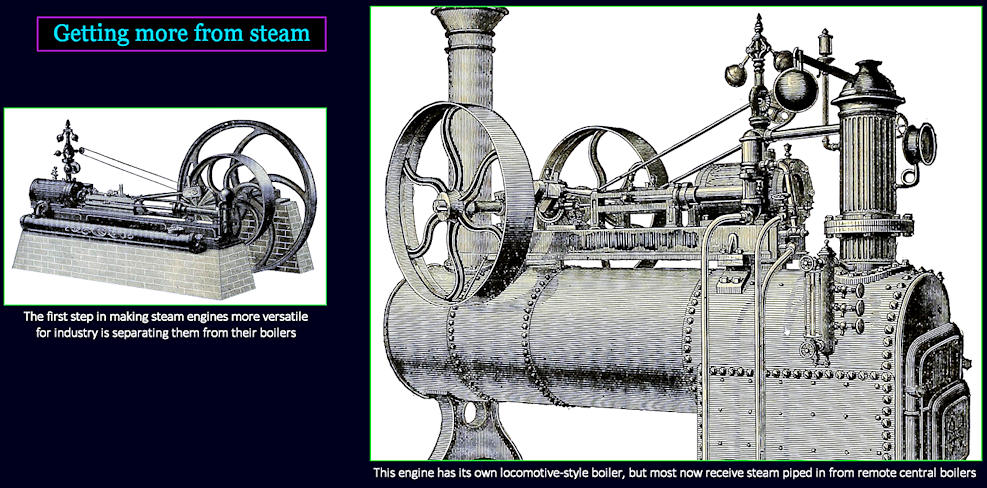
EngineeringA virtual flood of improvements to engineered devices of all types is unleashed after the Civil War. Steam engines are the best example of this trend, having now been adapted to many uses beyond simply pulling rail cars. Steamships continue to grow in size and power, with some now using propellers instead of paddlewheels. Bridges can now span all but the widest rivers, while families can purchase the very first all-metal home appliance. |
| ||||||||||||||||
| |||||||||
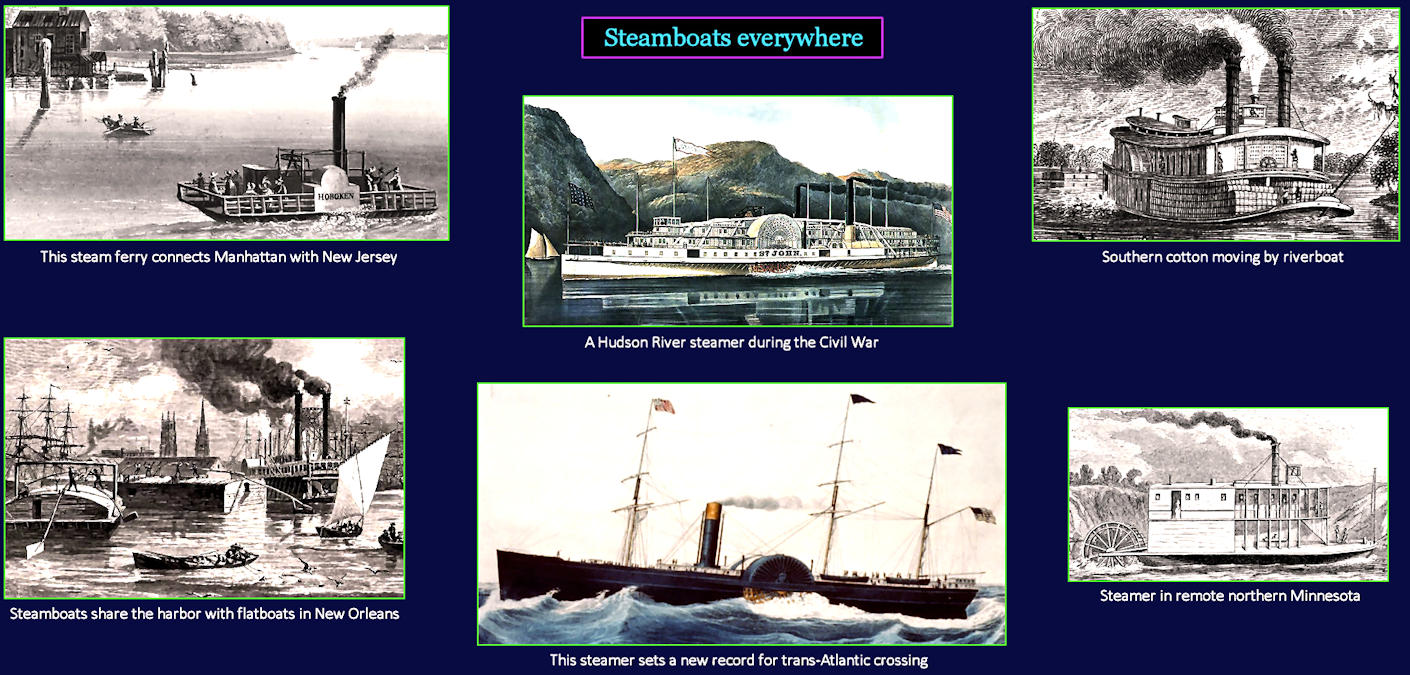
Mighty Steamers Large commercial steamers are now a common sight anywhere that water flows in America. They deliver people and cargo with reliable service at a cost considerably below that of railroads, which still have to power their way over every hill. This takes more energy, and thus fuel, than simply driving a hull through flat water. Railroads also face the additional expense of constructing bridges over every river that they cross. | |||||||||
| |||||||||
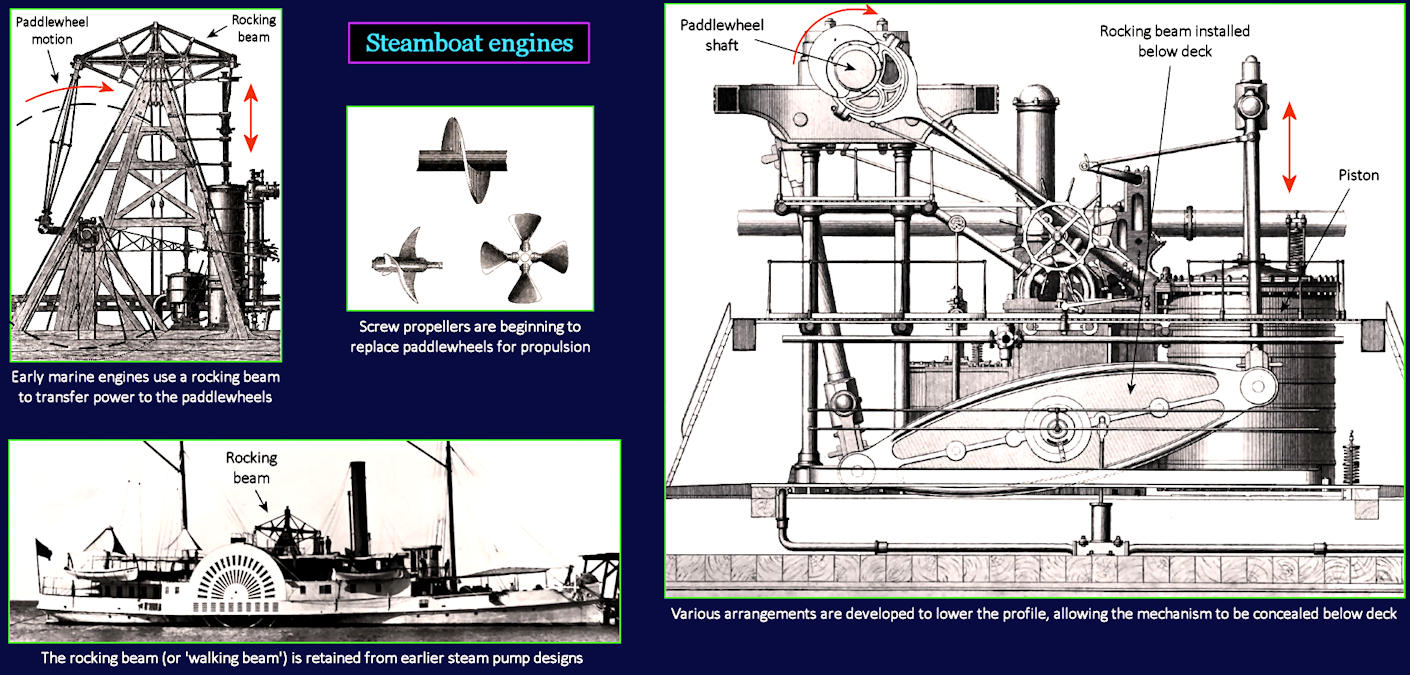
Better Propulsion Steamboats still require very large engines and boilers to provide the power they need. Early steamers use vertically-arranged engines, but these gradually give way to more compact, semi-horizontal designs. Bulky side-mounted, or rear-mounted paddlewheels are being replaced by simpler screw-shaped propellers, which are far less vulnerable to damage. | |||||||||
| |||||||||
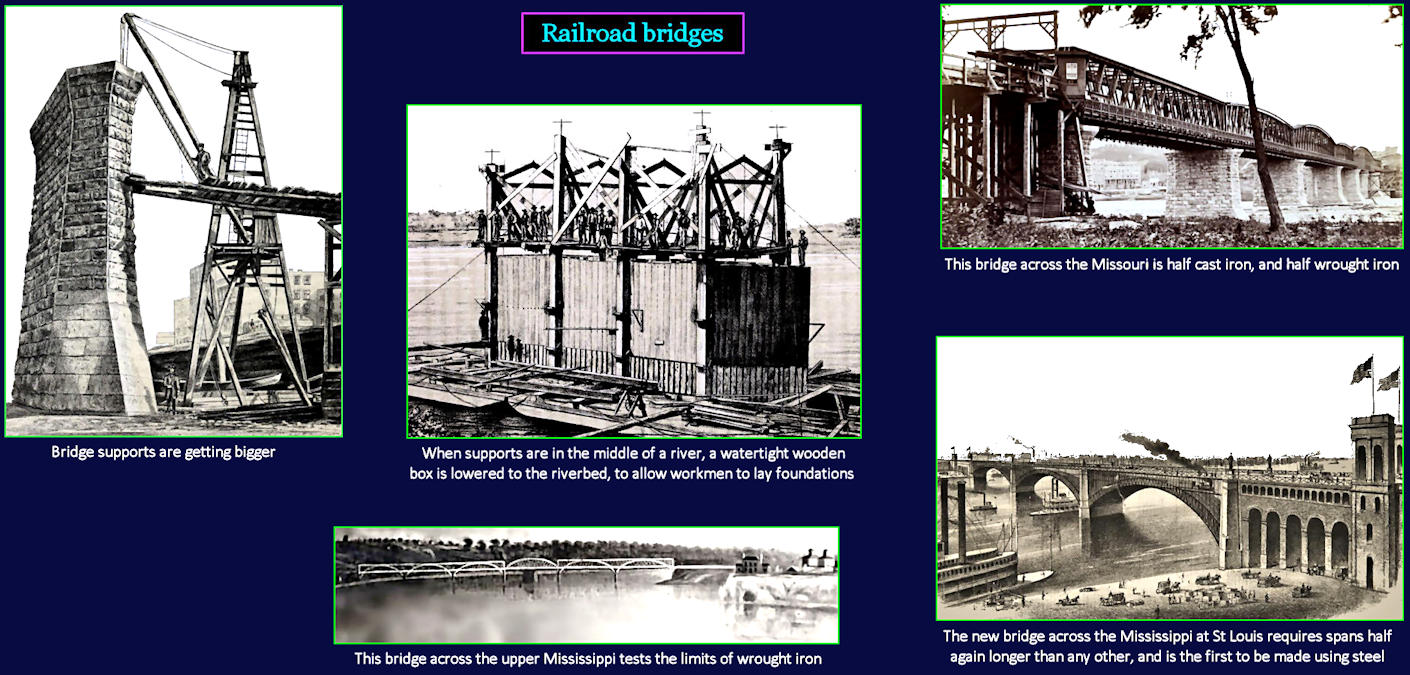
Crossing Big Water Railroad bridges are mostly simple structures made by riveting together iron girders. Really major rivers, like the Ohio, Mississippi and Missouri, however, require a much higher level of engineering. Wrought iron can be used to span distances up to about 500 feet, but steel is needed for anything greater. The new railroad bridge at St Louis takes seven years to complete, consuming in the process most of the steel being produced in America at the time. | |||||||||
| |||||||||
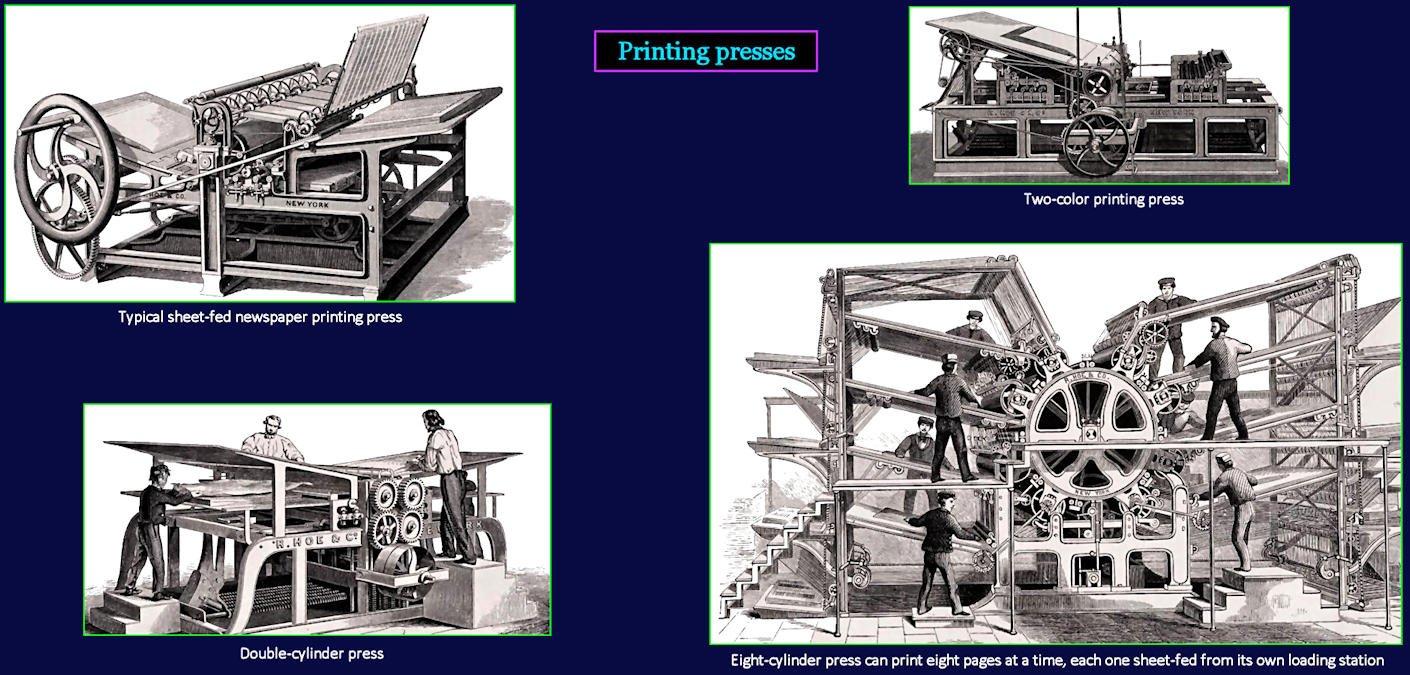
Cascade of Newsprint Many printing presses now use multiple cylinders, each carrying type, which are arranged around the central printing drum. An eight-cylinder press can print eight pages in a single revolution of the drum. Steam engines are used to power high speed presses, and color printing is now possible for the first time, though it requires its own special press. Larger cities all have newspapers in a variety of languages, while Boston alone has over 100 different printers. | |||||||||
| |||||||||
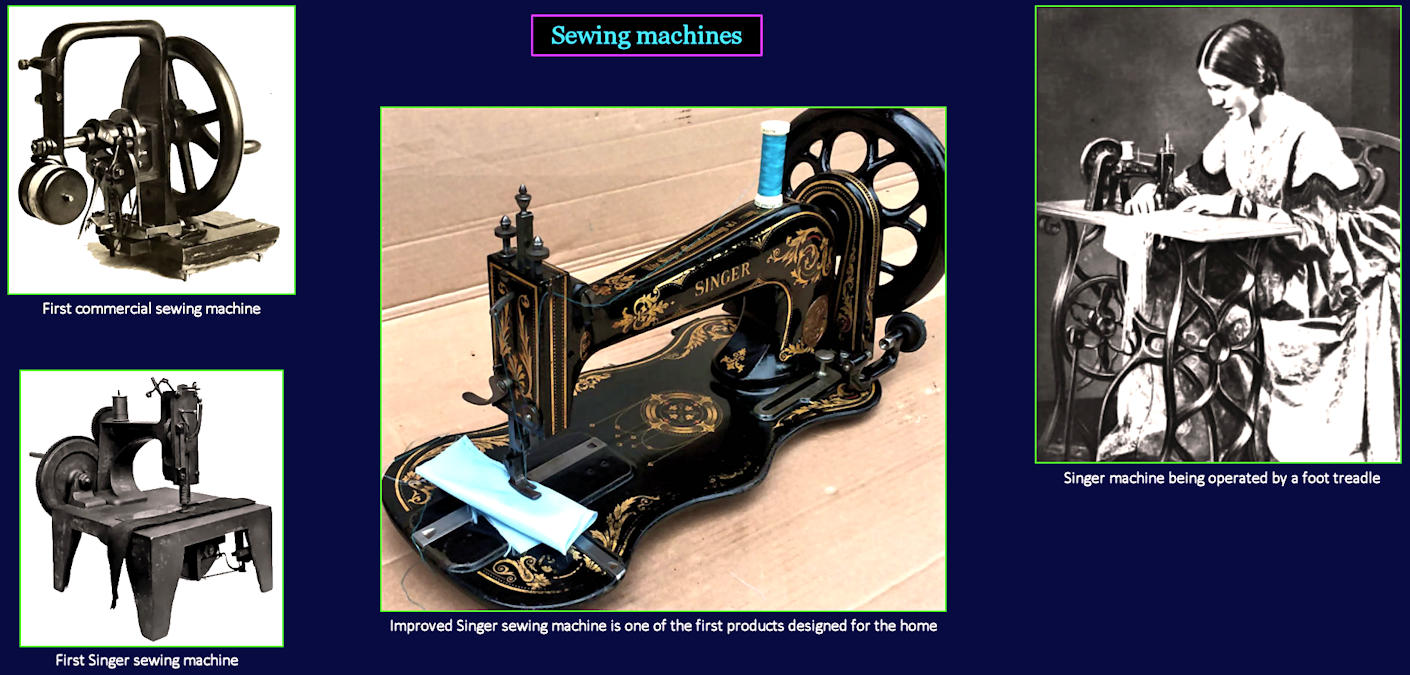
Early Consumer Product Home sewing machines are among the first all-metal devices simple and cheap enough to be sold to ordinary families. The textile mills are producing lots of fabric, but sewing pieces together to make clothing has always been a manual chore. Wives are delighted to finally have help with all the stitching. Early designs are crude, but newer machines are so handy that they remain virtually unchanged for many years. The lower bobbin assembly is a big improvement. | |||||||||