Unpowered ToolsAll-metal mechanical tools become widely available after the Civil War. Iron availability is still somewhat limited, however, and the tooling required to cut and shape iron is still in the early stages of development. Most existing tools are only designed to make linear cuts, with almost no ability to follow complicated contours. Similarly, slots and angular cuts require specialized machines designed solely for this purpose. Another issue is the limited selection of cutters available. A new generation of steel cutters is being developed to shape complex profiles in wrought iron, similar to those being used to make fancy wooden molding. |
| ||||||||||||||||
| |||||||||
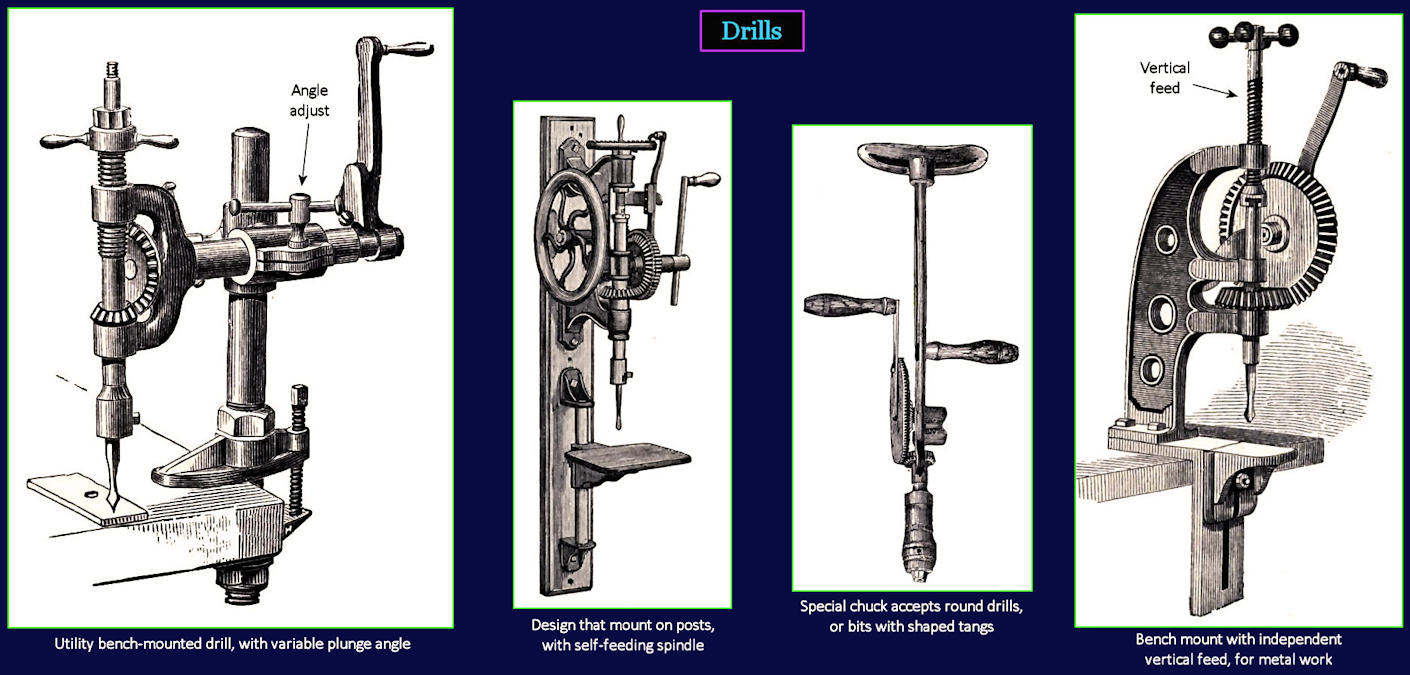
Hand Cranks The most common tool in a metal-working shop is the drill. These models all use hand-cranked geared mechanisms to provide the mechanical advantage required to drill through iron. | |||||||||
| |||||||||
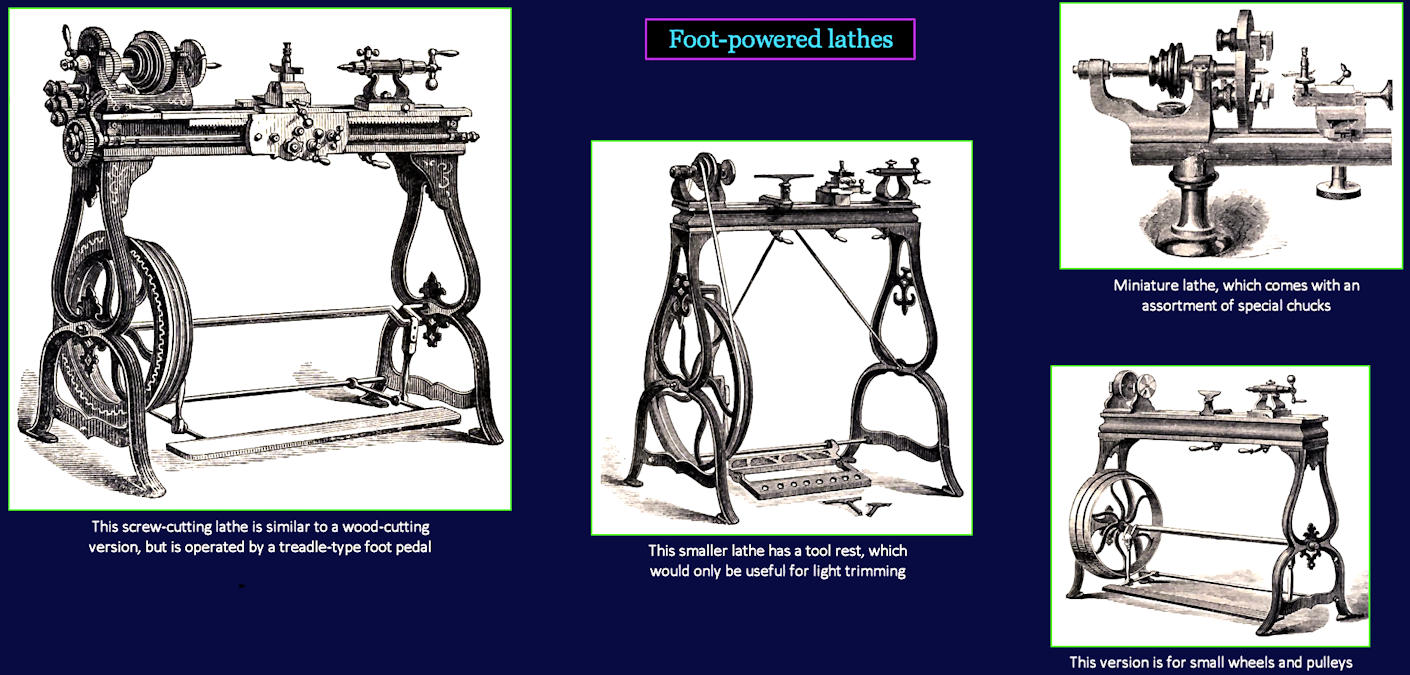
Turned Parts Many machines need shafts to provide the various motions required. Lathes are used to make precision shafts, and the pulleys that run on them. The models shown above are powered by foot treadles. | |||||||||
| |||||||||
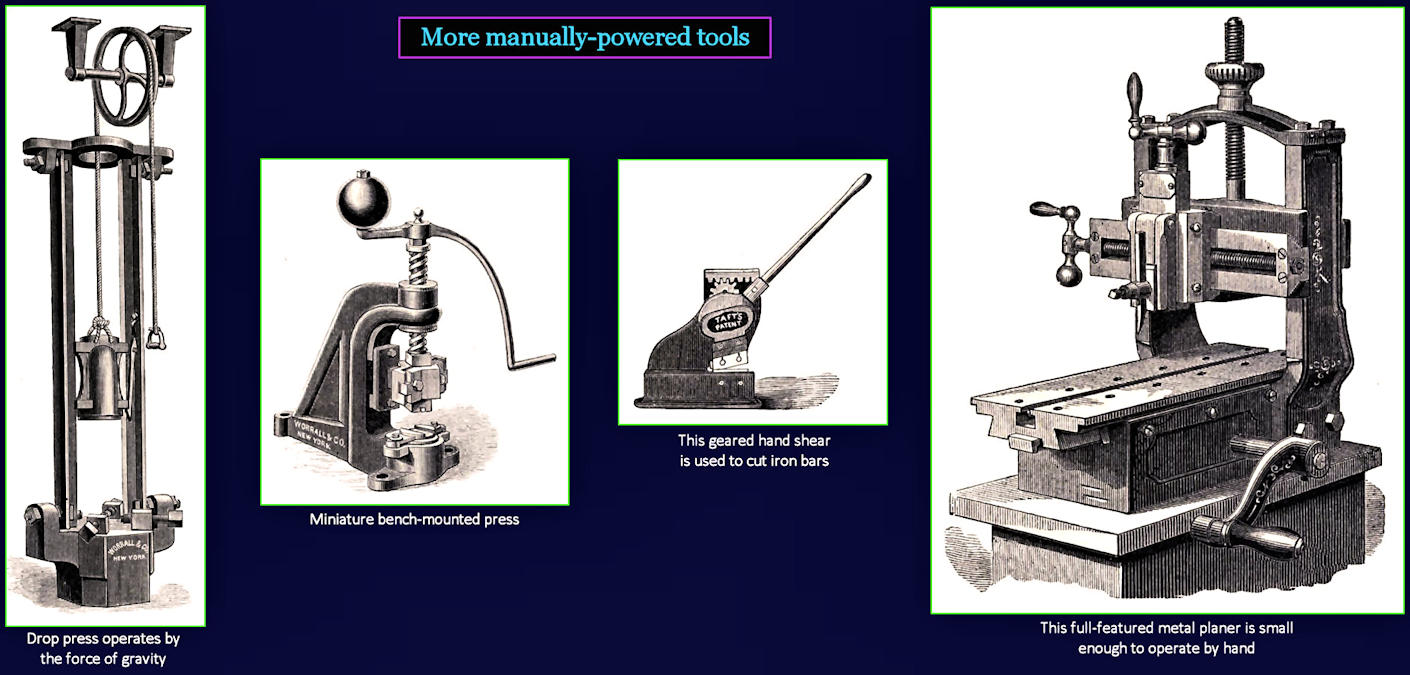
Shaping Tools Cast-iron parts take the shape of the mold, but parts made from wrought iron must be cut and shaped with special tools. Shears are used to cut bars and sheet metal, a task made easier if the stock is pre-heated. Presses and planers use brute force to shape or shave metal, using mechanical advantage to develop the necessary force. Tool bits have to be stronger than the material being worked, so they are made from the finest steel available, which is difficult to produce and thus in limited supply. | |||||||||
| |||||||||
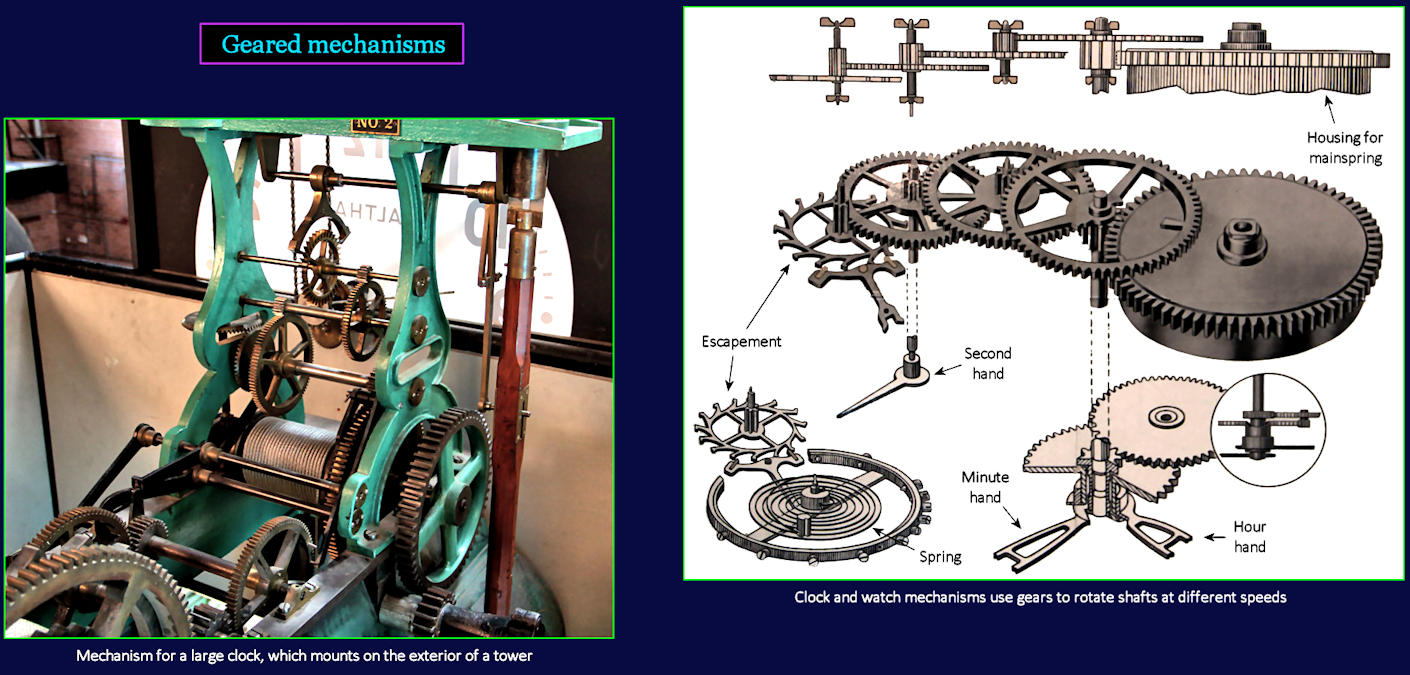
Transferring Motion Almost all equipment is driven by a single main shaft, powered either by a hand-crank, or a leather belt driven remotely by a steam engine or waterwheel. Any additional motion requires gears, which might be needed to drive secondary shafts, or to change the speed or direction of rotation. In the case of a watch, the input power is provided by the mainspring. The gears transfer this single motion to the various shafts, which turn the hands of the clock at different speeds. | |||||||||
| |||||||||
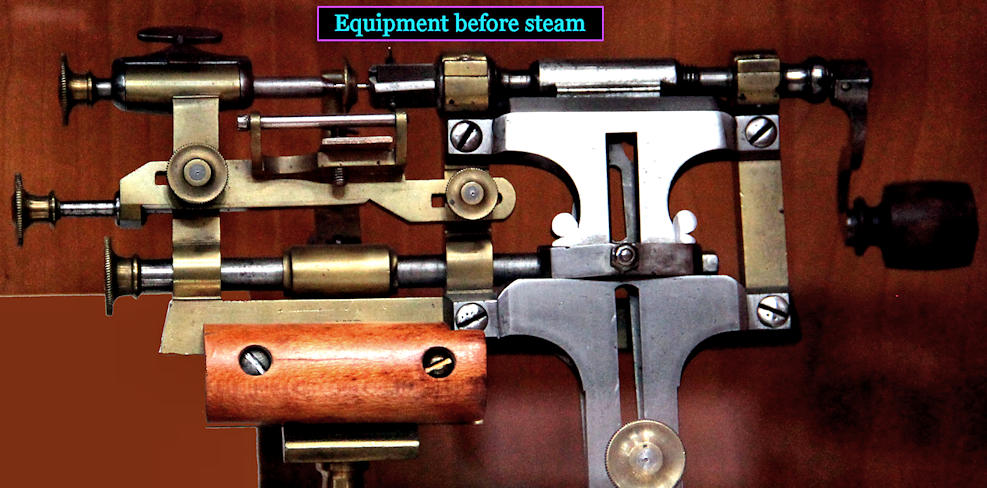
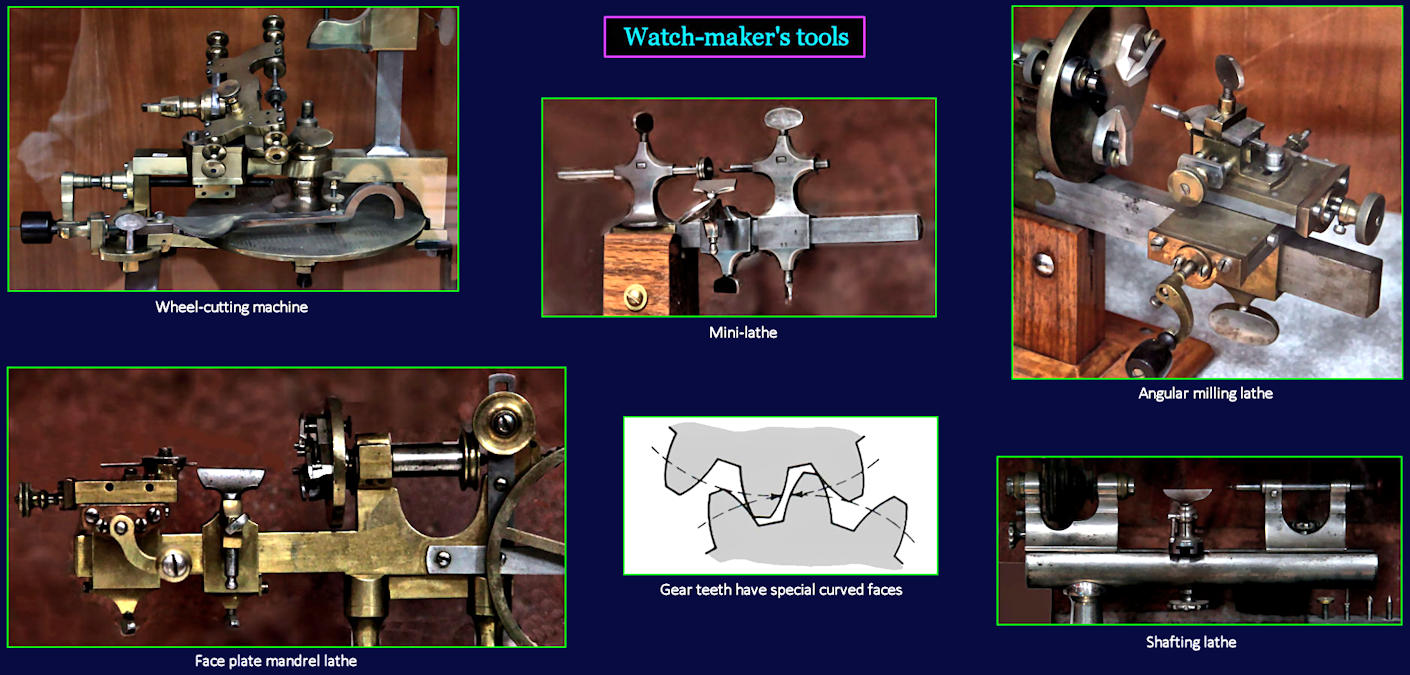
Exquisite Miniatures These small bench-mounted devices were all developed around mid-century to make parts for watches. Gears are particularly difficult to make, as the teeth require delicately-changing contours, to allow meshing with the least friction. The machines shown here are made mostly from wrought iron and brass. Brass is softer, and much easier to work. | |||||||||