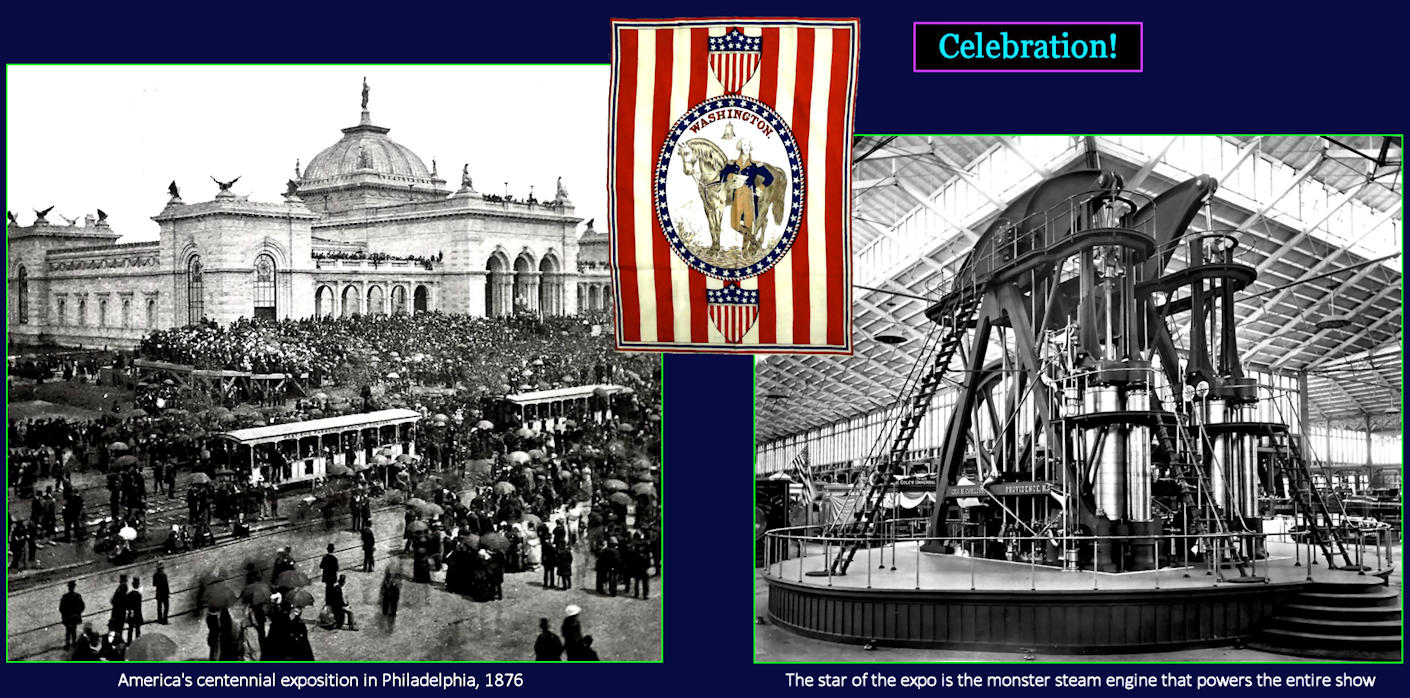
100th BirthdayThe middle of the 1800s witnessed the first two great World's Fairs. The first, in London, featured the amazing glass Crystal Palace. The Paris followed, organized around a great Palace of Industry, which displayed US-made Colt revolvers among the exhibits. When America's centennial arrived in 1876, Philadelphia launched a similarly triumphant festival. It showcased a great Machinery Hall. |
| ||||||||||||||||
| |||||||||
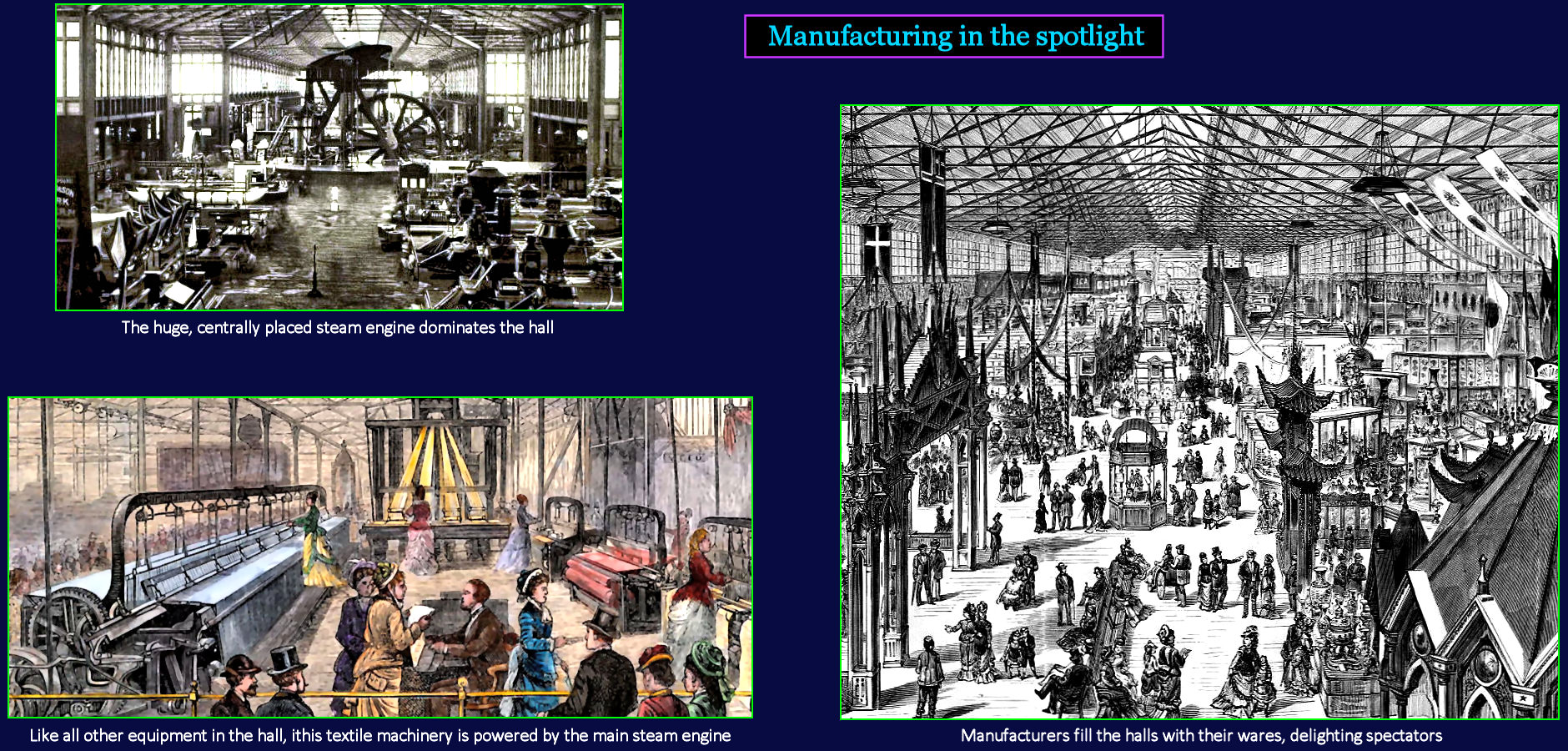
America's Finest There's plenty of machinery to fill the hall, including a whole row of locomotives and another of textile machinery. The mood is festive, as ordinary American's get their first look at the muscle behind the country's growth. | |||||||||
| |||||||||
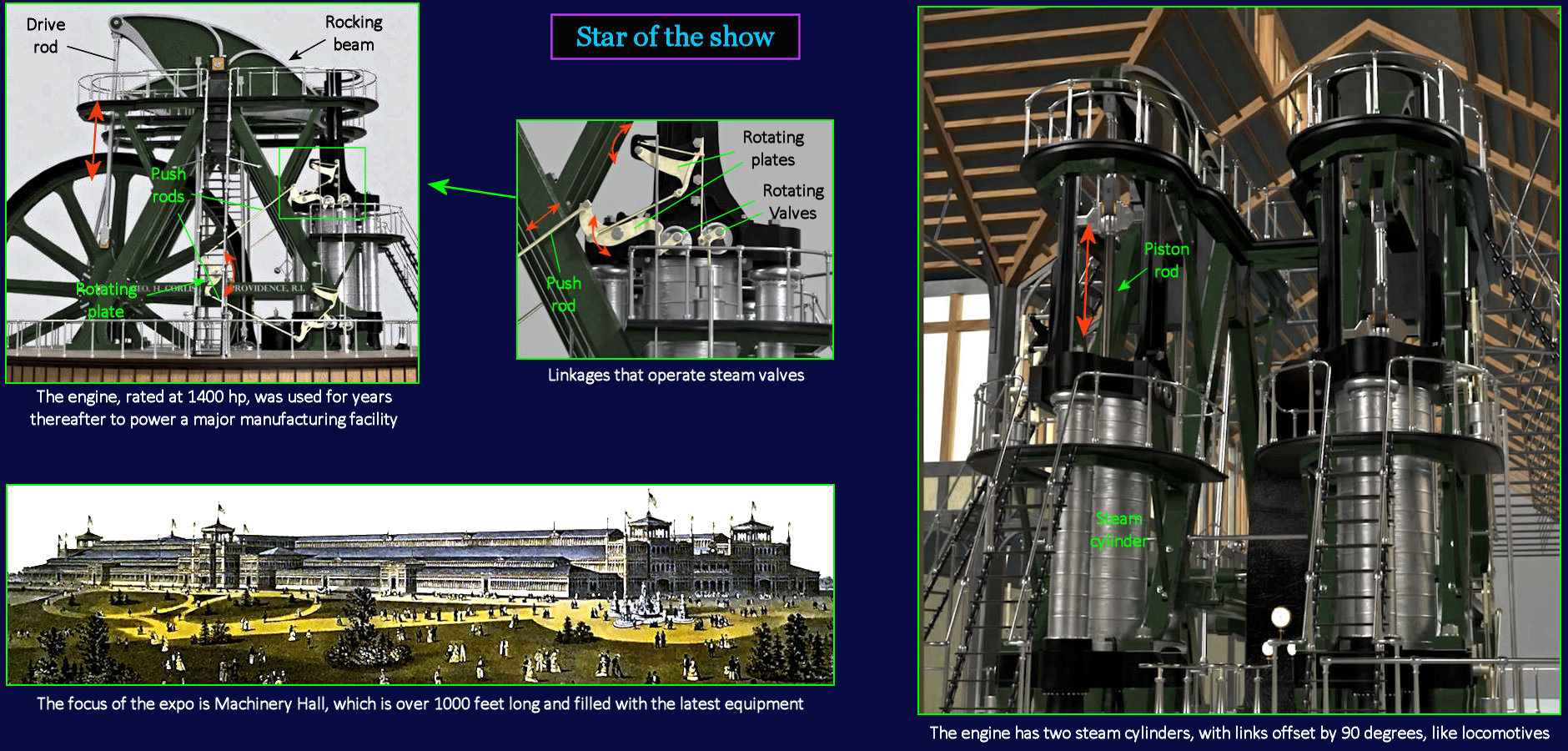
Rock Steady, but Silent It's difficult to believe that anything so powerful could operate in almost complete silence. The huff and puff common to steam locomotives is muffled by the below-ground condenser, allowing spent steam to exhaust noiselessly. Meanwhile, the mechanical linkages above ground are so precisely manufactured and lubricated, that the only audible sound is the soft swish of the mechanisms that regulate the cutoff of steam entering the cylinders. There is no detectable variation in engine speed, throughout the day. | |||||||||
| |||||||||
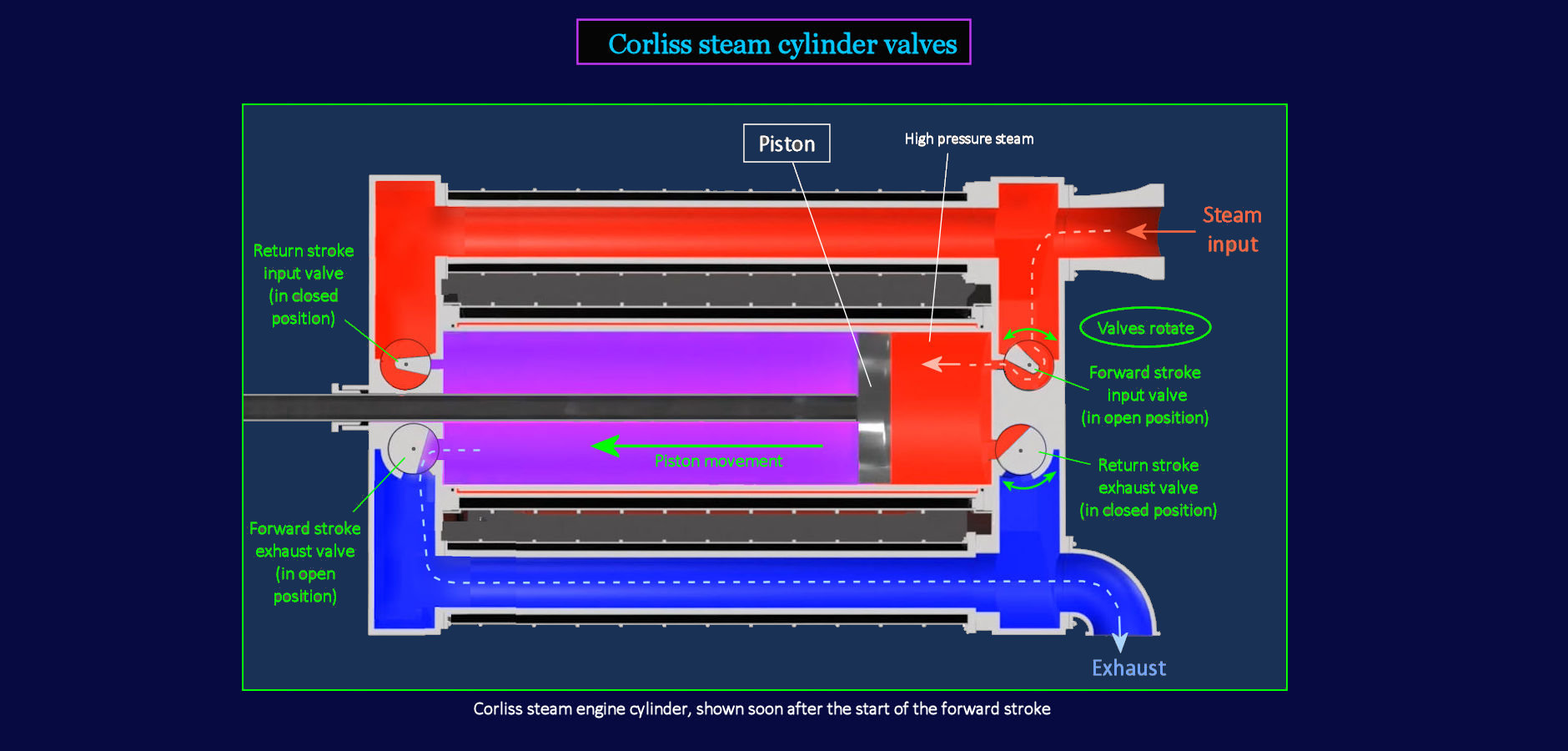
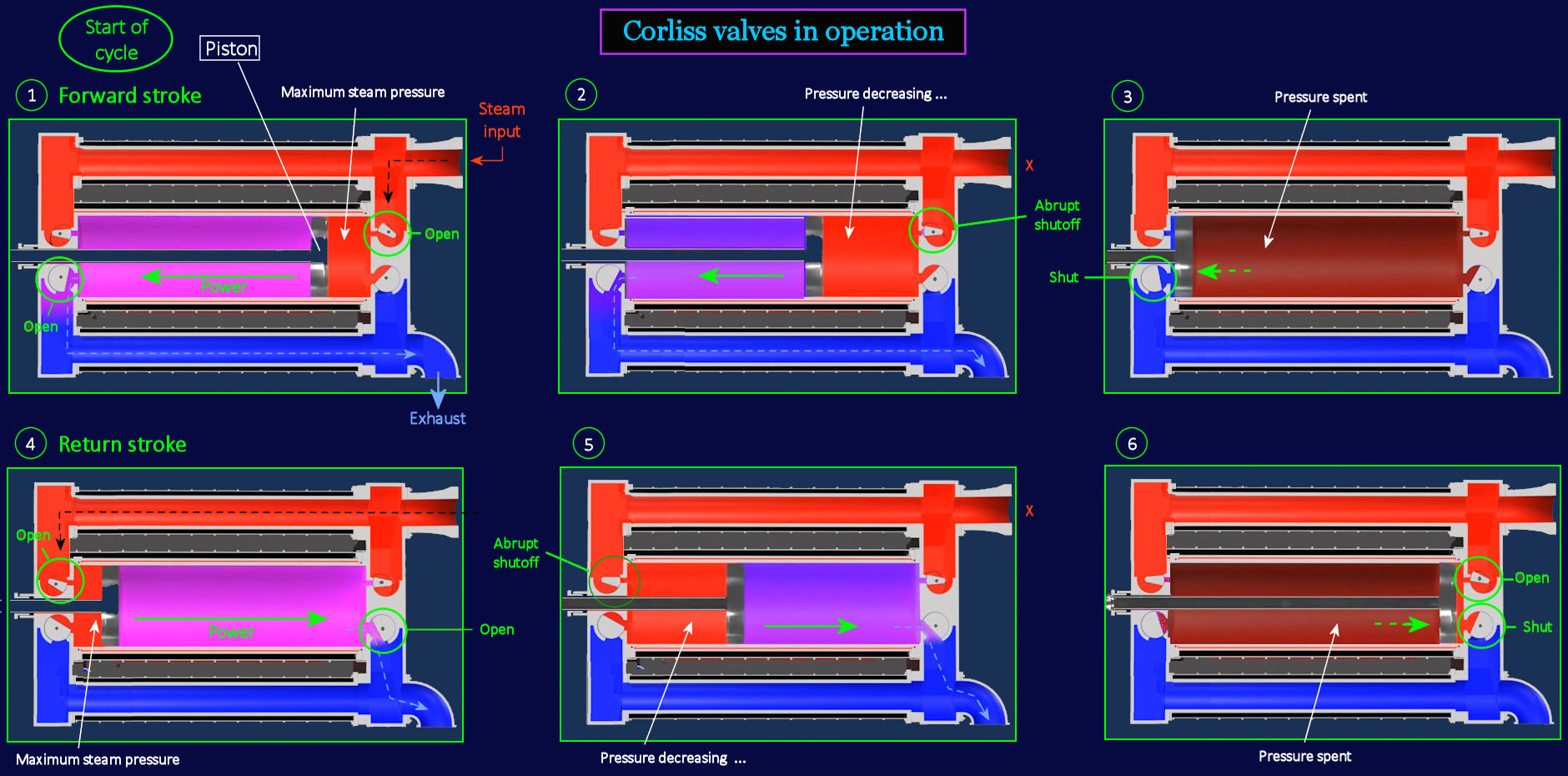
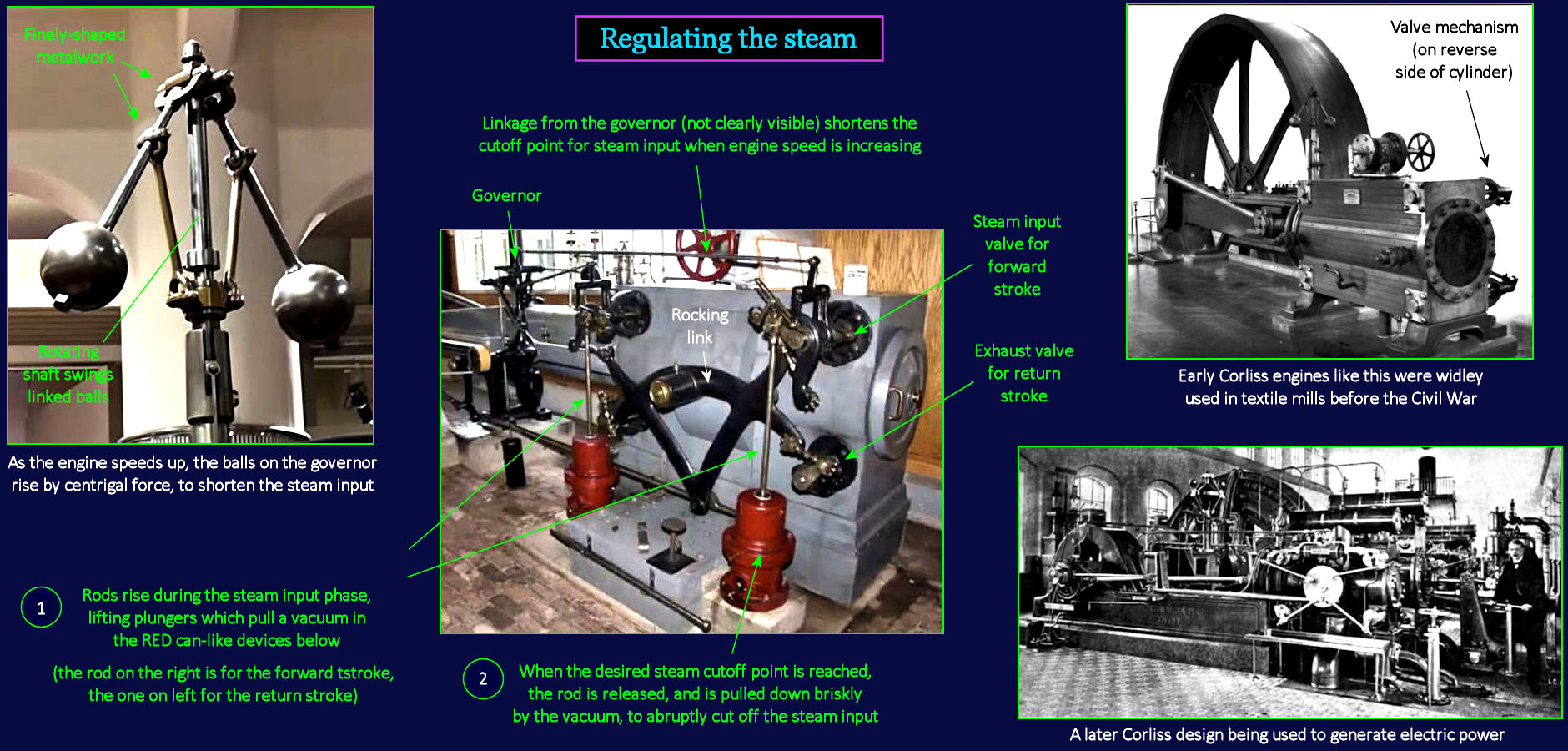
New Industry Standard The genius behind the design is George Corliss, and the 'Corliss' steam engine quickly replaces earlier designs still using the old sliding valve. Instead of just two ports, alternating between steam input and exhaust, the Corliss engine uses four, each precisely timed for most efficient usage of the steam power, and thus of fuel. The links connecting the speed governor to the valve actuators automatically varies the cutoff point for steam input, such that no extra steam is expended when the load is relatively light. | |||||||||
| |||||||||
Rotating Valves The valves on the Corliss steam cylinder ports are cylindrical, with a portion milled away to allow steam in or out, depending on the angular rotation of the valve. A special feature of the linkages which rotate the valves is the ability to shut off the input steam almost instantaneously, when sufficient steam is already in the cylinder. This is somewhat before the piston has travelled even half of its maximum stroke, allowing the steam to continue expanding (and the piston to continue driving) until no energy remains. | |||||||||
| |||||||||
Maximizing Efficiency The photo at top center is a somewhat later Corliss design, with most of the linkages being replaced by a single iron casting, which rocks slightly back an forth as the engine works (large black V-shaped piece in the center of the photo). The design of such linkages continues to evolve over time, but the main action doesn't. In each case, steam input is cut off abruptly at the optimum point, to maintain constant engine speed regardless of changing loads. The governor regulates the varying cutoff point. | |||||||||