| |
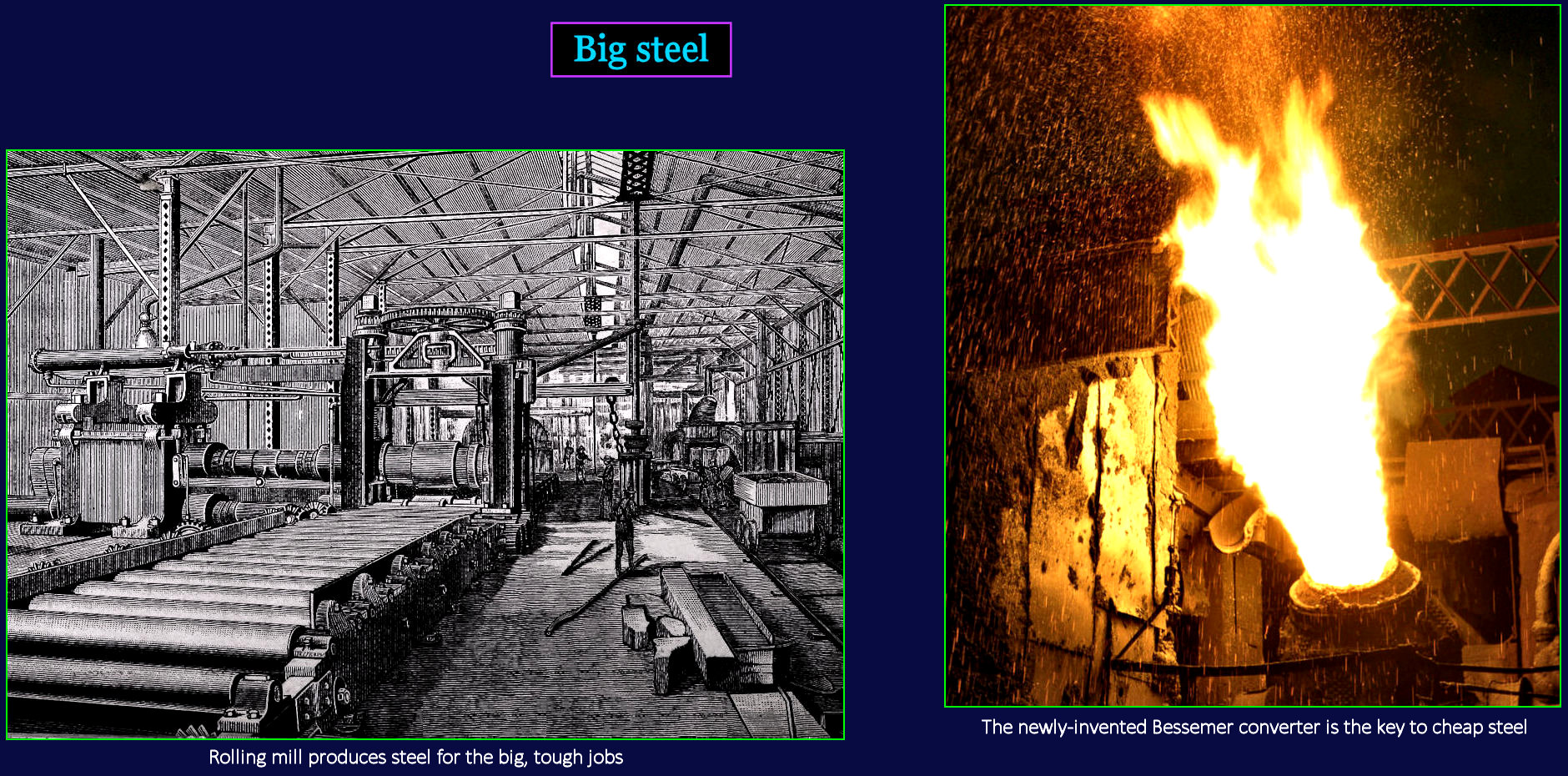
Fast and Cheap Iron ore is melted in a blast furnace by mixing it with a large amount of coal, as fuel, which raises the carbon content of the iron. This carbon must be reduced by secondary processing, which used to take all day in a much smaller furnace. The Bessemer converter (top right) achieves the same result by blasting air from the bottom of a huge cauldron full of liquid iron, quickly burning away the carbon in a great tongue of flame. |
| |||||||||
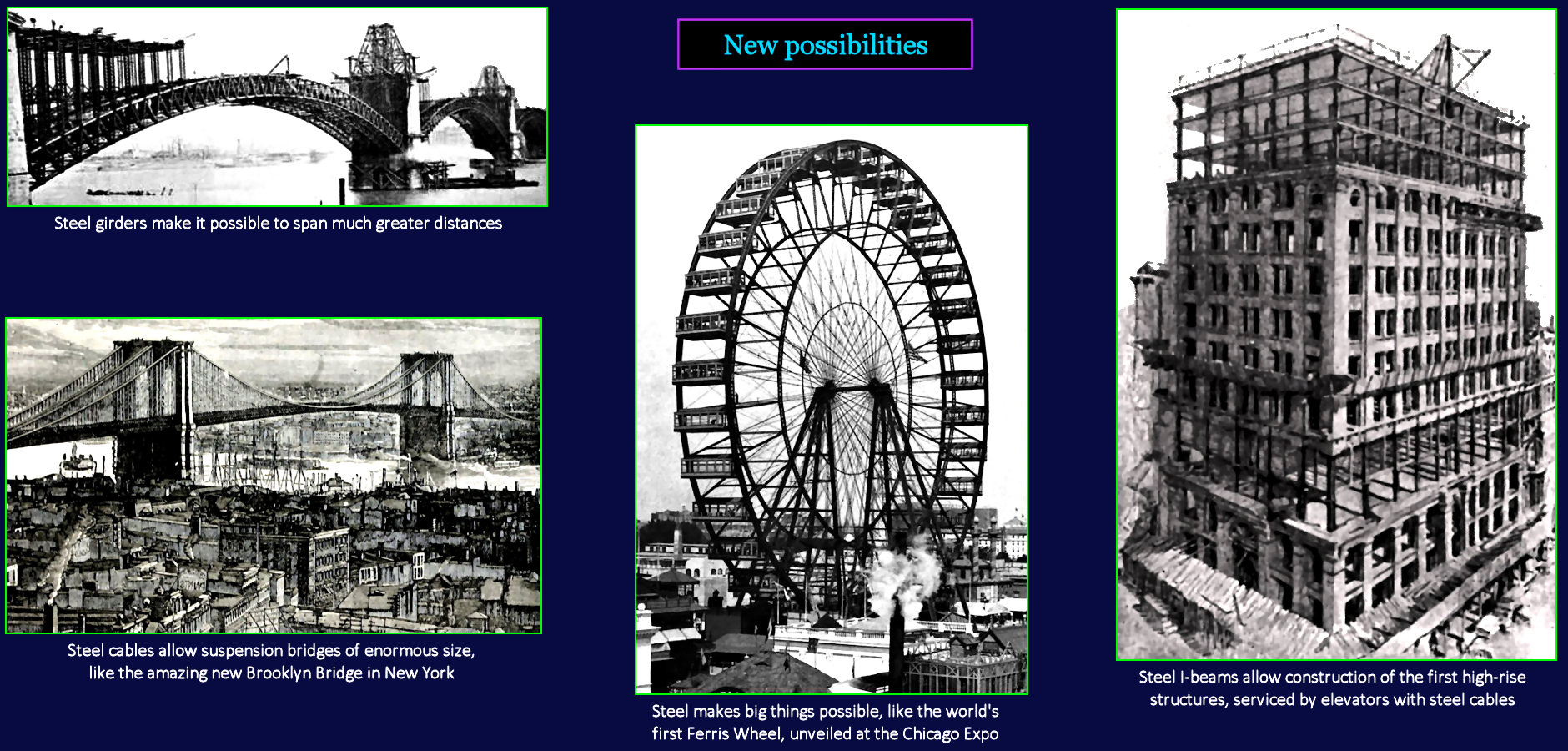
Superior Strength Steel is stronger and tougher than even the best wrought iron. This makes possible bridge spans which are half again longer than previously attempted, such as the new bridge over the Mississippi at St Louis (top left). Steel cable is used for the Brooklyn Bridge (lower left), but also for the Ferris Wheel. The new steam elevator, with its steel cable, will soon allow buildings to be built 20 stories high, with steel beams taking the load off masonry facades. | |||||||||
| |||||||||
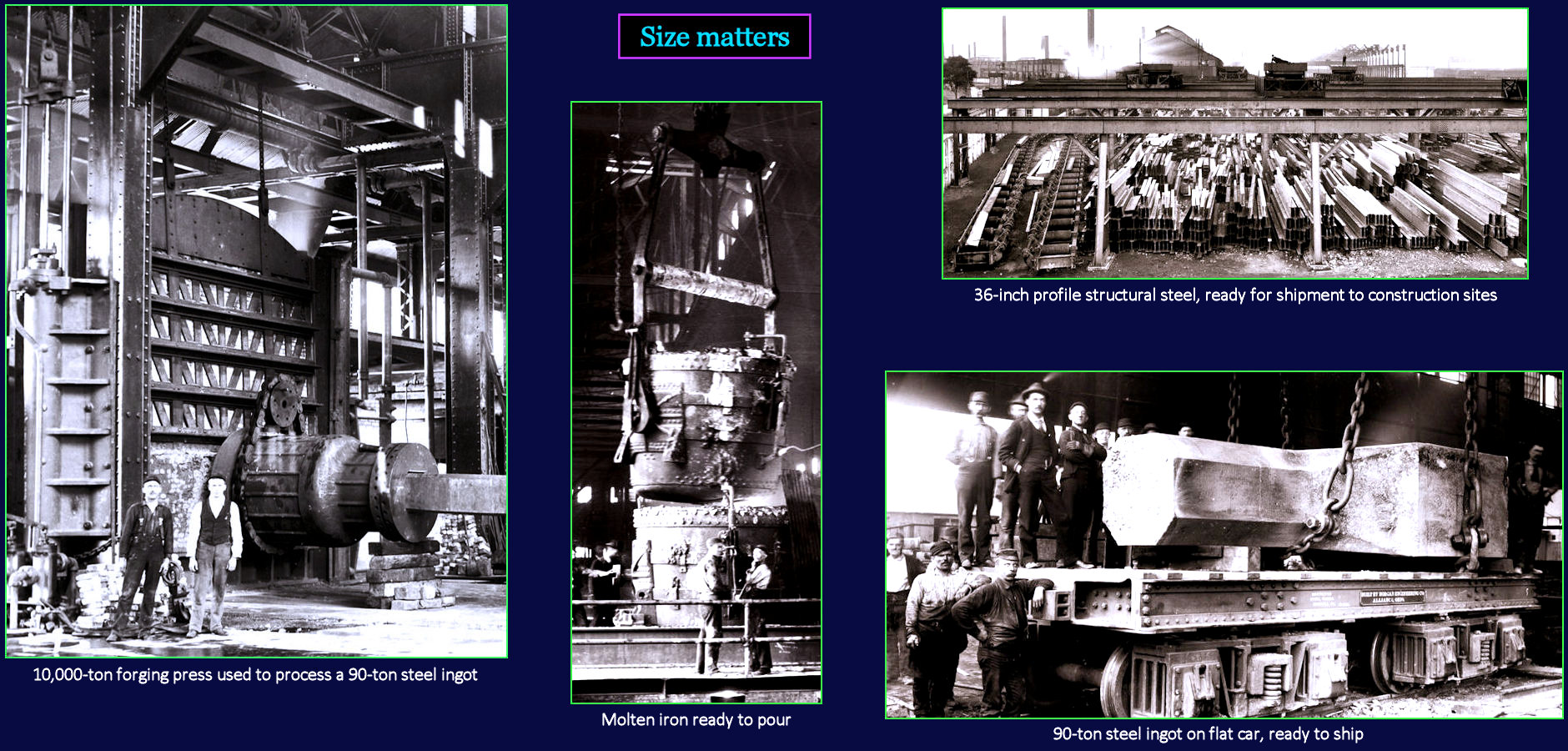
Gigantism Everything, it seems, is now astonishingly oversized, from the equipment used to process steel to the size of steel girders and ingots. The two stone towers that support the cables of the Brooklyn Bridge are, by far, the tallest structures in America. | |||||||||
| |||||||||
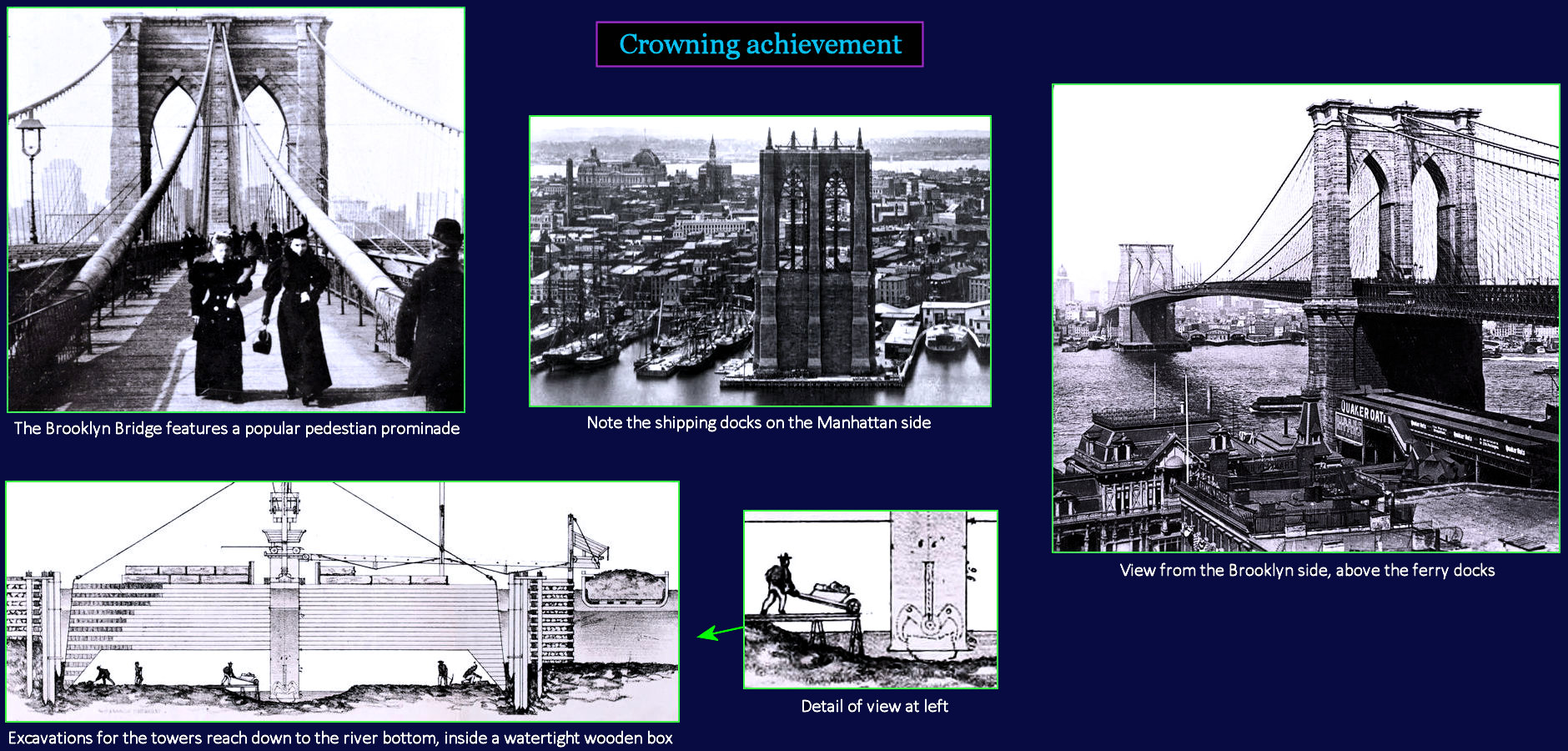
Masterpiece The Brooklyn Bridge epitomizes the can-do spirit of the age. The main deck is designed for trains, and is suspended so high that fully-rigged ships can pass beneath. Earlier suspension bridges over the Ohio River, using wrought iron cable, look almost tiny by comparison. The project is so daring and controversial that it takes 13 years to complete, built by the son of the original designer, who died shortly before construction began. When the son was also injured on the job, his wife helped him finish. | |||||||||
| |||||||||
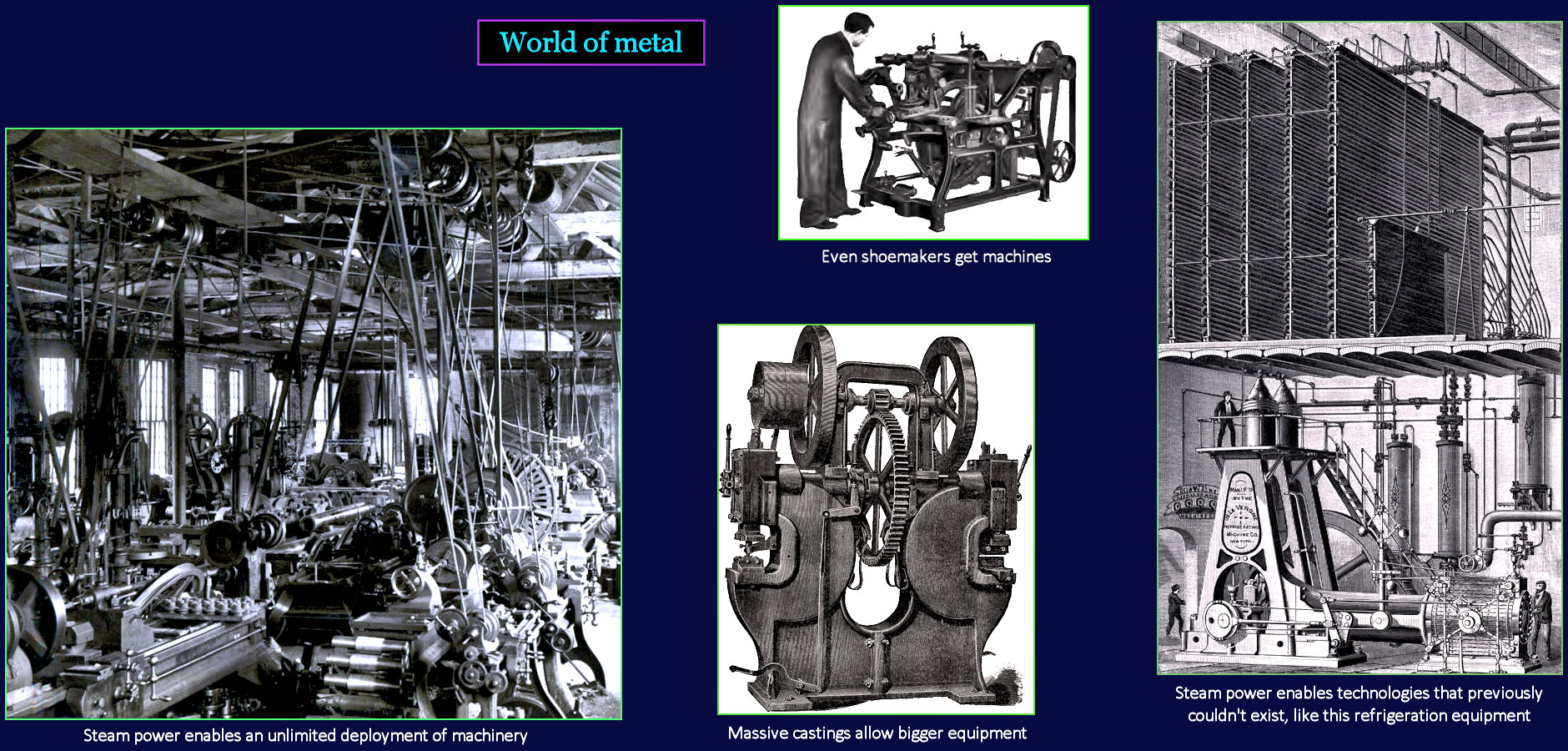
Metal and Steam Parts made from steel are incorporated into the design of all kinds of equipment. Steel cutting bits are required to cut the softer wrought iron, which continues to be used in large quantities. | |||||||||
| |||||||||
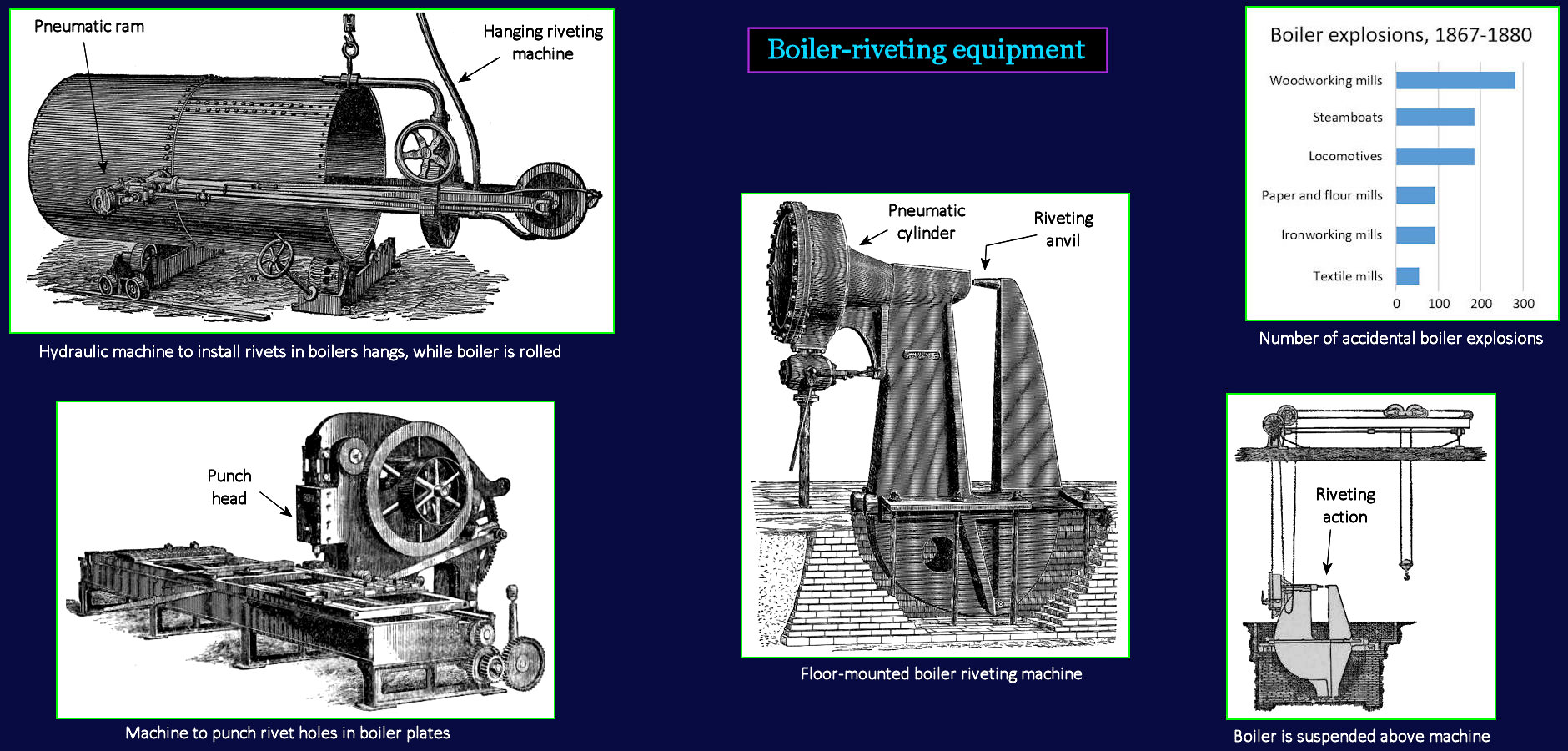
Bigger boilers Manufacturers continue to rely on steam boilers to power their equipment. Boiler enclosures increase in size, while rivets remain essential for joining the pieces of curved boiler plate. Rivets are now set using pneumatic rams, powered by steam. The trick is to suspend the partially-finished boiler from above, while the riveting continues. The tube is rotated to get the best access to each row of rivets, while the riveter itself remains largely or completely stationary. | |||||||||