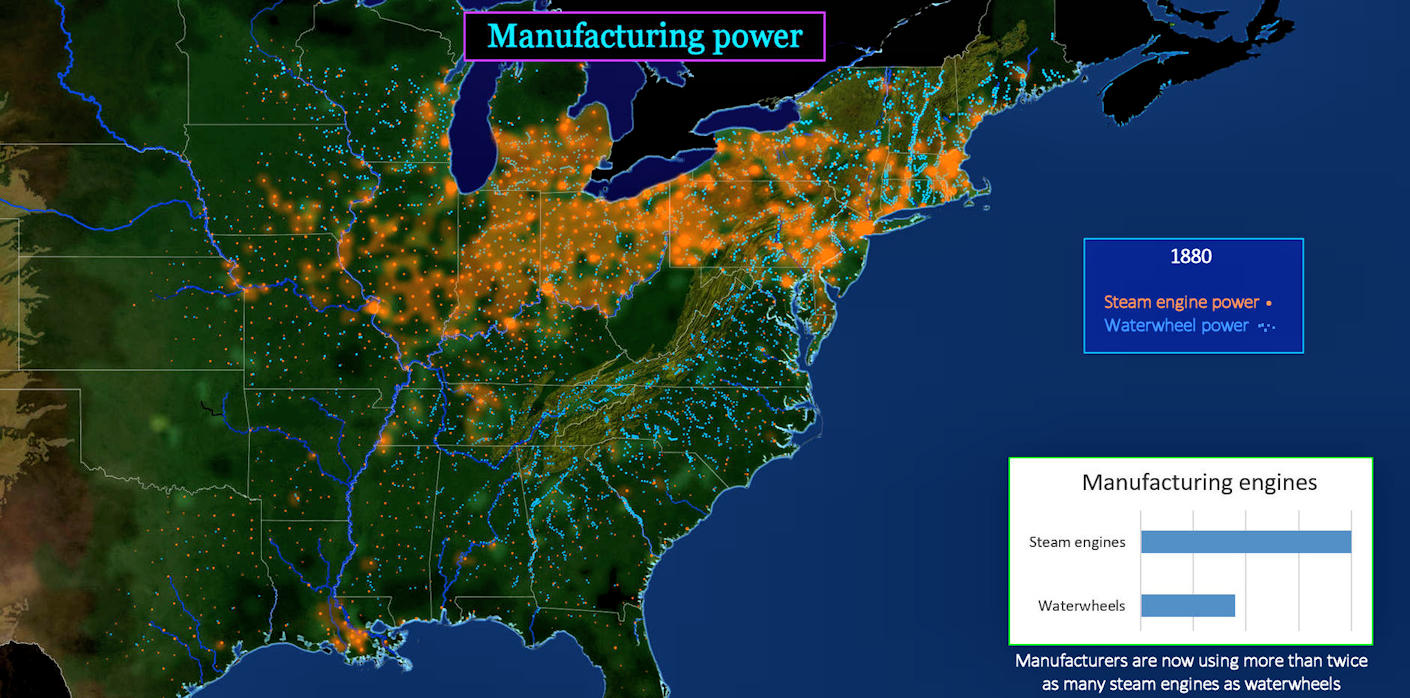
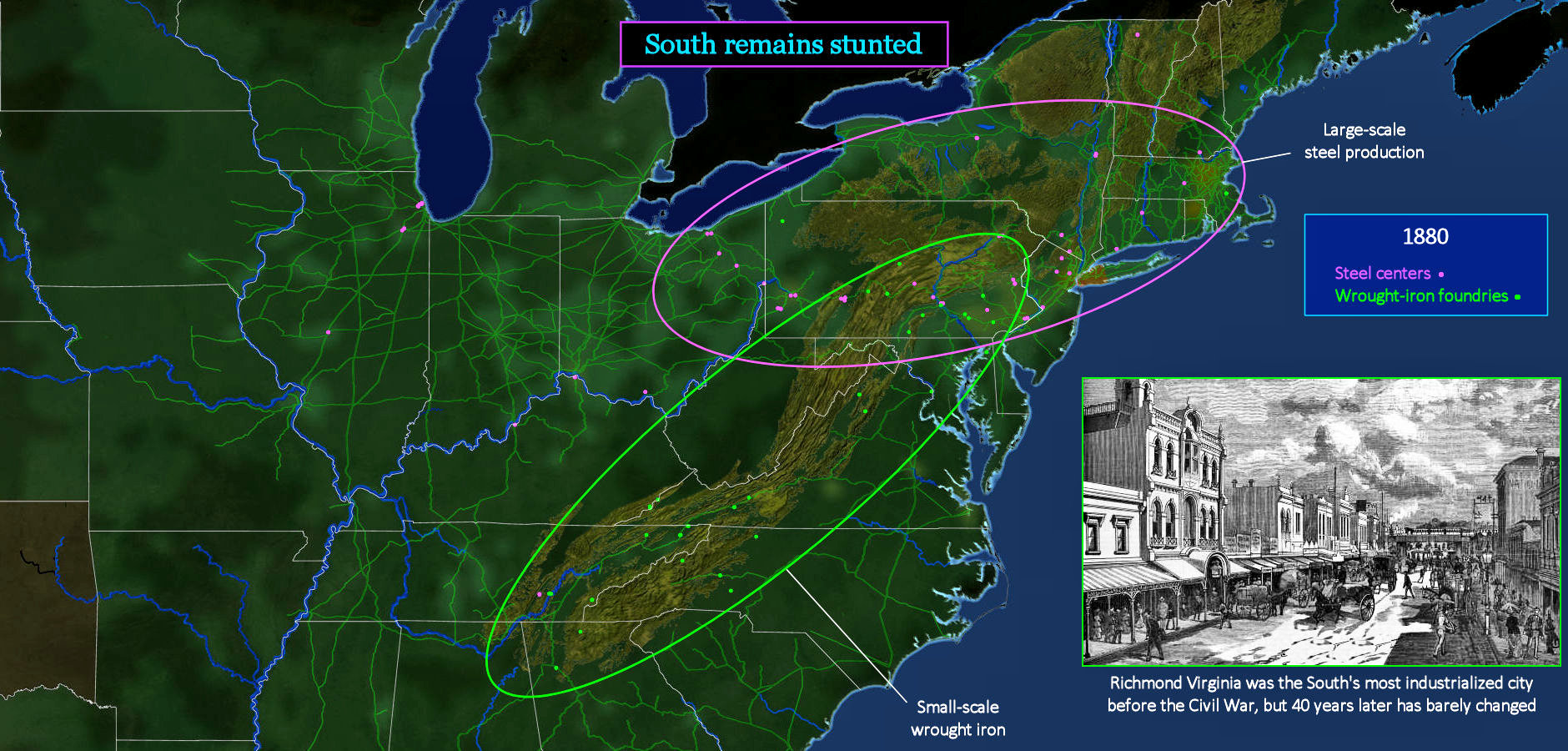
North and SouthThe Civil War absolutely crushed the South, largely because the freeing of black slaves had destroyed Southern wealth. Plantation owners were stuck with debt used to purchase slaves in the past. The slaves were gone, but not the debt. This leaves Southerners without investment capital to modernize, so they stick with water power. |
| ||||||||||||||||
| |||||||||
Living in the Past The map above illustrates the problem the South continues to struggle with, trying to move forward after the desolation of the Civil War. With so little free capital, big new iron and steel facilities simply cannot be financed. Consequently, the region plods forward with partial reliance on small pre-war foundries, producing small batches of wrought iron the old hard way. In other regions, this technology has mostly been abandoned. | |||||||||
| |||||||||
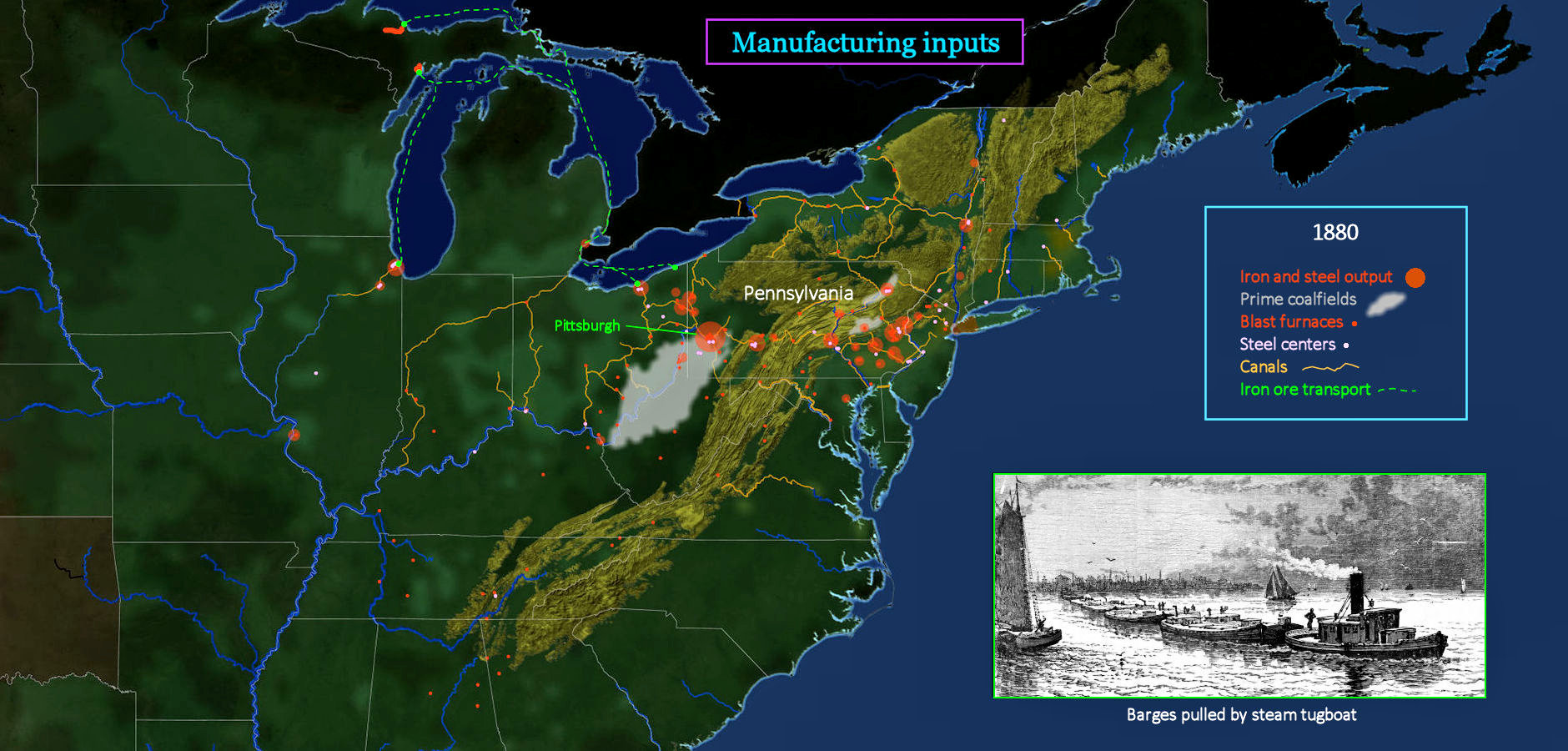
The Front End Industrial activity of all kinds requires iron and coal in huge amounts. The map above shows that iron production (in RED) is heavily concentrated in a single state. Pennsylvania. Pittsburgh is the center of this activity west of the Appalachian Mountains, while the region lying east of the mountains hosts most of the rest. Iron ore is coming increasingly from upper Michigan, by ore boat (GREEN dotted lines), while coal is most easily transported by barge. Note how many blast furnaces lie on canal routes (ORANGE). | |||||||||
| |||||||||
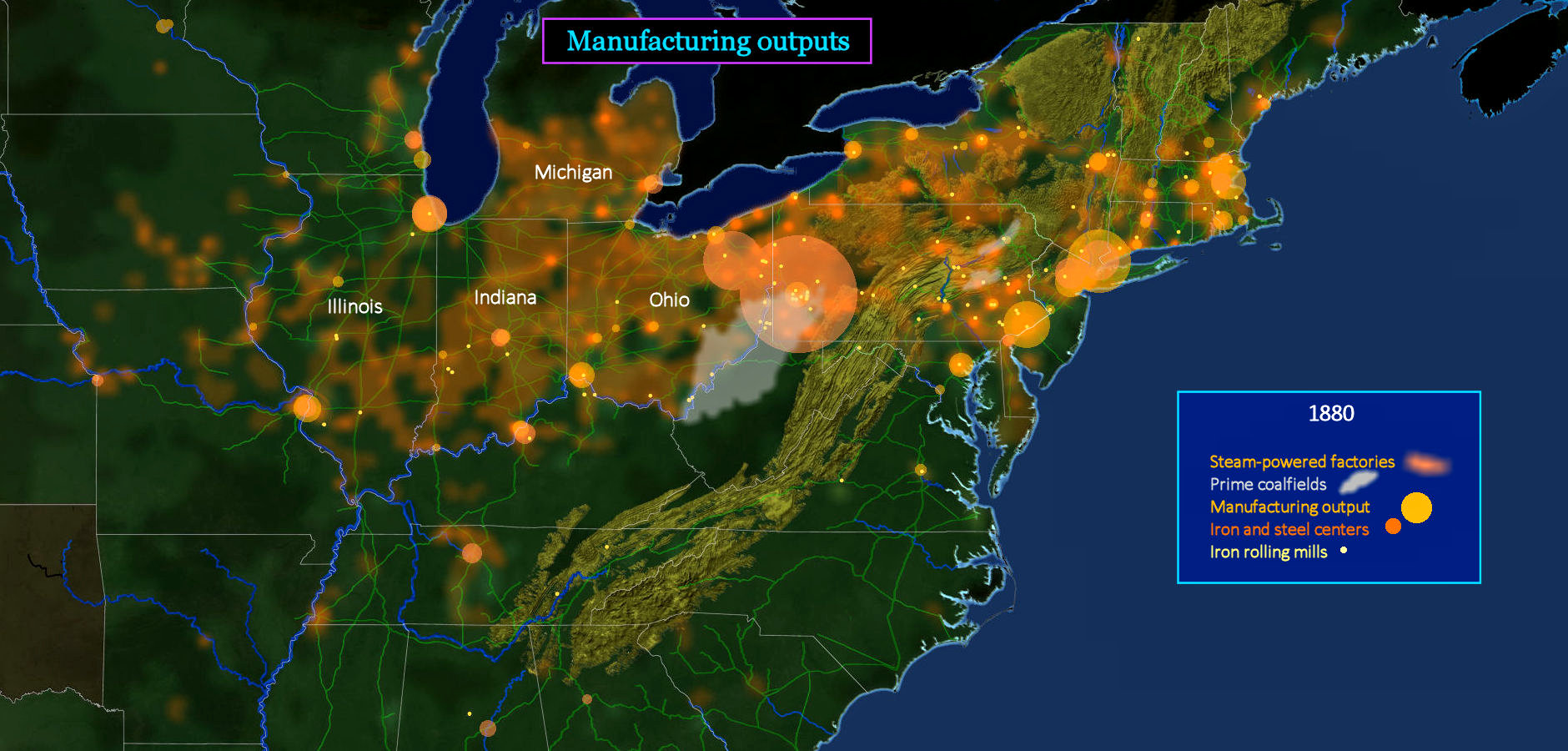
Shifting Center of Activity Manufacturers are the users of all that metal, relying heavily on rail transport (rather than vessels) to receive material and ship products. Whereas iron production is centered in Pennsylvania, manufacturing is expanding fastest west of the mountains, where population is growing most rapidly. This region also enjoys good access to coal, which fuels the nation's 100,000 steam boilers (an impressive number). Also important are the big rolling mills (YELLOW dots), where factories get their iron and steel. | |||||||||
| |||||||||
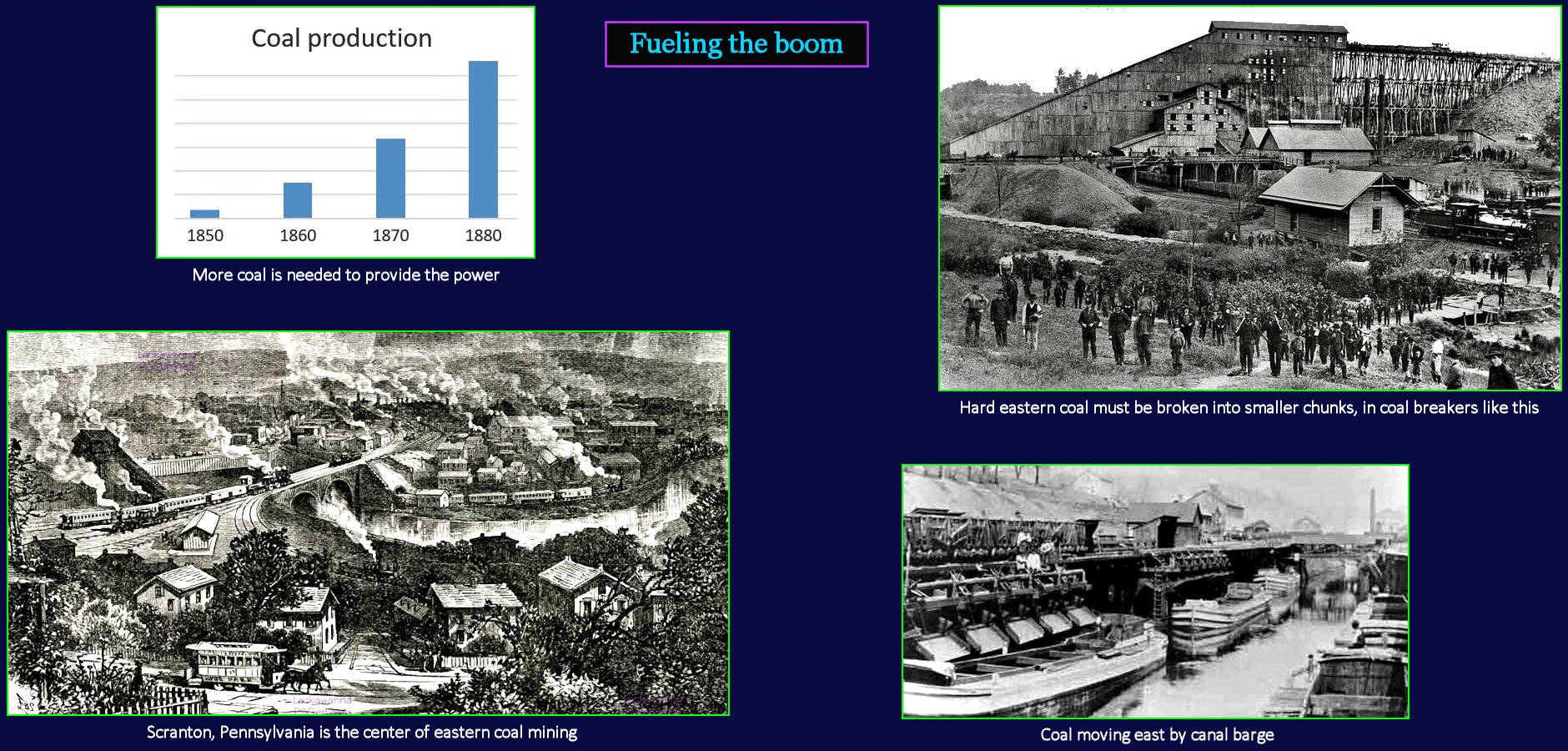
Boiler Fuel While coal is largely responsible for the steep rise in iron and steel production, the vast bulk of coal deliveries are to manufacturers, to keep steam boilers fueled. Large river barges remain important for Pittsburgh, which receives much of its coal by water, but elsewhere canals remain important. Coal is a bulk item, like corn and wheat, which can be transported in large quantities most efficiently by barges, which are simple to load and unload. | |||||||||
| |||||||||
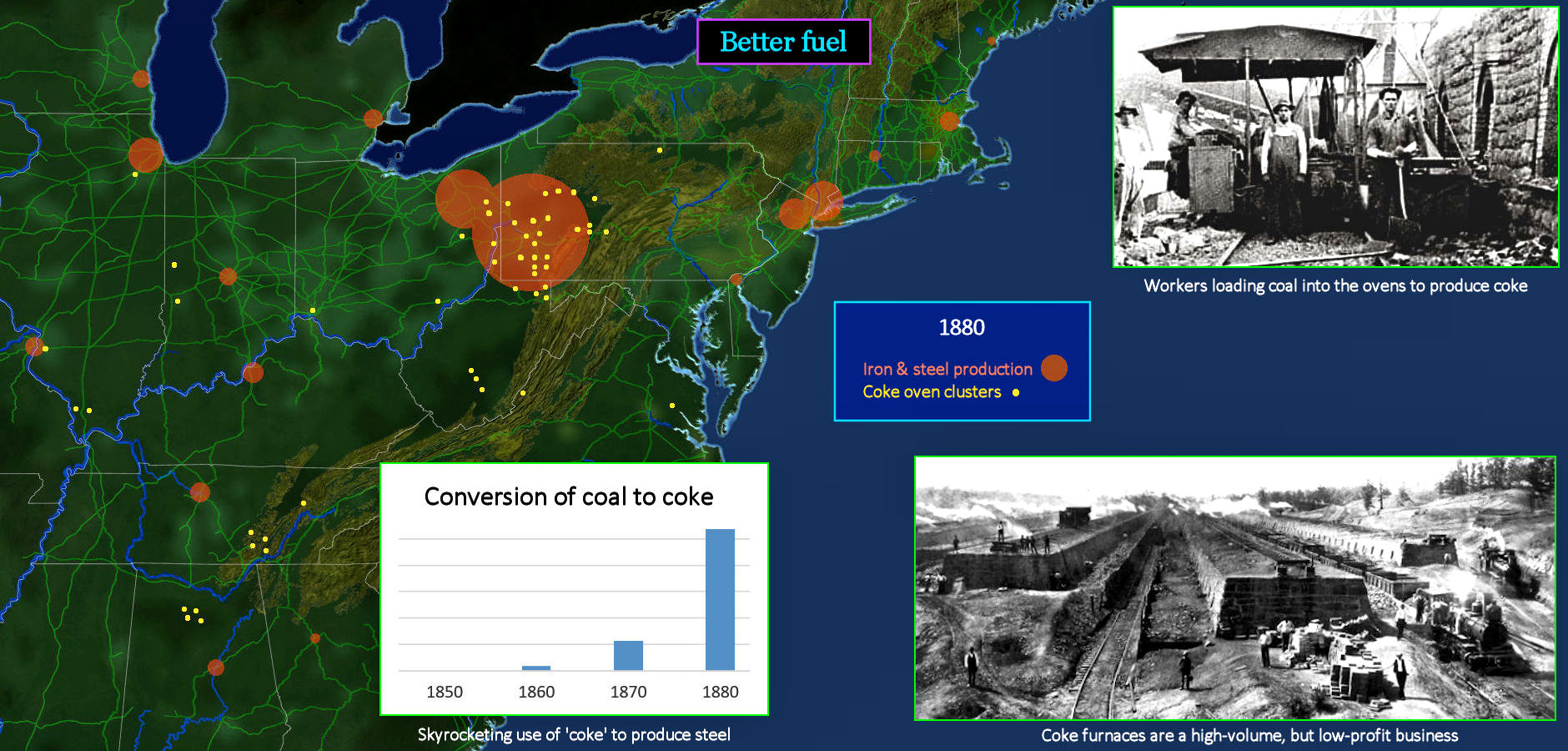
Coal Conversion Just as charcoal can be made from wood, using a smoldering process that transforms it into almost pure carbon, coal can be purified in a similar manner. Beginning around 1880, great numbers of new kilns are built to turn dirty coal into its most pure form, known as coke, using long rows of brick kilns. Exhaust from the kilns slowly kills all surrounding vegetation, but coke quickly becomes the preferred fuel for steel-making, because of its high purity. | |||||||||