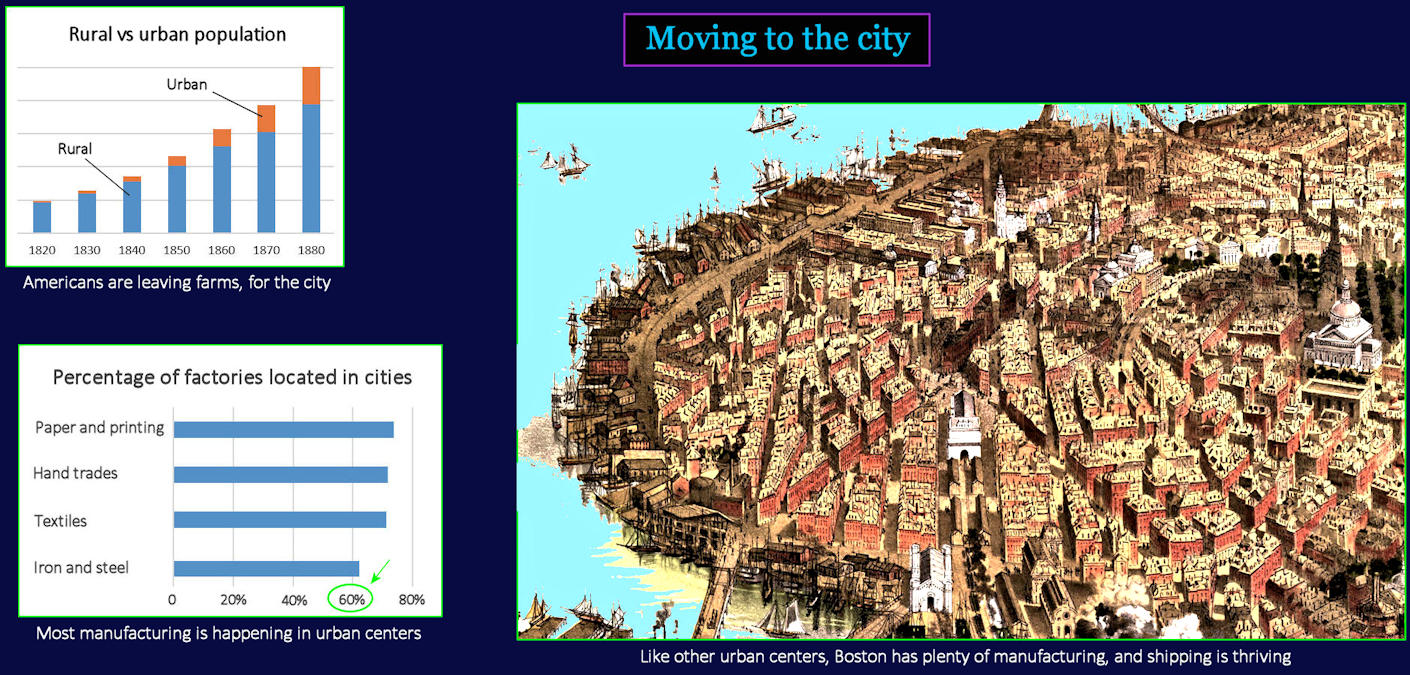
Rural and UrbanAs railroads continue to work westward, many rural families decide to pick up roots and head west, to make a fresh start. But an increasing number head to the big city, instead. Urban centers are now closer than ever, with the fresh lure of manufacturing jobs. |
| ||||||||||||||||
| |||||||||
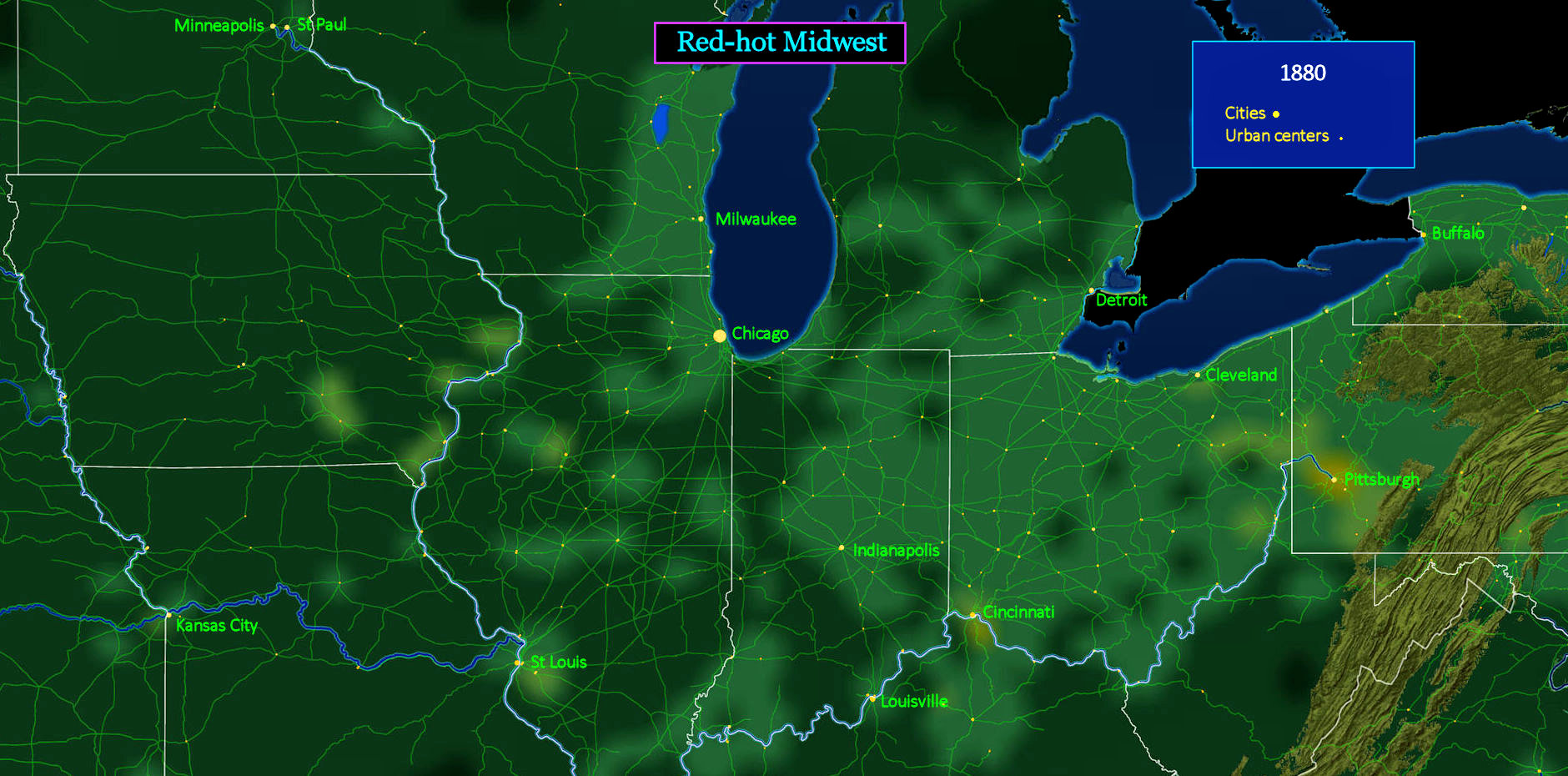
Railroads Driving Growth The yellow dots above mark emerging urban centers, which all have rail connections. At the same time, the availability of new land is luring many farming families west, which in 1880 means what we now call the Midwest. Thanks to federal government giveaways, good farming land is dirt cheap, made conveniently available by agents in the employ of the railroads. Thus, the Midwest has dual engines of growth, one manufacturing and the other agricultural. Both are driven by railroads. | |||||||||
| |||||||||
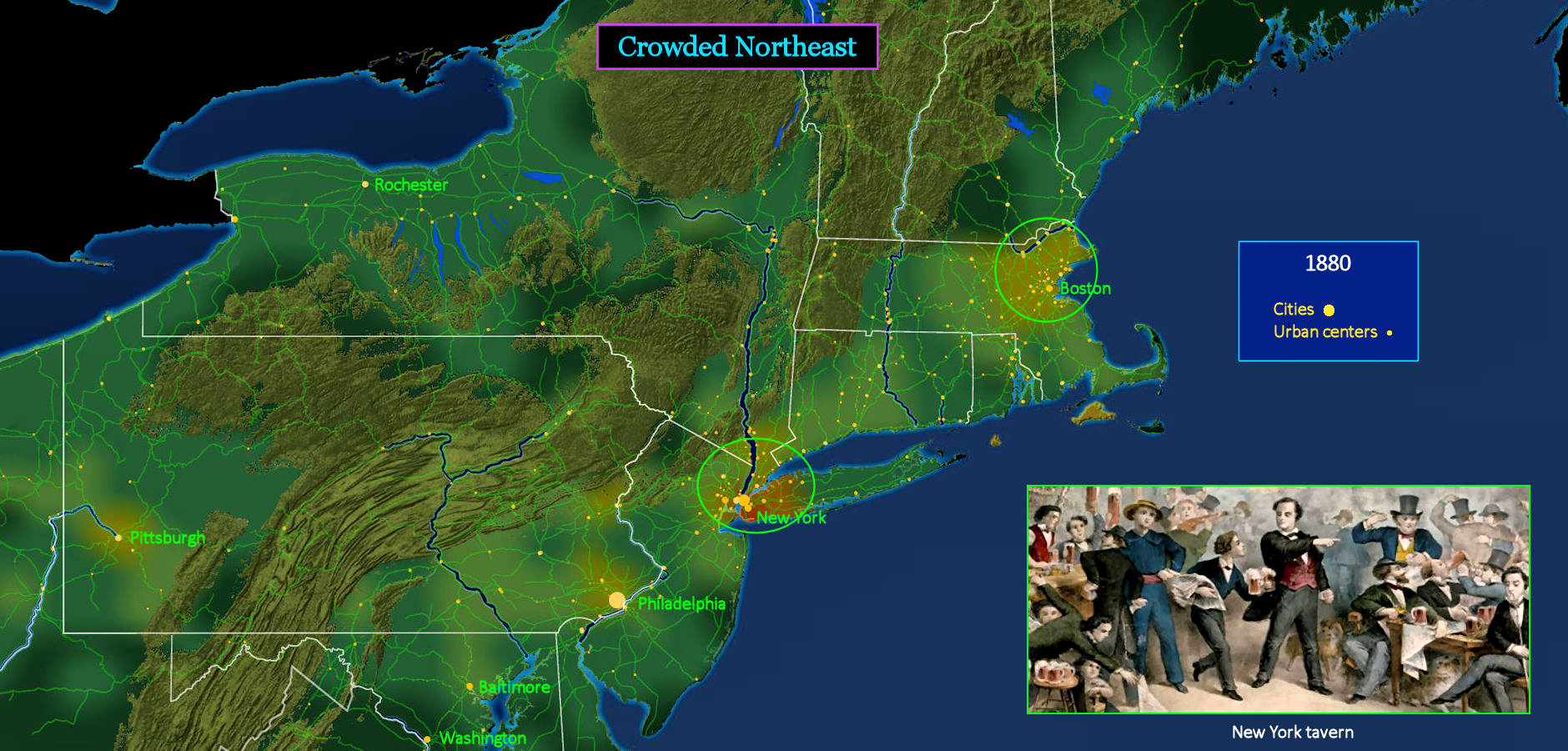
Less Room for Growth The map above shows that the Northeast has an even greater level of urban growth. The regions surrounding Boston and New York are filled with yellow dots quickly becoming larger. But the lure of cheap land is almost entirely absent. Farming is notoriously marginal in the stony New England soil, while mountains take up most of the remaining acreage. Without the boost of rapidly rising land values, the center of manufacturing activity has now moved west, with the railroads. | |||||||||
| |||||||||
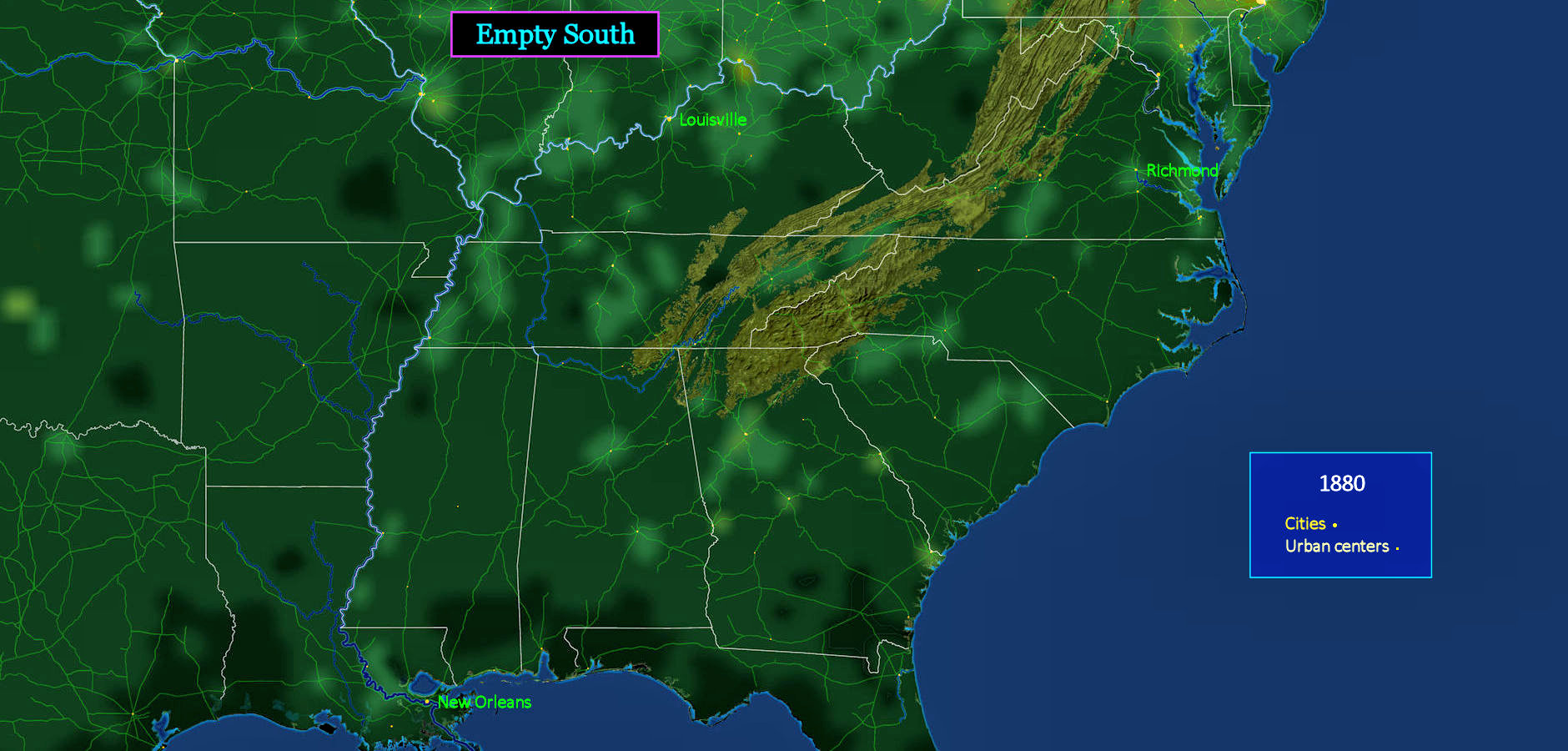
Lonely and Depressed By contrast, the South is barely even alive. In a region that historically had few towns, and even fewer cities, there is no base upon which to grow. Right up to the Civil War, the entire Southern economy was based on a single industry. Plantation farming. Most of the South's manufacturing activity was located in a single city, Richmond. After the war, cotton remains the biggest export product, by far, but the large slave-driven plantations are gone. Richmond itself barely shows up on the map above. | |||||||||
| |||||||||
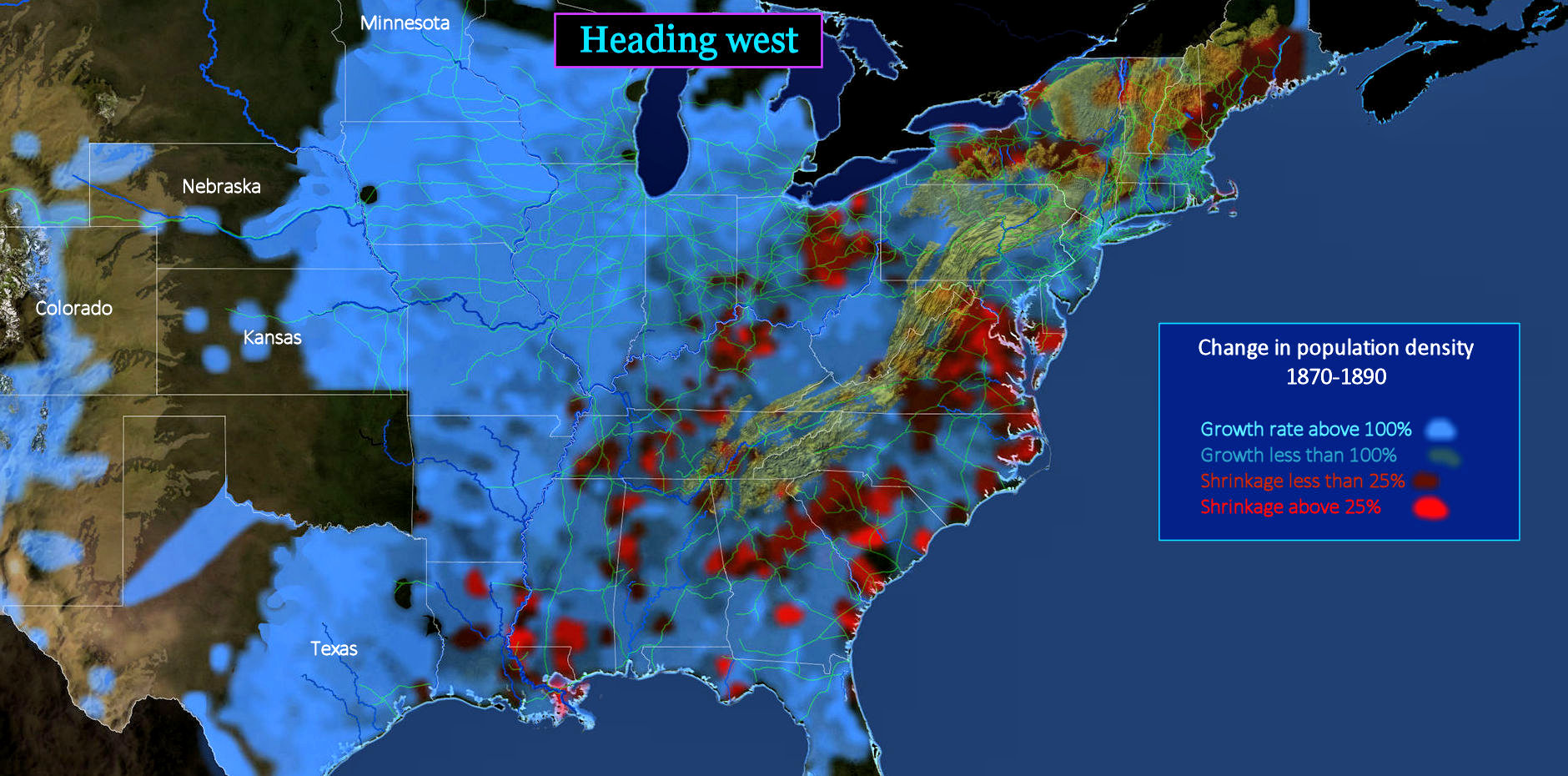
Dramatic Population Shift All the factors previously discussed result in the map above, showing changes in population density from 1870 to 1890, during which overall US population grew by a breathtaking 65%. Meanwhile the region shown above in BRIGHT BLUE grew even faster, approaching 300% in sparsely populated regions at the far western frontier. Amazingly, however, the regions shown in RED actually shrank, despite the surge in national population. Regions in BRIGHT RED indicate counties that shrank more than 25%. Ouch. | |||||||||
| |||||||||
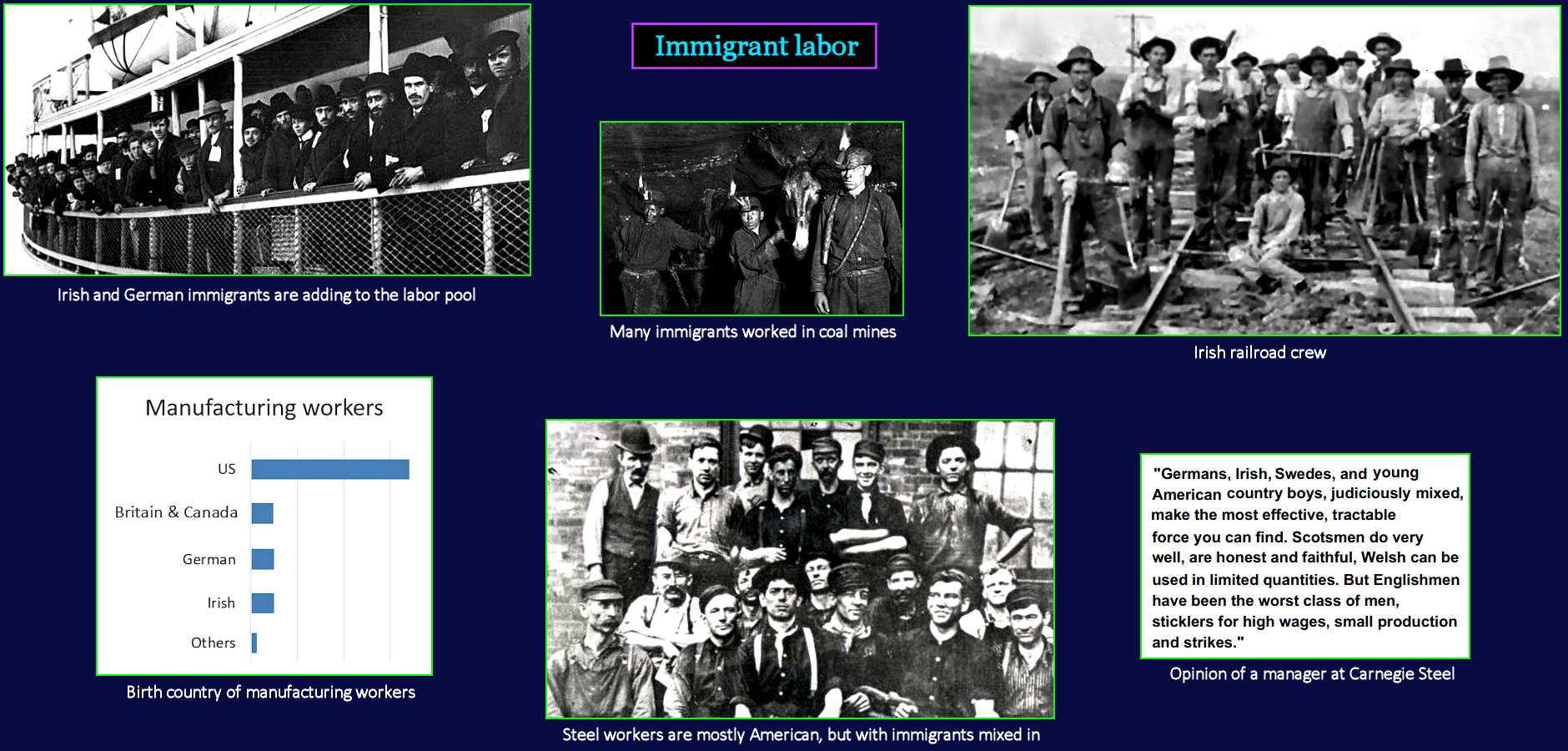
Northern Phenomenon Rural areas offer few actual paying jobs, outside textile mills. Urban areas, by contrast, have a voracious need for new manufacturing labor. As luck would have it, this is the very period when fresh immigration from Northern Europe spikes again dramatically, especially from Germany and Ireland. Famine and war in Europe are largely responsible for the new influx, but it couldn't come at a more opportune moment. Northern railroads, manufacturers and mine operators eagerly soak up the excess manpower. | |||||||||