| |||||||||
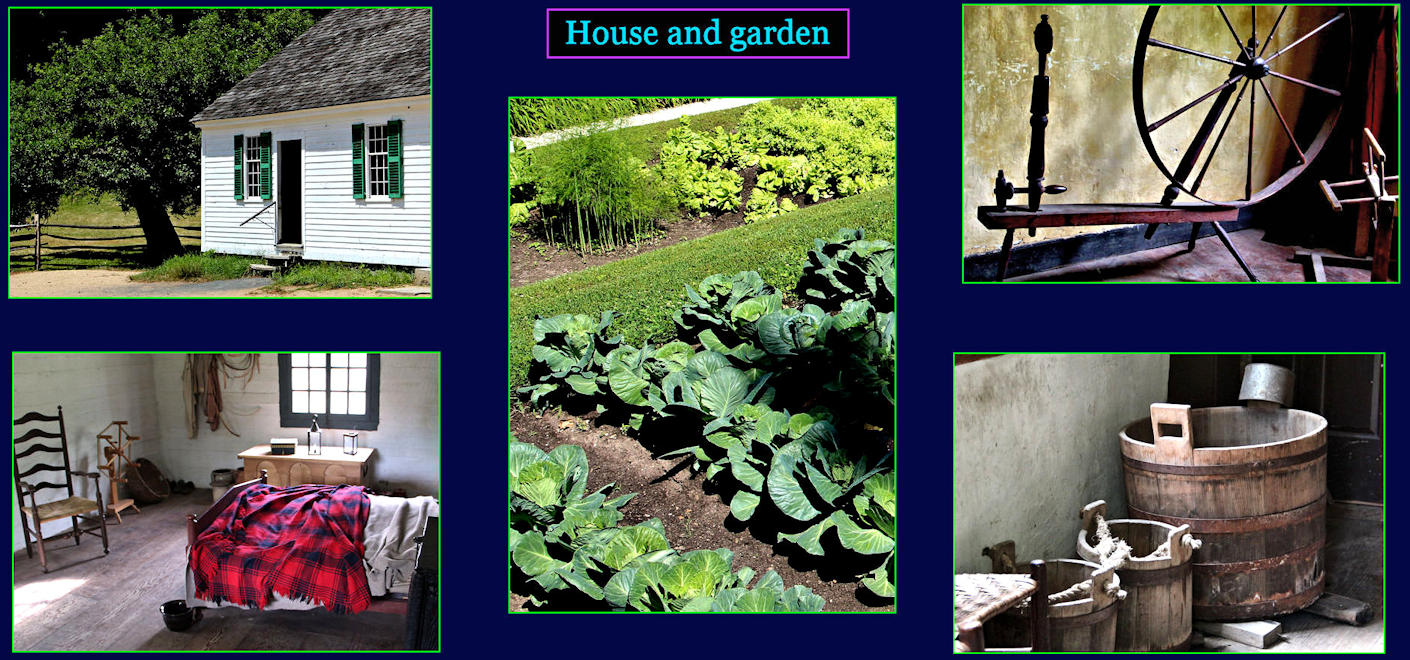
Clothes, Food and Water Life is plain and simple on the colonial farm. The same clothes are worn pretty much every day, with any special clothing kept in a chest or set of drawers. Water is carried into the kitchen in wooden buckets from the well out back. The gardens, and occasional orchards, provide fresh food sufficient to feed the family. Many wives also spin yarn to make 'homespun' clothing. | |||||||||
| |||||||||
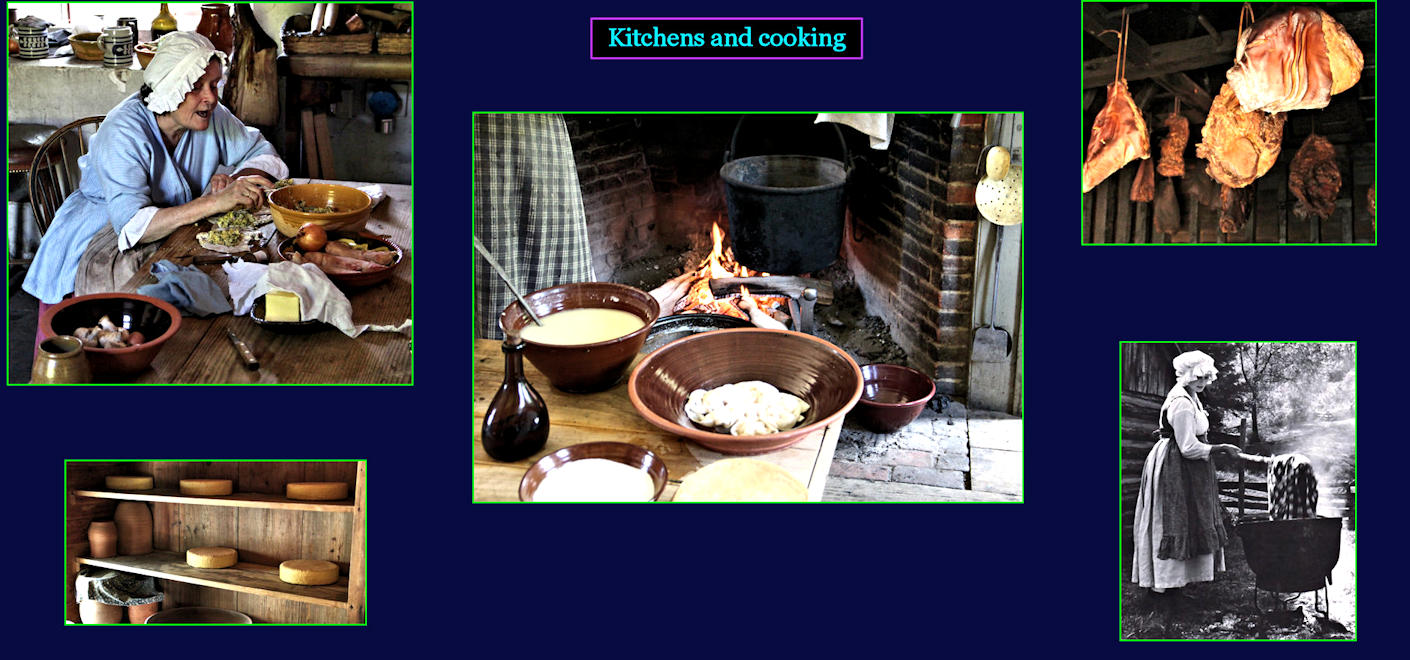
Surprising Abundance Kitchens are often the busiest place on the farm. There is no refrigeration, so food is prepared fresh most of the year. Meat can be hung over a smoldering fire in a small smokehouse, which preserves it for a month or more (top right). Wheels of cheese will also last a long time, when stored in a cool back room (lower left). Cookware is mostly cast iron, while mixing bowls and storage jars are made of crockery, fired in a local kiln. Laundry is boiled in tubs or kettles, using water heated over an open fire. | |||||||||
| |||||||||
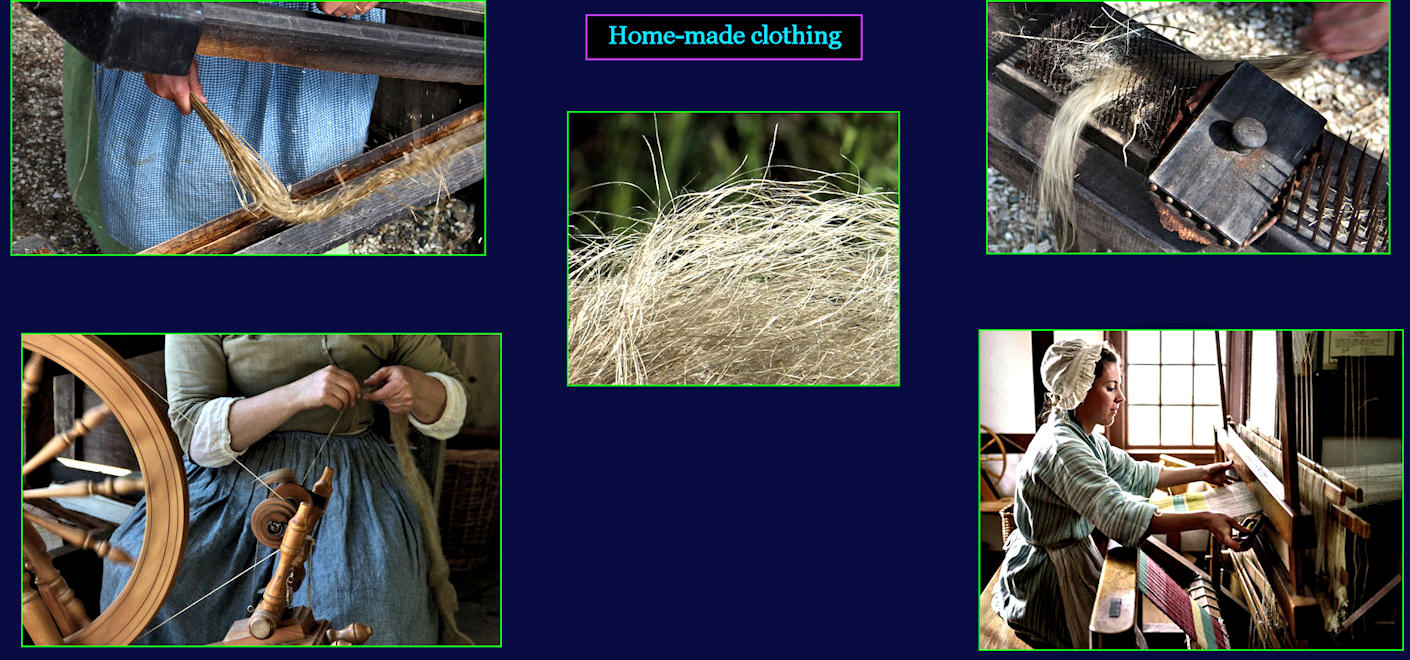
Do-it-yourself Clothing Store-bought clothing is unavailable almost anywhere in colonial America, so most families make their own clothing, from scratch. This begins by growing a field of flax, a grass-like plant that is dried, and then crushed in a wooden frame (top left). This reveals a very soft, fine fiber, much like human hair (center top), which is pulled through a crude metal comb to separate and align the fibers (top right). The fibers are then spun into thin yarn (lower left), which is woven into fabric on a wooden loom (lower right). | |||||||||