| |
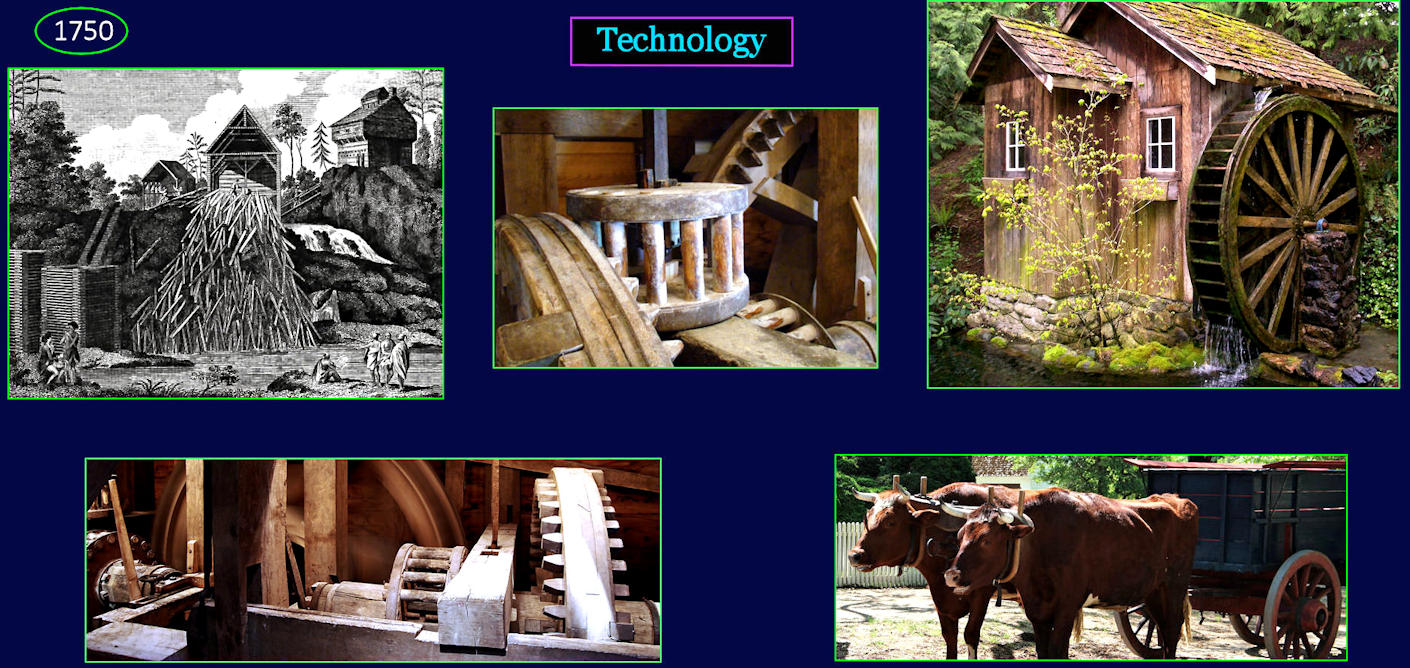
Power from Water Waterwheels are the source of mechanical power for most mills in colonial America, but they are not easy to construct. The wheel itself is large, and composed of many pieces, while massive wooden shafts and clumsy wooden gears are needed to transfer power to the grinding wheel or saw blade On the farm, anything that needs to be moved is pulled by animals. |
| |||||||||
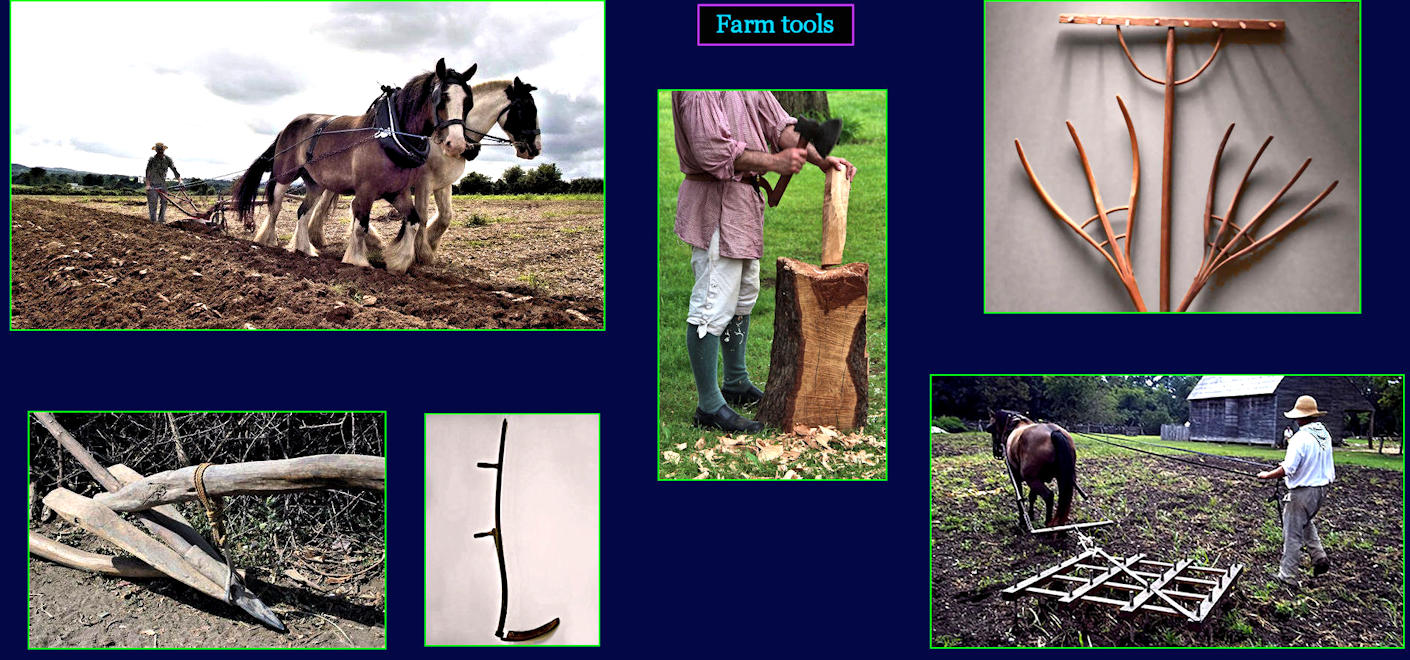
Mostly Wooden Tools Farming tools are simple, and mostly made of wood. Only cutting edges, such as axe heads and scythe blades, are made of iron. Plows (lower left), pitchforks (top right) and scythe handles are made of specially selected pieces of curved wood. The contraption at the lower right is also wooden, with rows of pegs projecting downward into the soil. Pulling the pegs diagonally through the soil helps smooth it out, and break up clumps. | |||||||||
| |||||||||
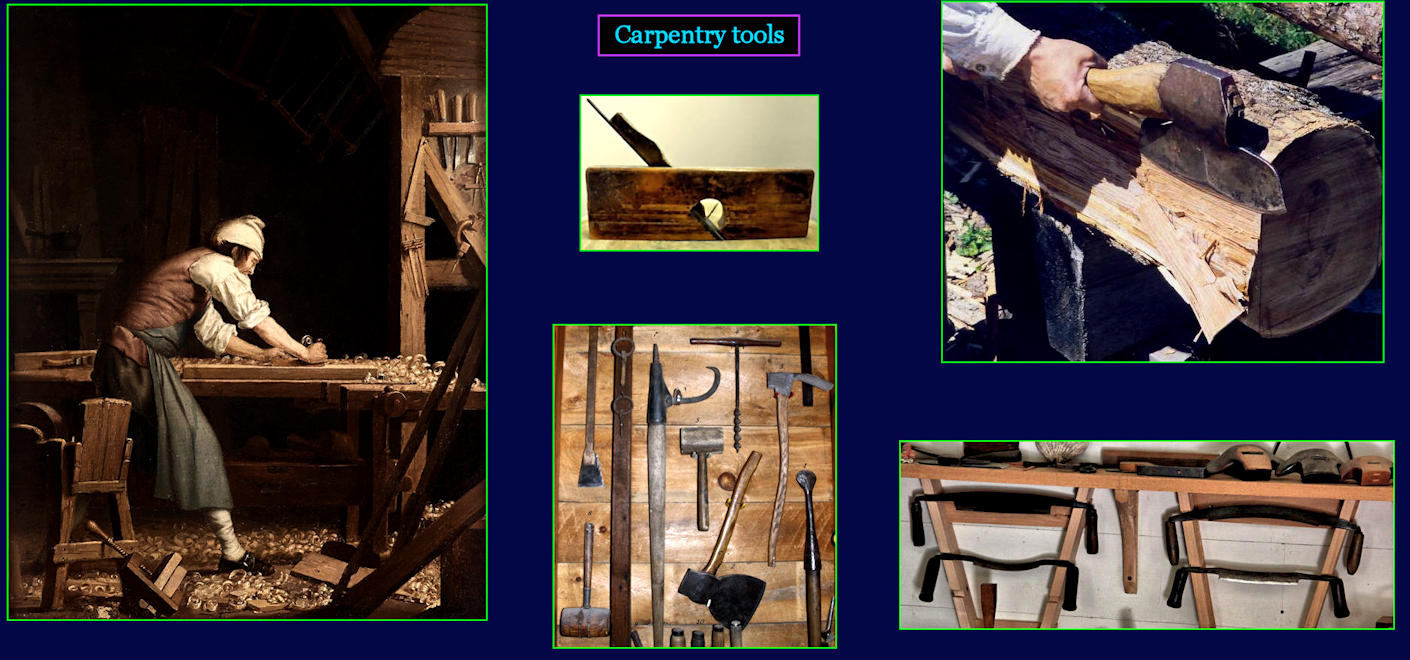
Metal Cutting Edges Carpentry tools are also simple, with most shaping jobs done with metal blades of various sorts. Hand saws are sometimes used, but are difficult to keep sharp without good metal files. Boards are often split from logs, then smoothed using a hand plane (left). The broadaxe (top right) is the workhorse for squaring off the sides of beams. The handle is slightly curved to one side, to spare the knuckles. The other all-purpose tool is the draw knife, which is a blade with two handles (lower right, on rack). | |||||||||