| |
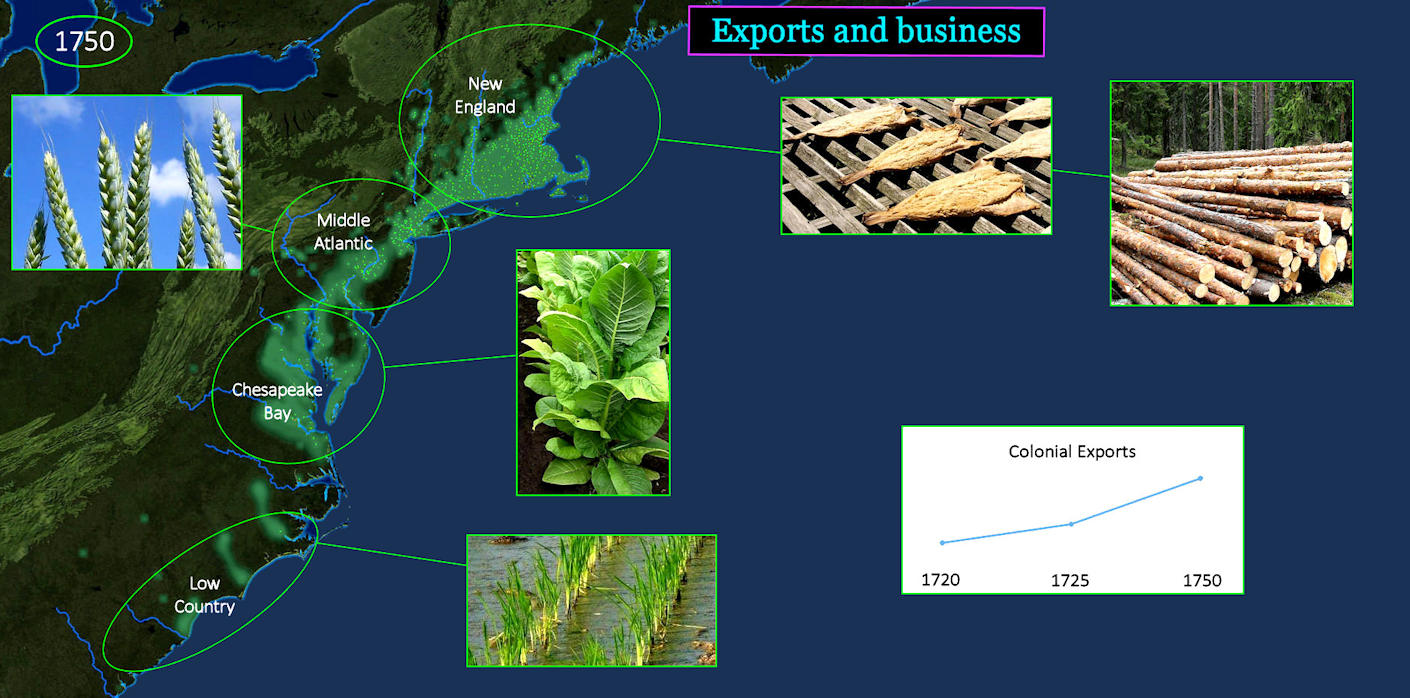
Export Products Colonial exports are rising rapidly. Northerners export dried fish, timber and wheat, but this barely covers the cost of imports. Southern plantations require slaves, which are budget-busters for smaller planters. Larger plantations are often forced to borrow heavily from London bankers to buy their slaves, leaving many planters struggling with debt they can never repay. |
| |||||||||
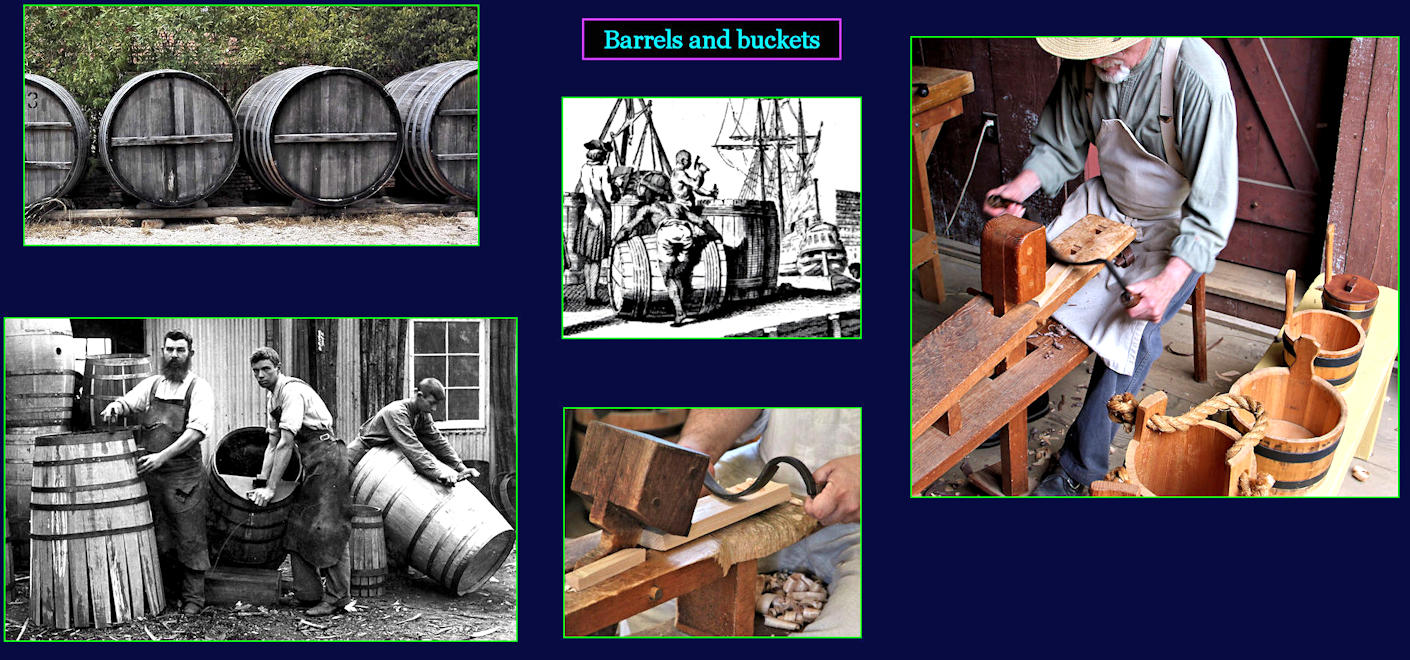
Coopers Barrels and casks are used everywhere. They are easily moved, since they can be tilted onto their sides, and rolled around with little effort (center top). The individual pieces of wood used to make a barrel are delicately shaped, with slightly angled edges and tapered ends (lower left). The inner surface of buckets is made circular by scooping out the pieces with a curved draw knife. The wood is held in a foot-operated bench clamp for this operation (lower right). | |||||||||
| |||||||||
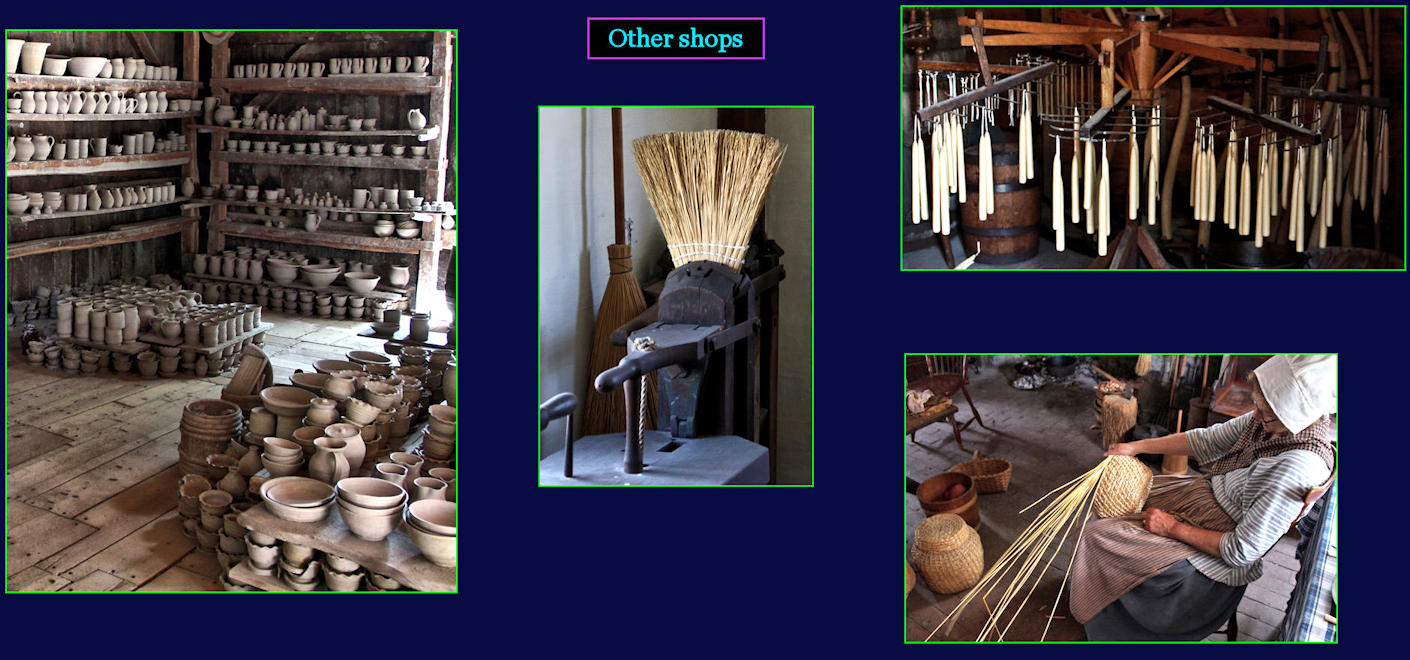
Lesser Trades There are many products that can be made in limited quantities by a small shop, with perhaps one or two assistants. Some can be made in batches, like hand-dipped candles (top right), but most are made one at a time, by hand. You can't make items very quickly this way, and the market for potential buyers in any given area is small. Still, such locally-made goods are far cheaper than anything shipped in from London. The era of mass-production factories is still in the distant future. | |||||||||