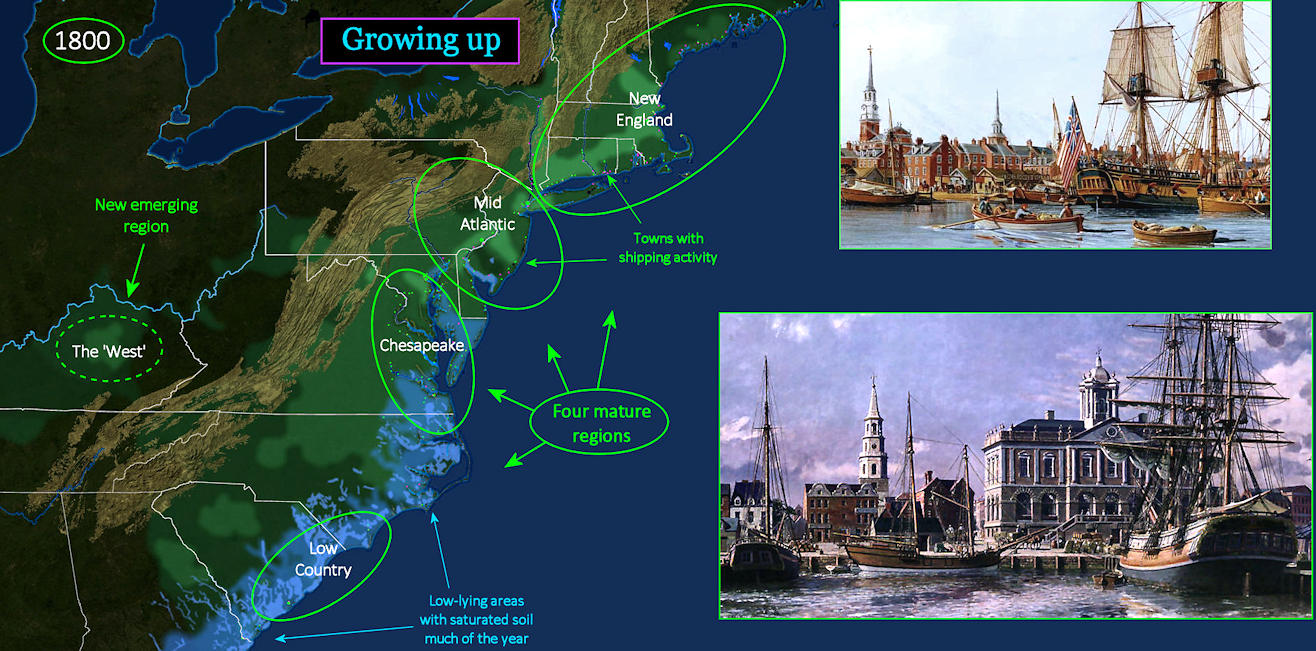
Standing UnitedBut America is not really united. There are still four separate regions, with separate histories and separate economies. The oldest are New England and the Chesapeake Bay tobacco region. In-between are the 'Mid-Atlantic' states of New York, New Jersey and Pennsylvania. This means mainly New York City and Philadelphia. But New York state also extends up the Hudson River, while Pennsylvania stretches far inland. |
| ||||||||||||||||
| |||||||||
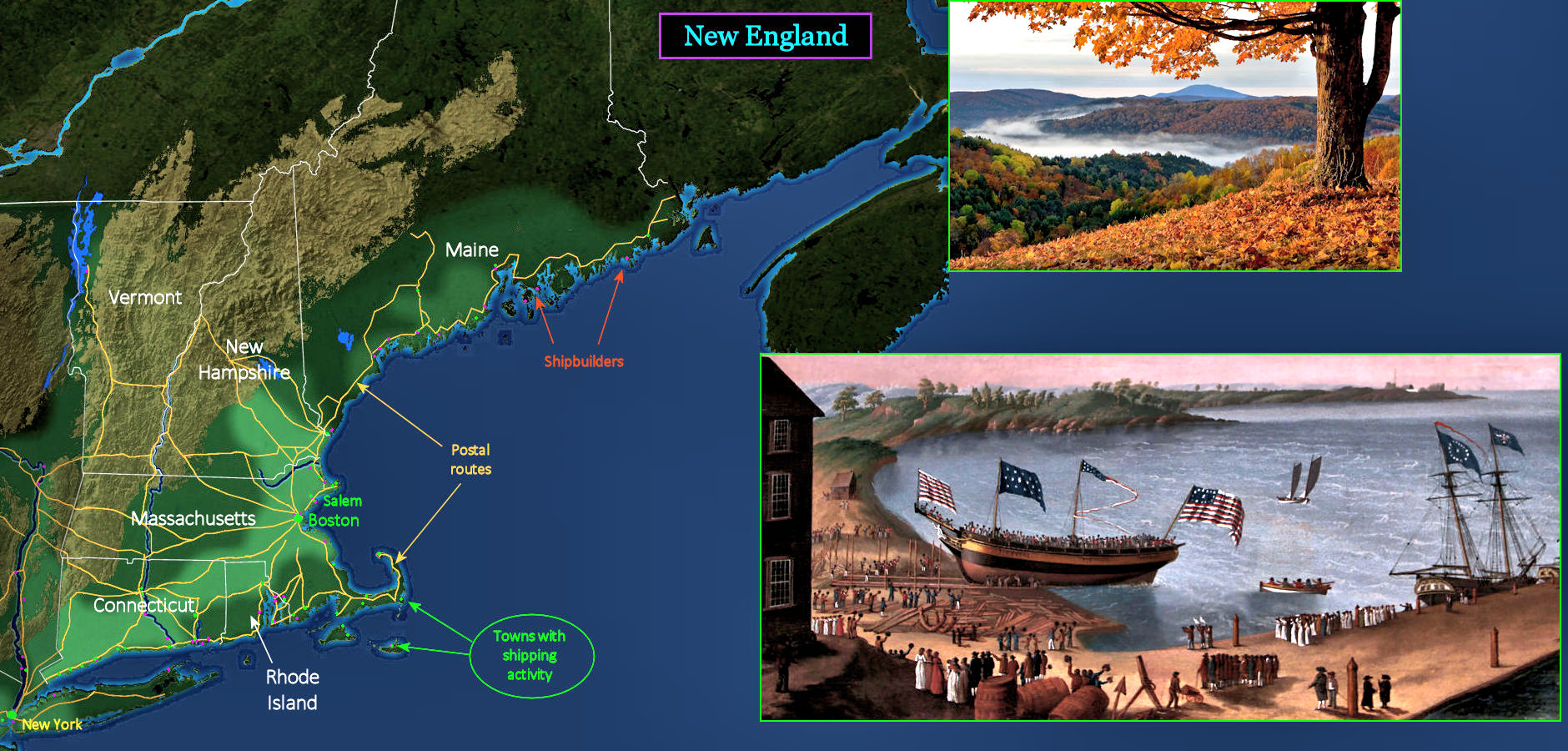
Northern Shipping The heaviest concentration of shipping activity is concentrated around Boston and New York, but smaller towns up and down the coast also have shipping docks to handle the bustling coastal trade (GREEN dots). Many also have shipbuilders located nearby (RED dots). One of the busiest small ports is Salem, which has been prospering in Boston's shadow for years. Its harbor is smaller, but the adventurous spirit runs high. BROWN lines are mail-carrying routes, some of which also offer stagecoach service. | |||||||||
| |||||||||
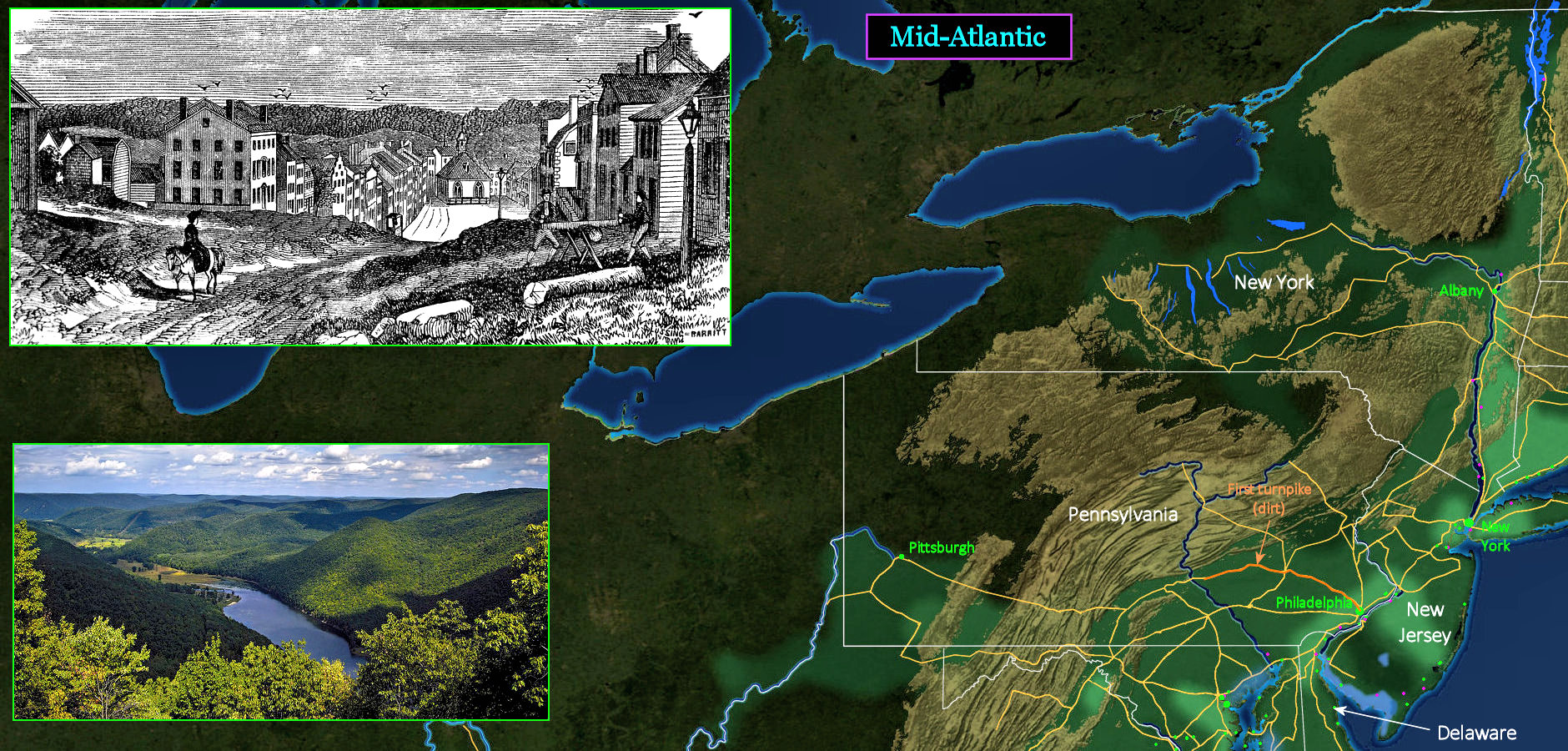
Mid-Atlantic Region The region lying between New England and Chesapeake Bay, called the Mid-Atlantic, has long been dominated by the big deep-water ports of New York and Philadelphia. But the future lies in the largely unsettled land west of the mountains. New York State has a network of postal roads which connect the new state capital at Albany, up the Hudson River, with more western regions. Pennsylvania is spending heavily to extend roads westward to Pittsburgh, and beyond. | |||||||||