| |
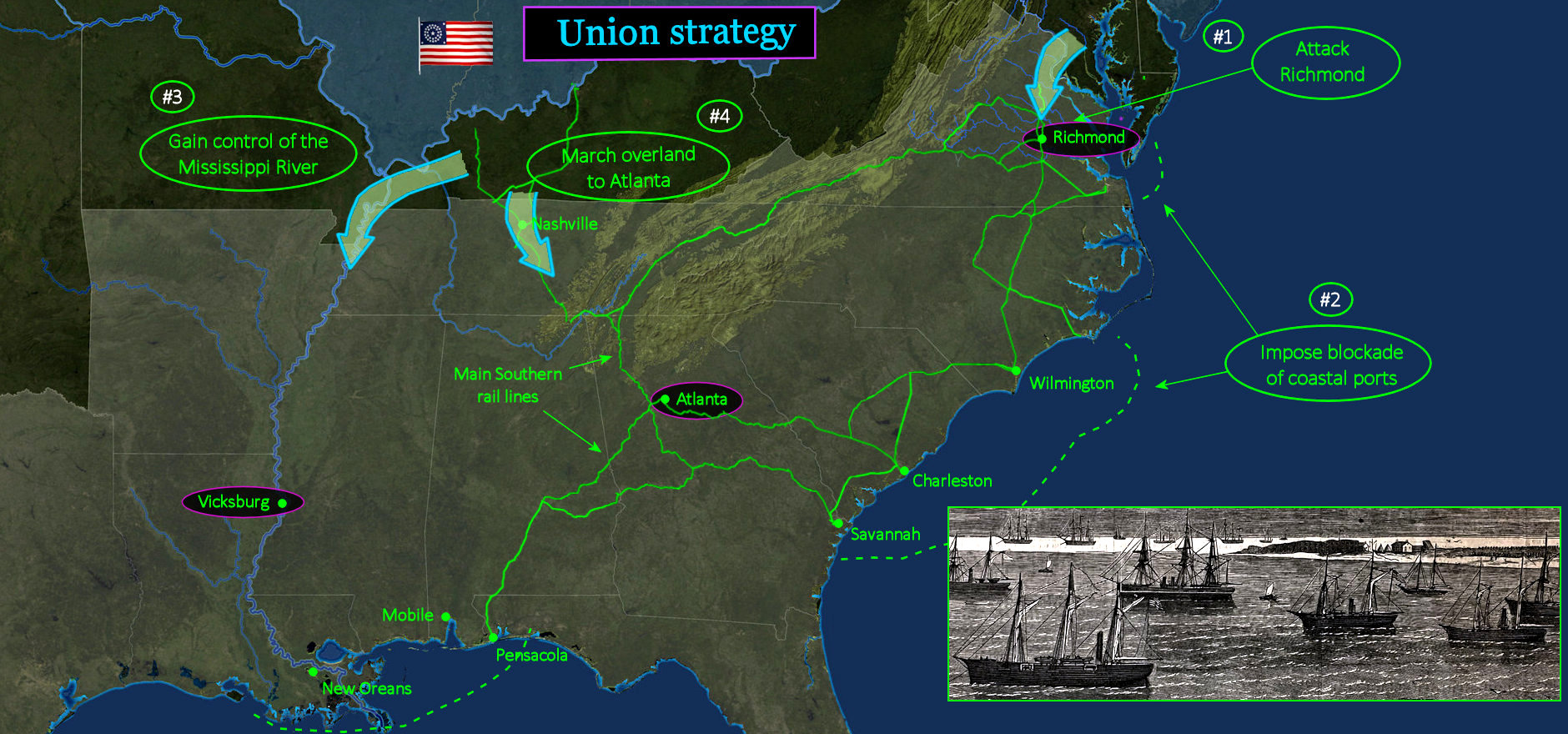
Four-part Offensive The Union hopes that a strong early thrust can take Richmond, ending the rebellion before it gets started. Until this succeeds, a blockade of southern ports should be able to choke off support from Europe. But the navy is small, and will need time to build more steam vessels. In the meantime, two offensives in the West aim to reduce the South's ability to wage war. |
| |||||||||
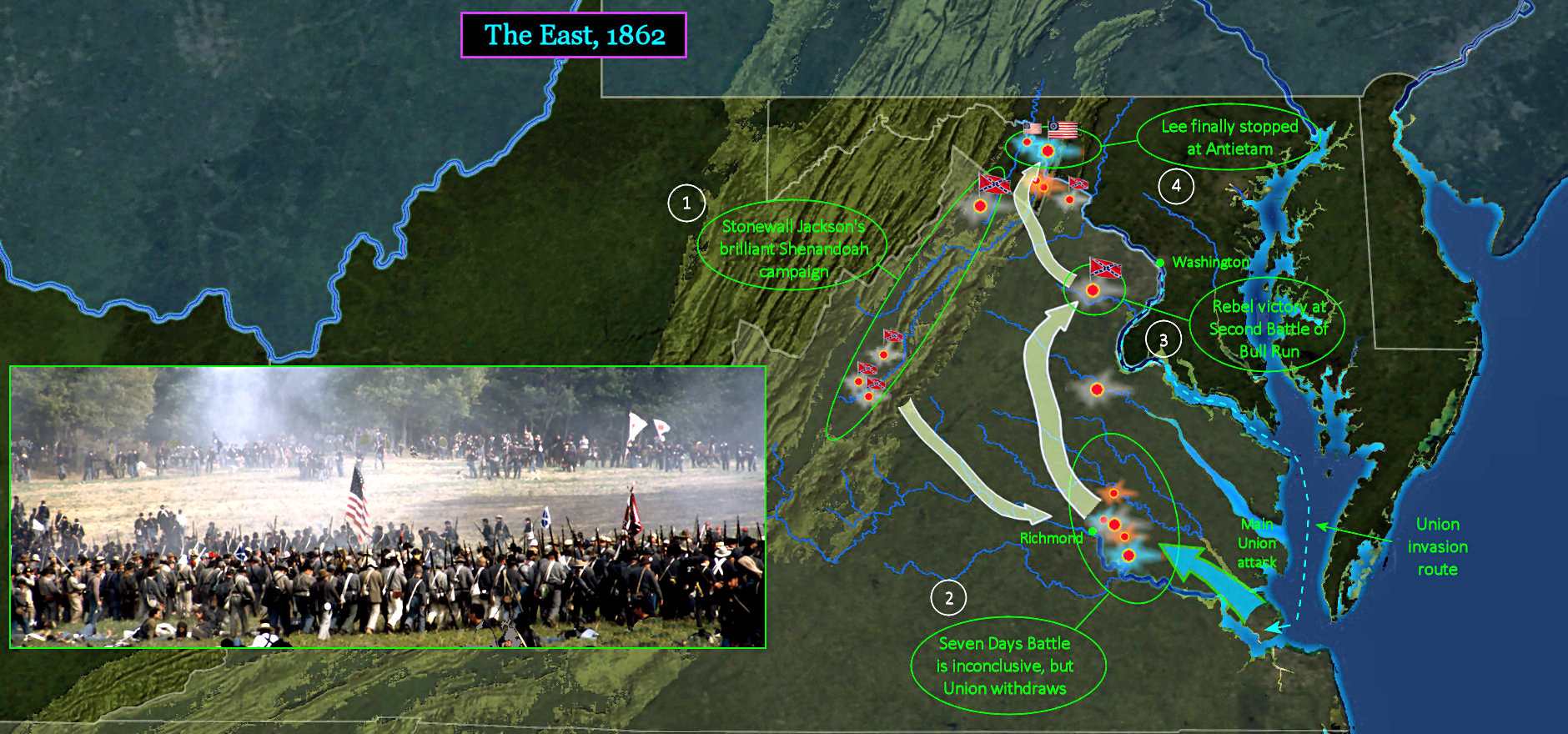
Total War The war in the East during 1862 is an almost unbroken string of Confederate victories, causing near-panic in Washington. It begins with Stonewall Jackson's rampage up and down the Shenandoah valley. When the main Union army is finally shipped south, it runs into Lee's stout defense at Richmond, and is forced to withdraw. Heavy losses stun both sides. Lee then sprints north, winning impressive victories before heading into Union territory. He is stopped at Antietam, but not defeated, and withdraws. | |||||||||
| |||||||||
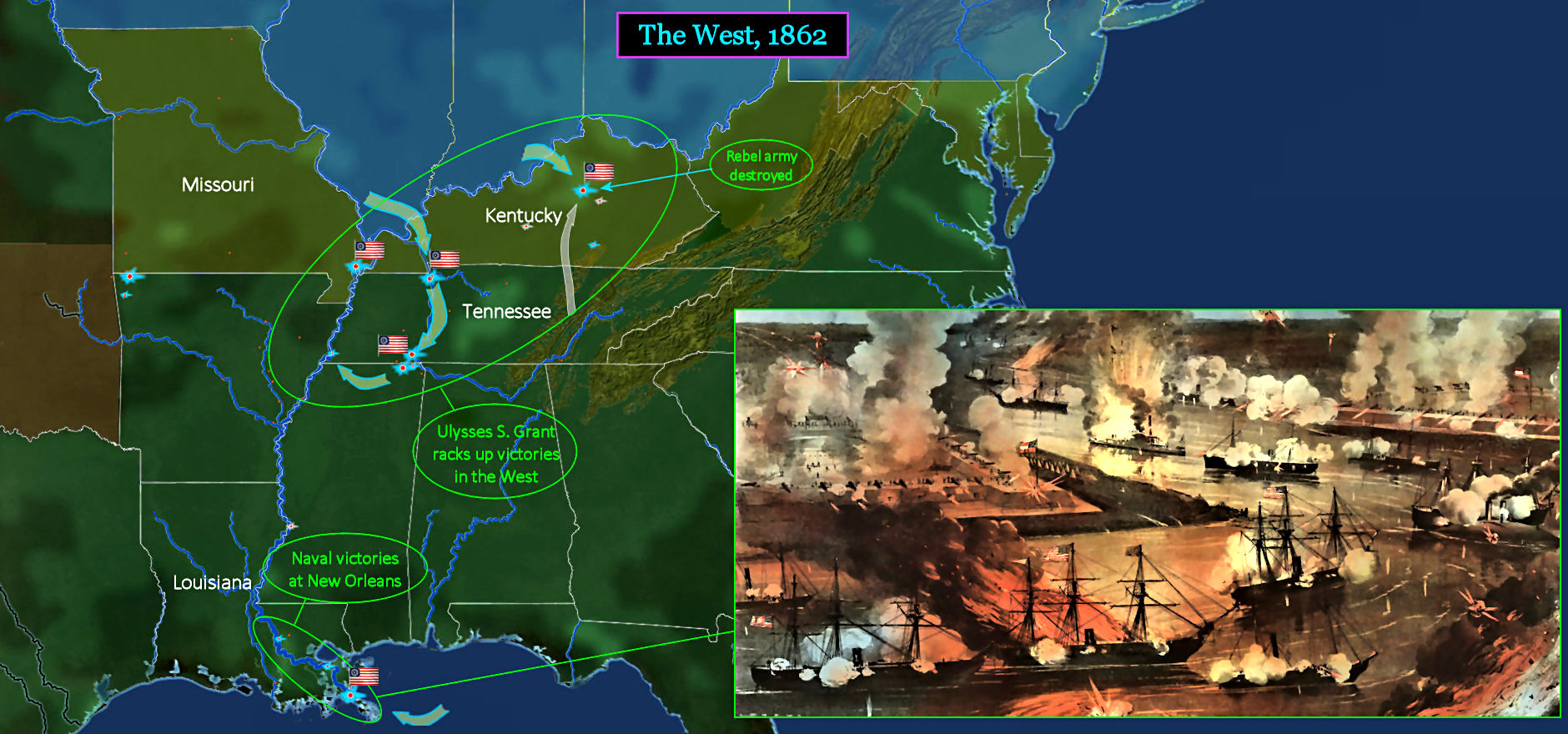
Better News from the West The story in the West is almost the exact opposite. A young and untested Ulysses Grant leads a methodical Union campaign that takes Confederate strongholds in Kentucky and Tennessee, effectively destroying rebel resistance. Further south, a Federal naval squadron braves the fire from Confederate batteries to take forts guarding the important port of New Orleans. All this goes almost unnoticed in Washington, however, where the public is kept in a constant state of near-panic by Lee's continuing success. | |||||||||