| |
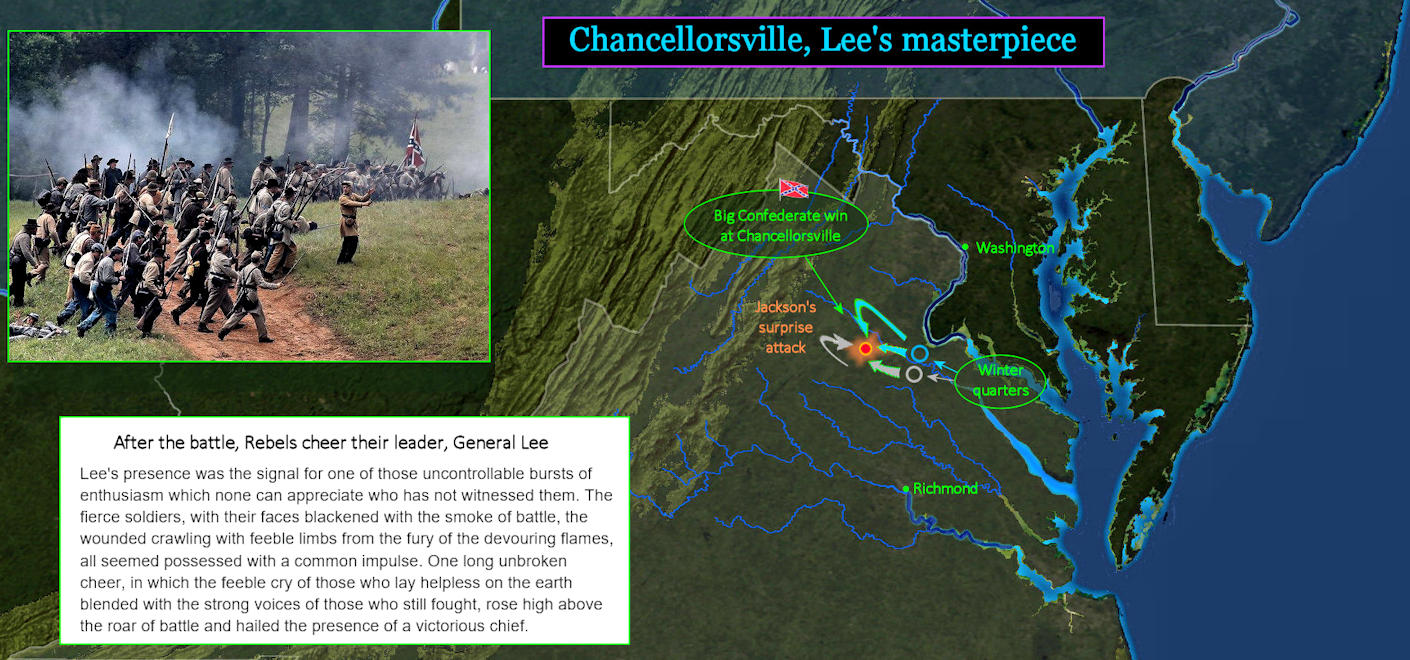
Jackson's End Run Chancellorsville, more than any other battle, is responsible for establishing Lee's reputation as a brilliant tactician. Even though badly outnumbered, Lee sends Stonewall Jackson's troops on a wide arc through the woods, to stun the Federals by suddenly emerging in their rear. Nonetheless, the Union army remains intact at the end of the four-day battle, and is able to withdraw. |
| |||||||||
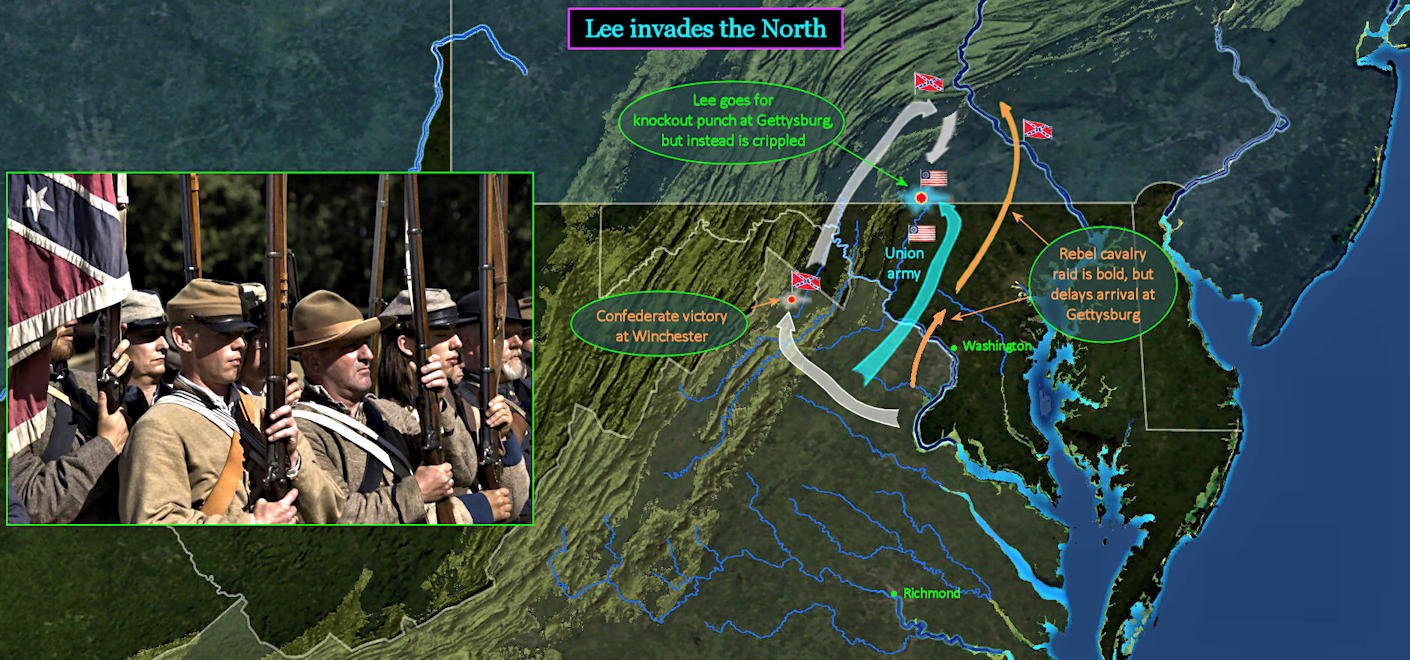
Betting Everything Fresh from his stunning victory at Chancellorsville, Lee now believes his army is invincible. He is convinced that support for the war in the North is fading fast, and a determined push will result in destruction of the Union army. Although short on supplies, he expects to seize what he needs along the way. But Union morale is better than supposed, and he is now missing both of his best generals. Jackson has been killed at Chancellorsville, while J.E.B. Stuart is off on a daring cavalry raid, out of touch with Lee. | |||||||||
| |||||||||
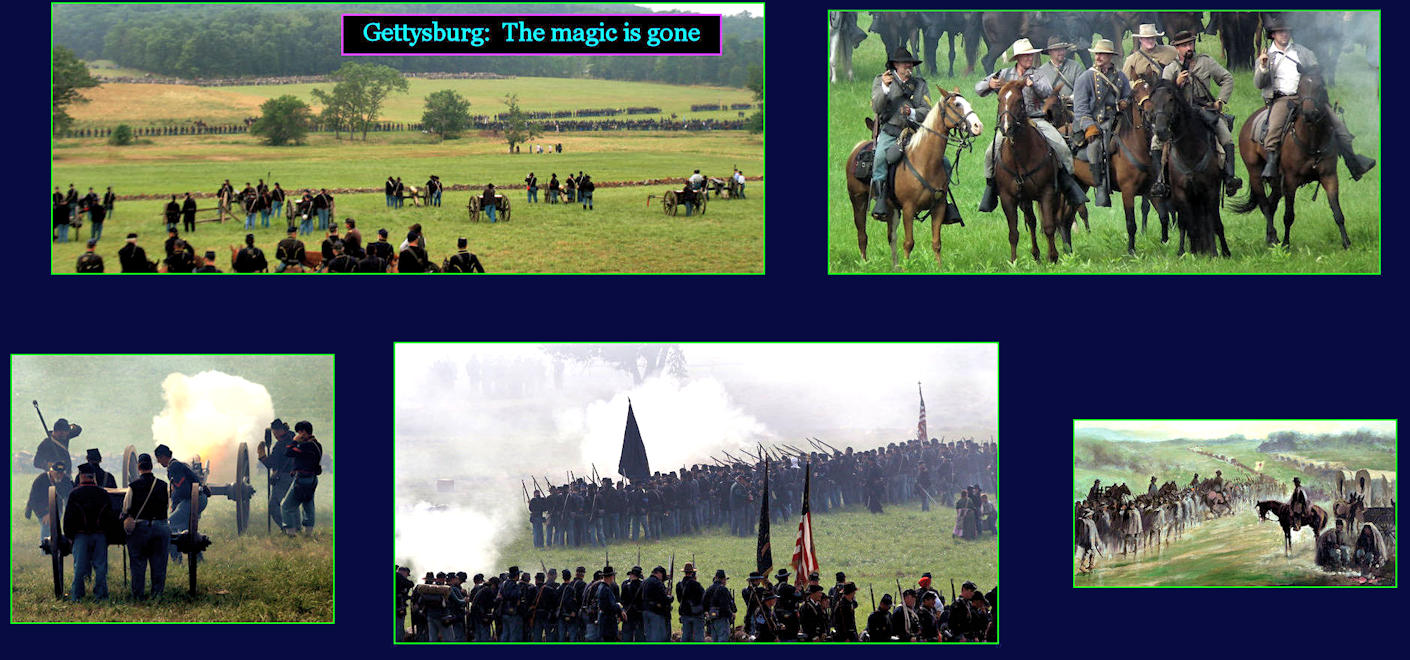
Failed Gamble Deep into Union territory, Lee has to wheel south to Gettysburg, where Federal troops are converging, but lacks his cavalry support. Union lines are consolidated and dug in on rising ground. Against advice, Lee gambles everything on the third day, ordering a grand assault on the Union center, in sweltering July heat, across exposed fields. Many Rebels believe the attack will fail, like so many earlier frontal attacks by the Union. It does fail. Lee loses a third of his army, and is forced to retreat. | |||||||||