| |
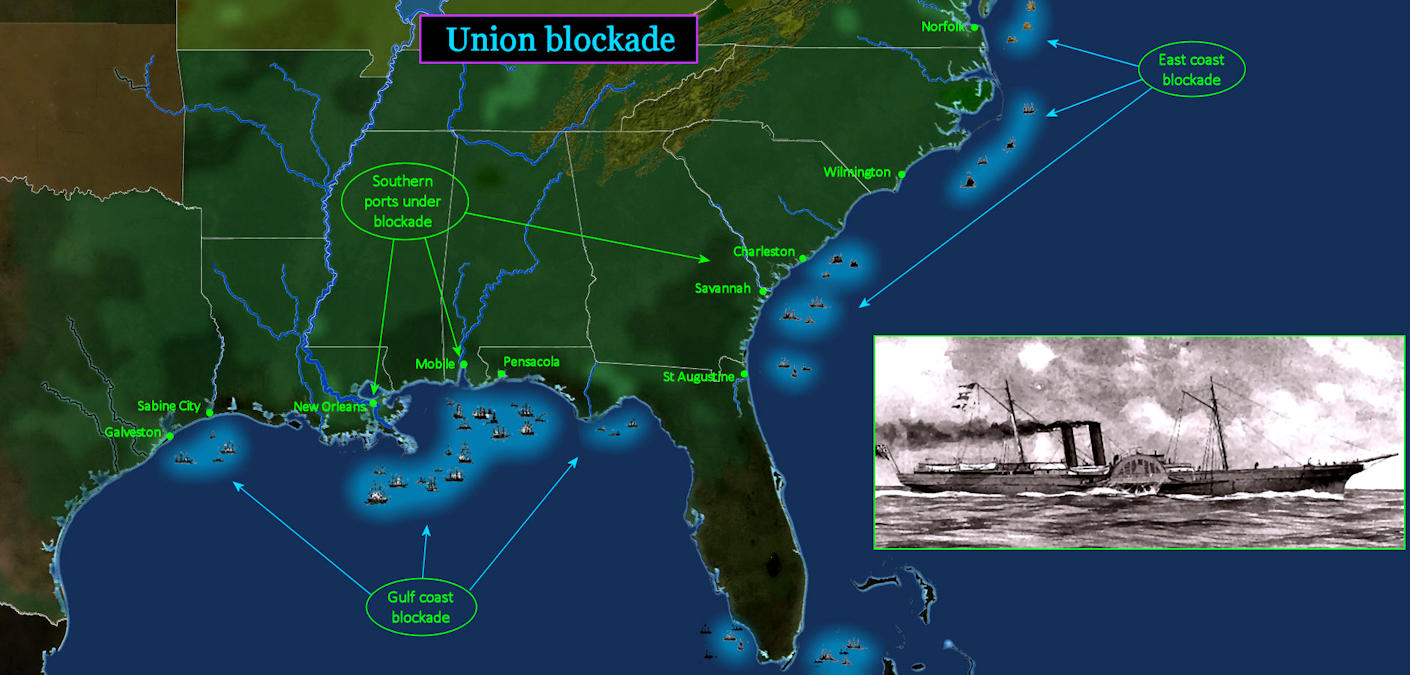
Blockade Tightens Over time, the Union blockade of southern ports is able to choke off 90% of southern exports, including their big money-maker, cotton. By the end of the war, 500 ships are involved in blockading duties, destroying or capturing 1,500 Confederate 'blockade runners,' which are their fastest steamers. The blockade also halts imports of food and war material. |
| |||||||||
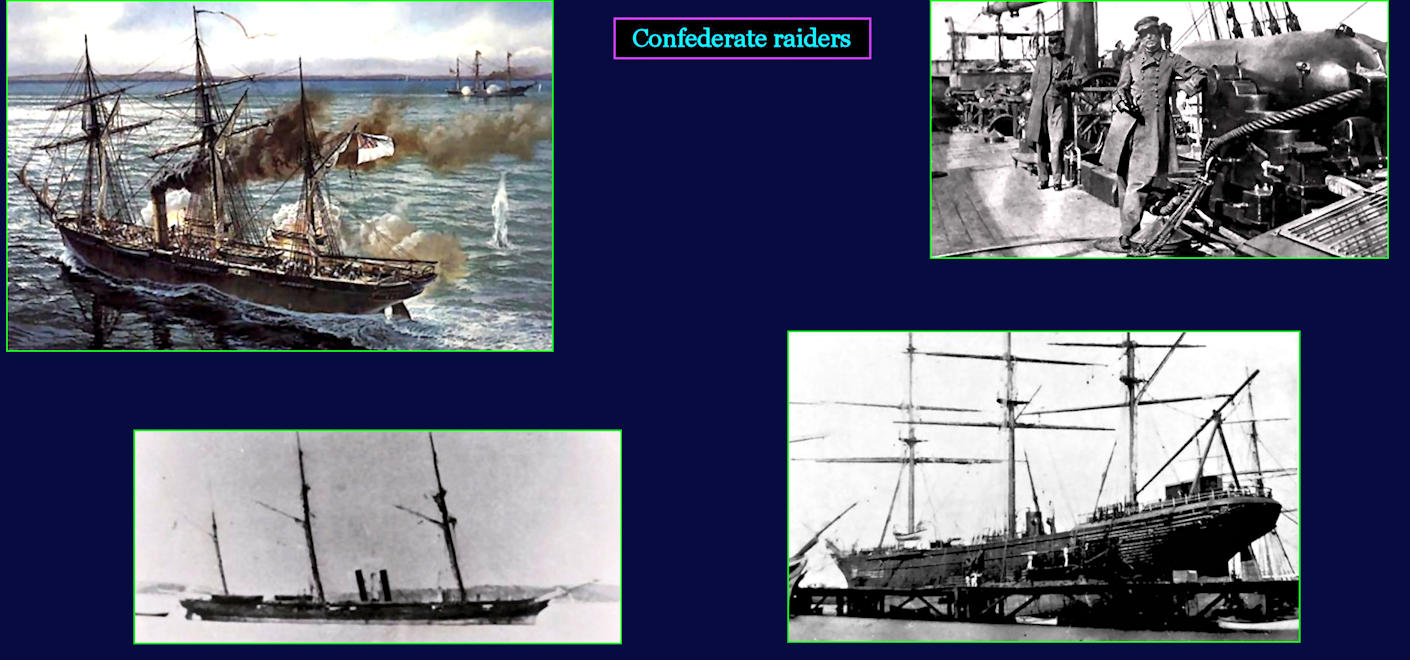
Fighting Back at Sea While blockade runners are merchant vessels carrying cargo to and from Europe, commerce raiders are pure warships. The three that cause the most damage are all built in England, and sail the world's oceans without ever needing to enter southern ports. The Alabama is financed with cotton. The South also uses privateers, which are private vessels authorized to attack Union shipping. Maine, alone, loses 100 ships to southern raiders. | |||||||||
| |||||||||
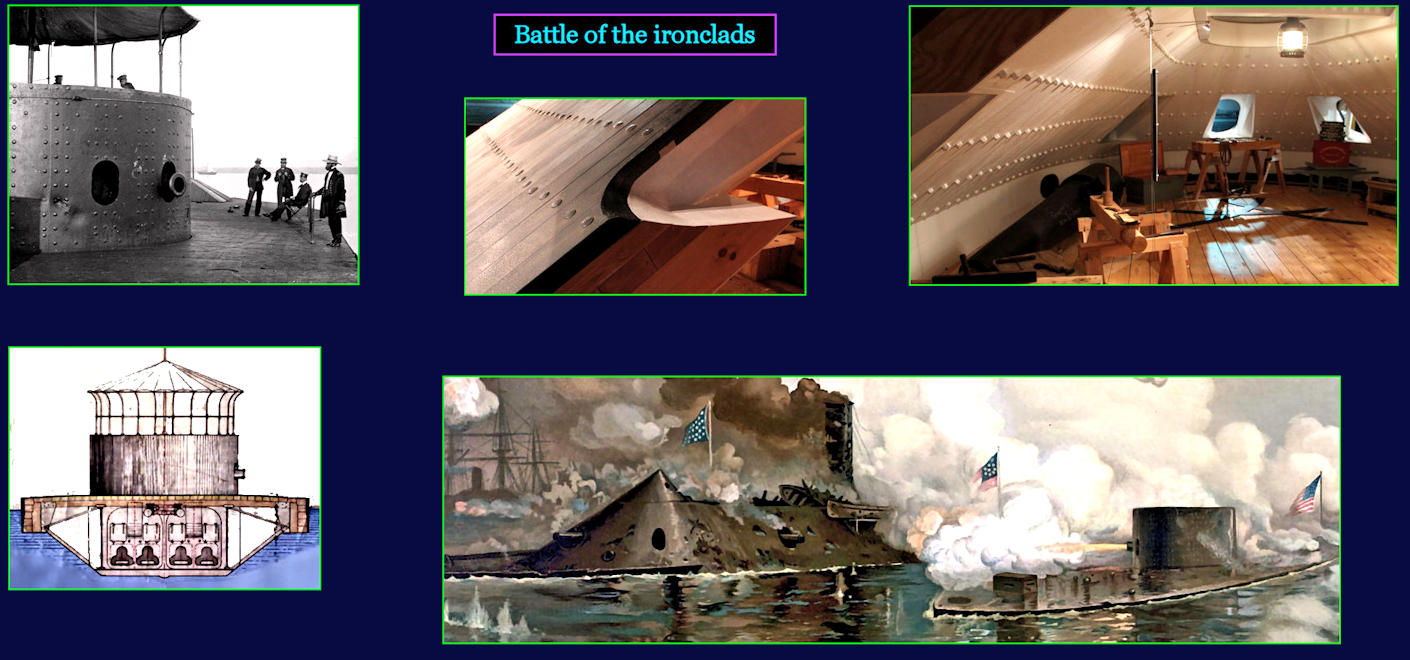
Iron Meets Iron The famous 'battle of the ironclads' occurs early in the war. The Confederates manage to launch their vessel first, attacking vessels on Federal blockade duty. Built on the burned-out hull of an abandoned Federal frigate called the Merrimack, she is re-named the Virginia. Nothing can withstand her fire. But the following day, a new Federal ironclad, called the Monitor, suddenly appears to challenge her. It's a draw, as neither can disable the other, but the Virginia is destroyed two months later, to avoid capture. | |||||||||