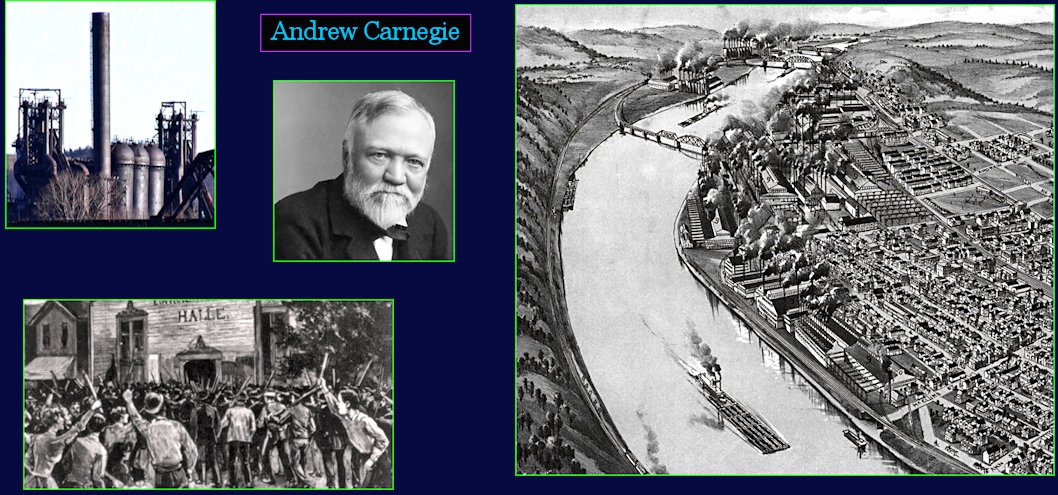
Bigger and StrongerBy the time he is done, Pittsburgh is the leading producer of steel, by a country mile. The city is already a leader in iron, but Carnegie's vision transforms it into the world's leading producer of steel. Carnegie starts by buying up existing iron and steel mills, beginning with Homestead Steel, just outside Pittsburgh. He adds a huge new Bessemer converter, and is on his way to building an empire based on steel rails. |
| ||||||||||||||||
| |||||||||
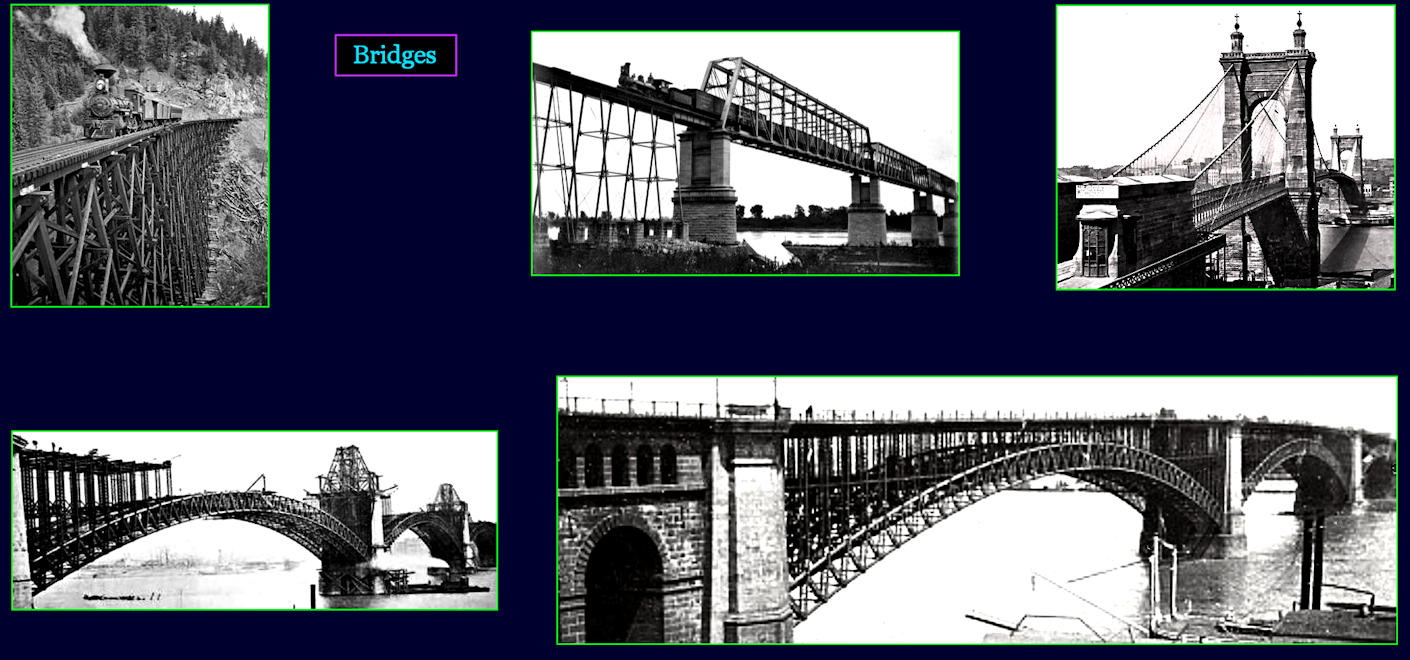
Steel Takes Over Structural steel is first used in bridges. Before the Civil War, bridges are supported by a structure of wooden beams (top left). When iron takes over, the longest wrought iron bridge span is 320 feet (center top). The bridge across the Ohio River uses iron cables to support an iron girder span (top right). When a bridge is needed to cross the Mississippi River at St Louis, calculations indicate that wrought iron simply isn't strong enough to support the 520-foot span required. The solution is an all-steel bridge (bottom). | |||||||||
| |||||||||
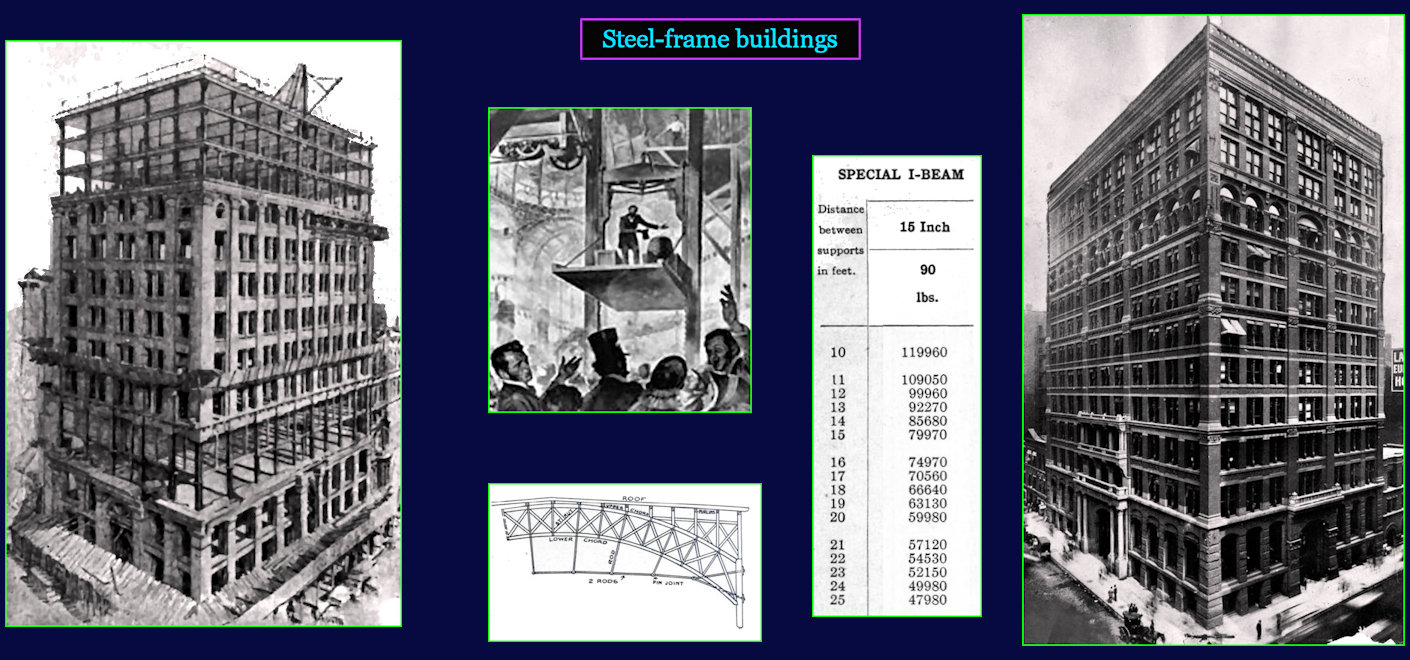
Structural Skeleton To make stronger, taller buildings, steel girders are riveted together to provide a rigid cage-like skeleton. This supports a thin masonry facade, with large window openings. Steel suppliers publish data to assist with calculations. When equipped with elevators suspended on steel cable, 12-story buildings are now possible. The Otis Safety Elevator creates a sensation before the Civil War, when it demonstrates the special brake that keeps the platform from free-falling, after the cable is disengaged( top center). | |||||||||