| |
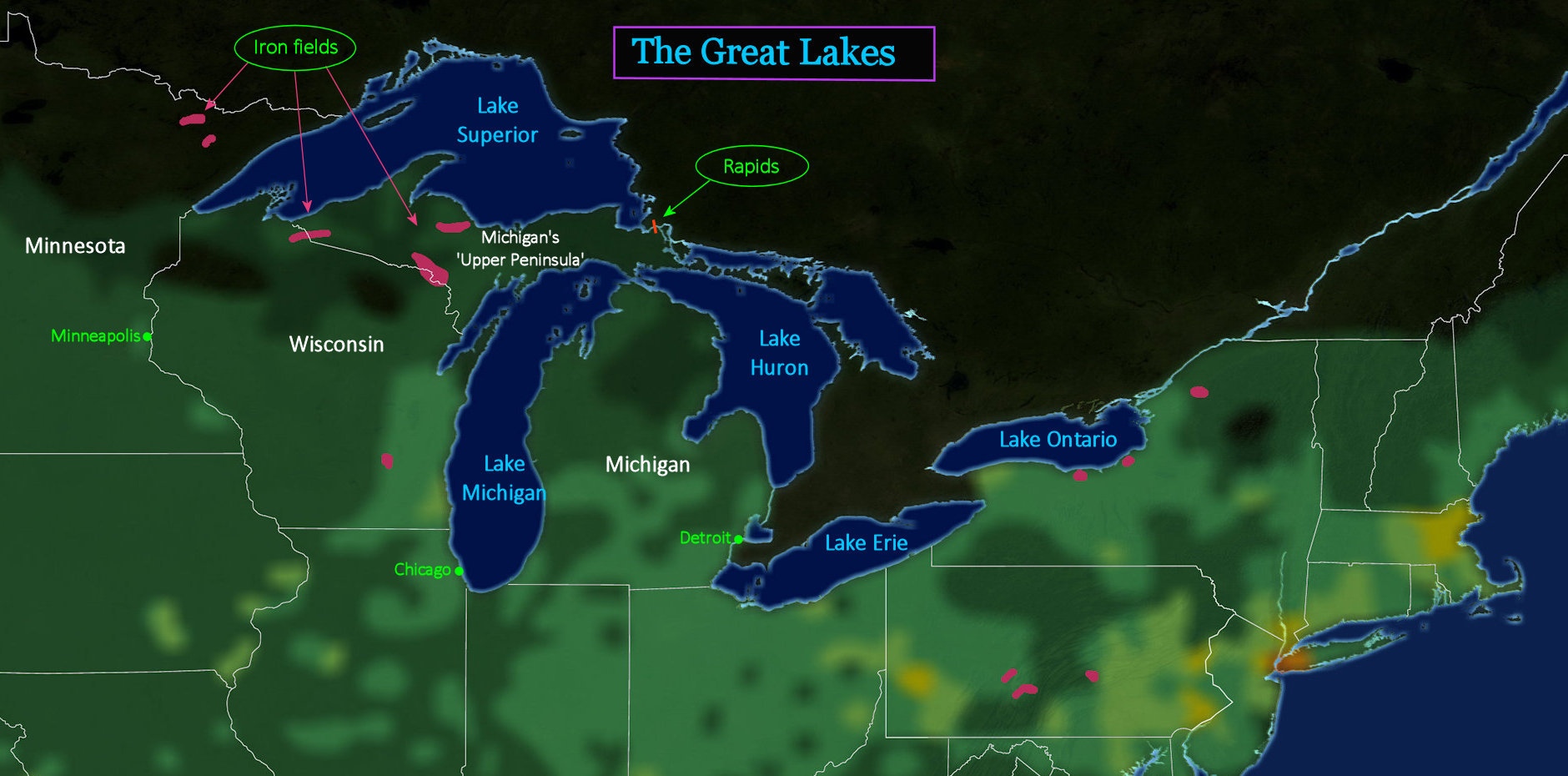
More Iron The upper Great Lakes region, centered in Michigan's Upper Peninsula, is wet and buggy, and doesn't lead much of anywhere. But it contains vast natural wealth in the form of rich iron ore and copper deposits. The problem is getting passed the rapids at the outlet of Lake Superior (top center of map). |
| |||||||||
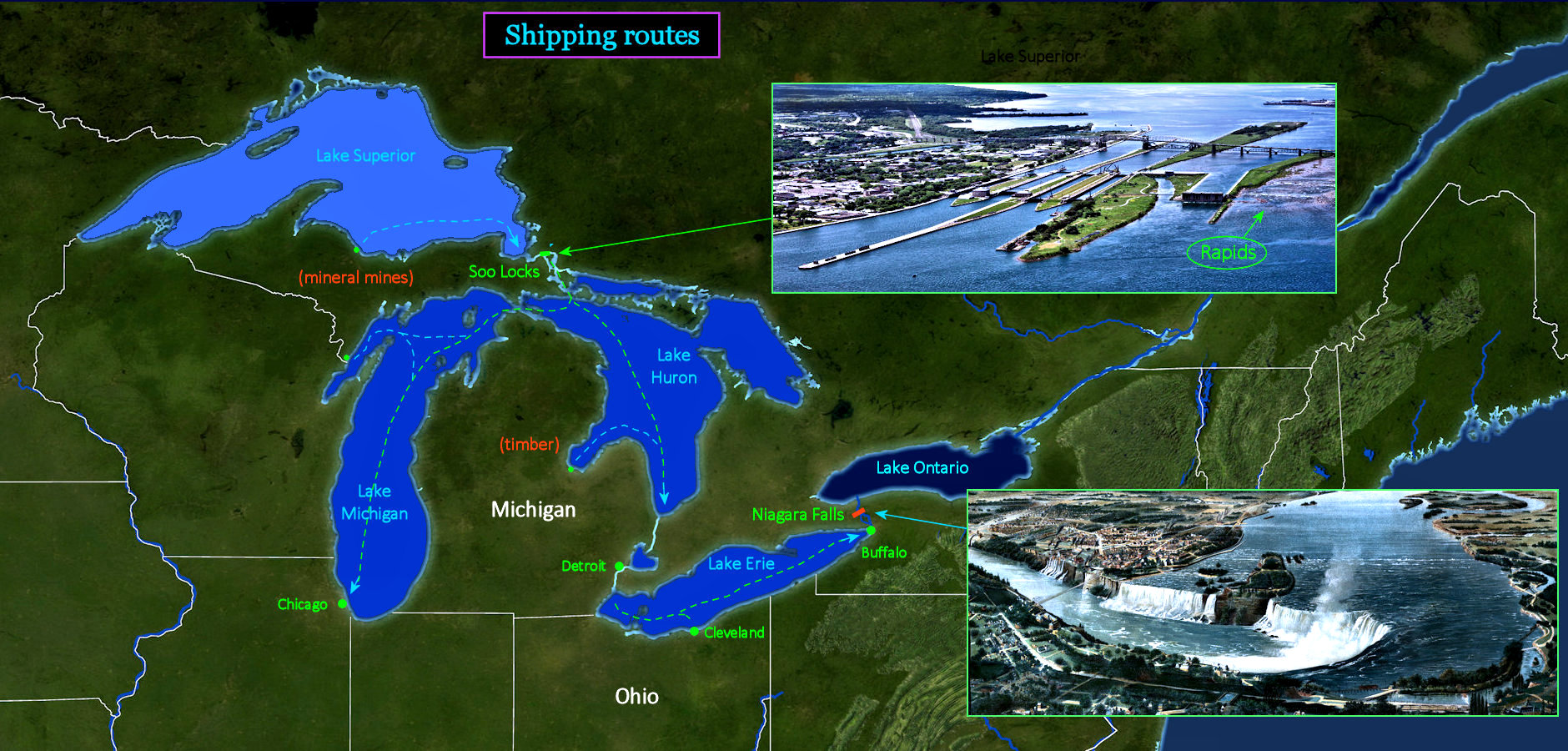
Getting Past the Bump The shipping lanes shown here develop after the completion of Soo Locks, which suddenly enables steamers to move from Lake Superior down to the 'lower lakes.' Steamers can move freely everywhere on the lower lakes, which are all on essentially the same level, until reaching Buffalo, at the far end of Lake Erie. There, blocked by Niagara Falls, the cargo is transferred, to continue traveling east via rail or the Erie Canal. Major cargo-handling facilities develop at Buffalo, Detroit, Cleveland and Chicago. | |||||||||
| |||||||||
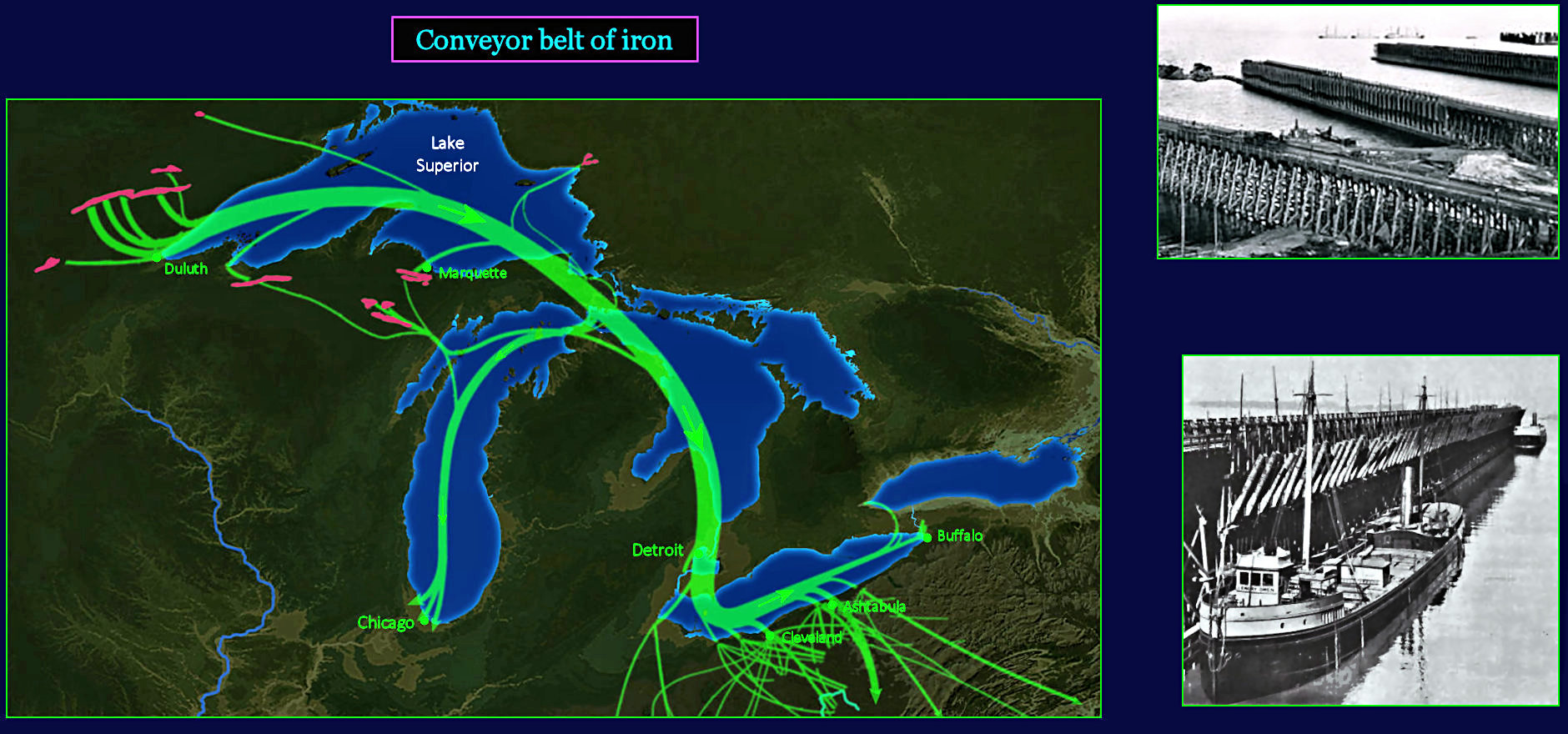
Non-stop Production Lake Superior ore is the best, and most abundant in the world. Huge deposits around Lake Superior are key to the continuing growth of the American iron and steel industry. The best fields surround Duluth (far left), but are only just beginning to be developed. The long docks at right are fitted with an array of loading chutes, which are lowered down into position over hatches on the ship's deck. Ore arrives from the mines continually, by rail car, and is positioned on top of the docks, ready to dump down the chutes. | |||||||||