| |
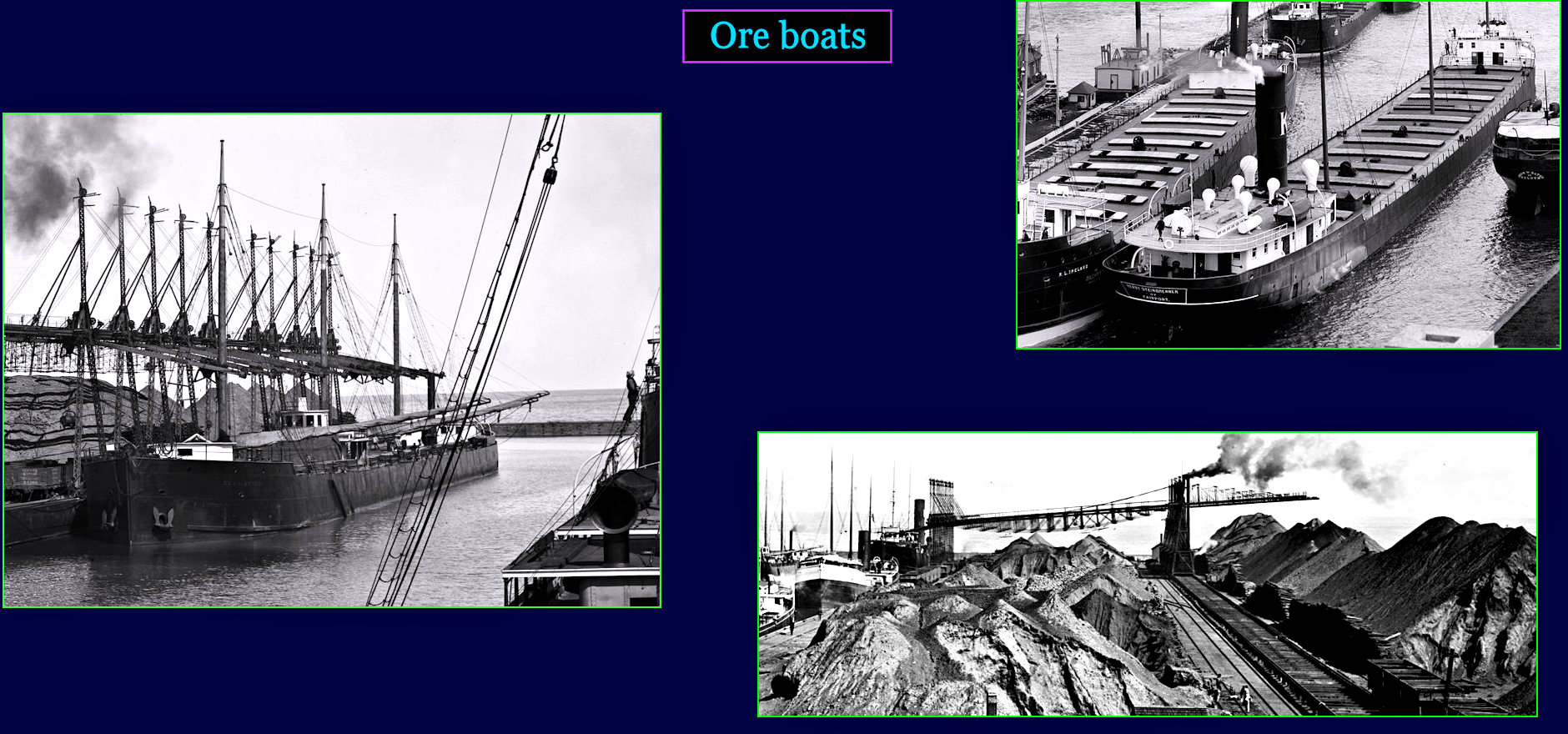
Turning up the Volume By 1890, iron ore boats are arriving in Lake Erie at an average rate of 20 per day, until winter ice suspends operations for the season. Each of the big steamers holds enough ore to fill 40 rail cars. That's a lot of material to unload, every day. The largest ore-handling ports are in Ohio, at Ashtabula and Cleveland. Most of the boats are built in Cleveland, and south of Detroit. |
| |||||||||
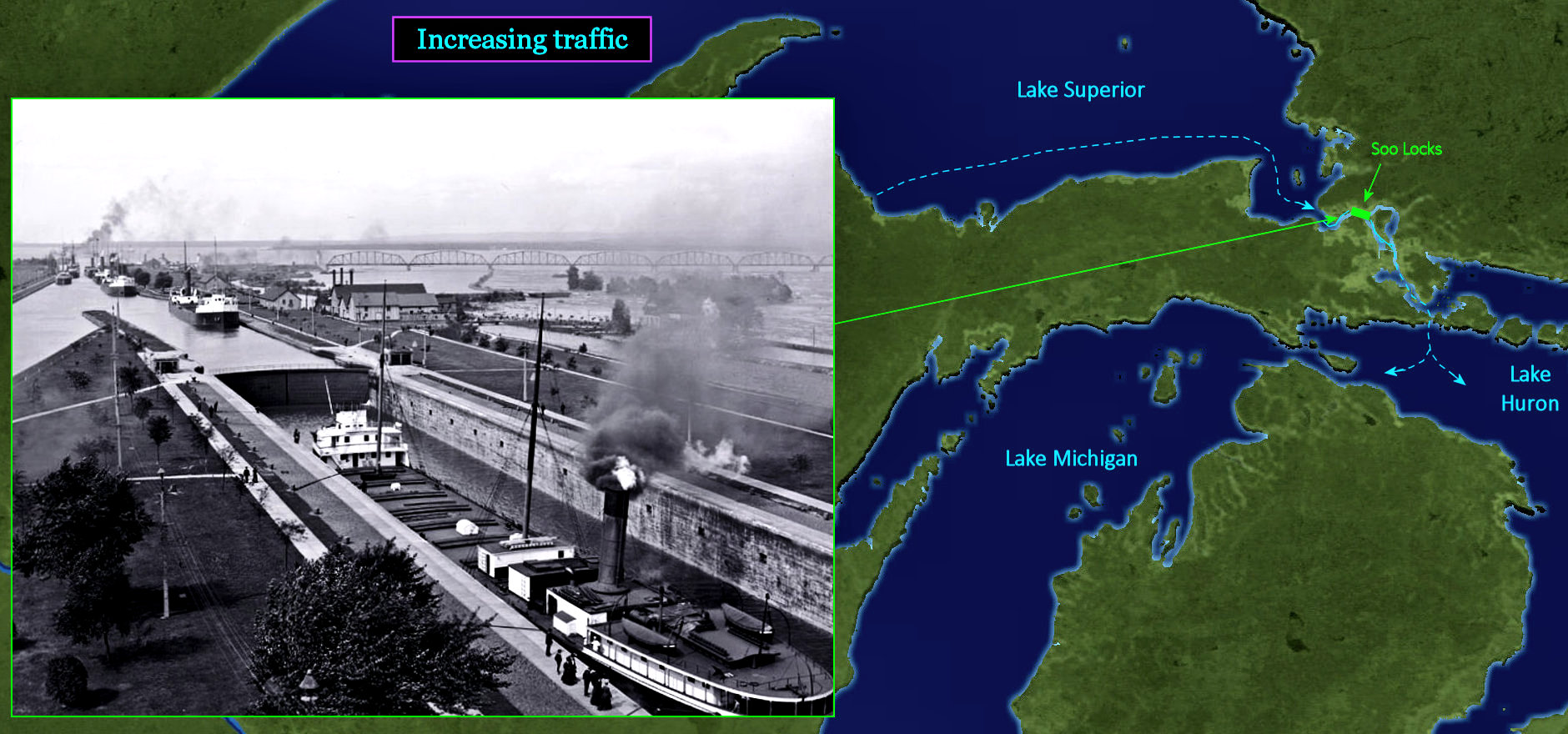
Huge Traffic Boost The Soo locks dwarf anything previously seen in America. The original lock is three times longer than those being used in the Erie Canal, but within 25 years a larger lock is added, which is half-again bigger. By 1890, there is yet another new lock in operation, this time eight times the size of the Erie Canal locks, and designed to handle four ships at once. Soon enough, however, ore boats grow to such a size that only one can fit through at a time. | |||||||||
| |||||||||
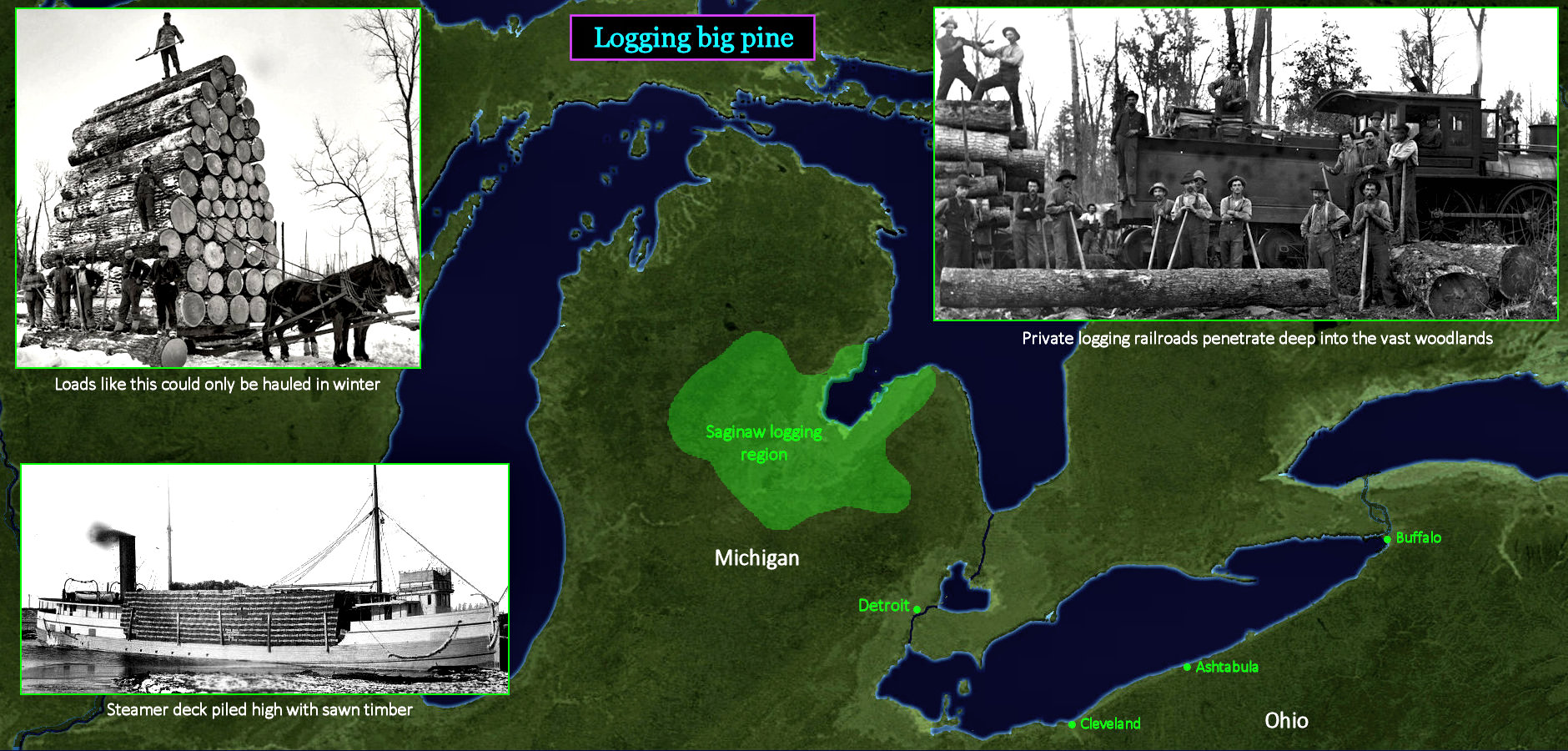
Wood for Housing During the same period, loggers are hauling huge loads of virgin timber from central Michigan. This is mostly white pine, which is hauled in astonishing loads over snow and ice. As the areas close to rivers are logged out, timber companies build their own private railroads to reach further into the interior. Even more timber is cut on the western shore of Michigan, bound for Chicago and Milwaukee. After 40 years, Michigan is effectively logged out by 1900. | |||||||||