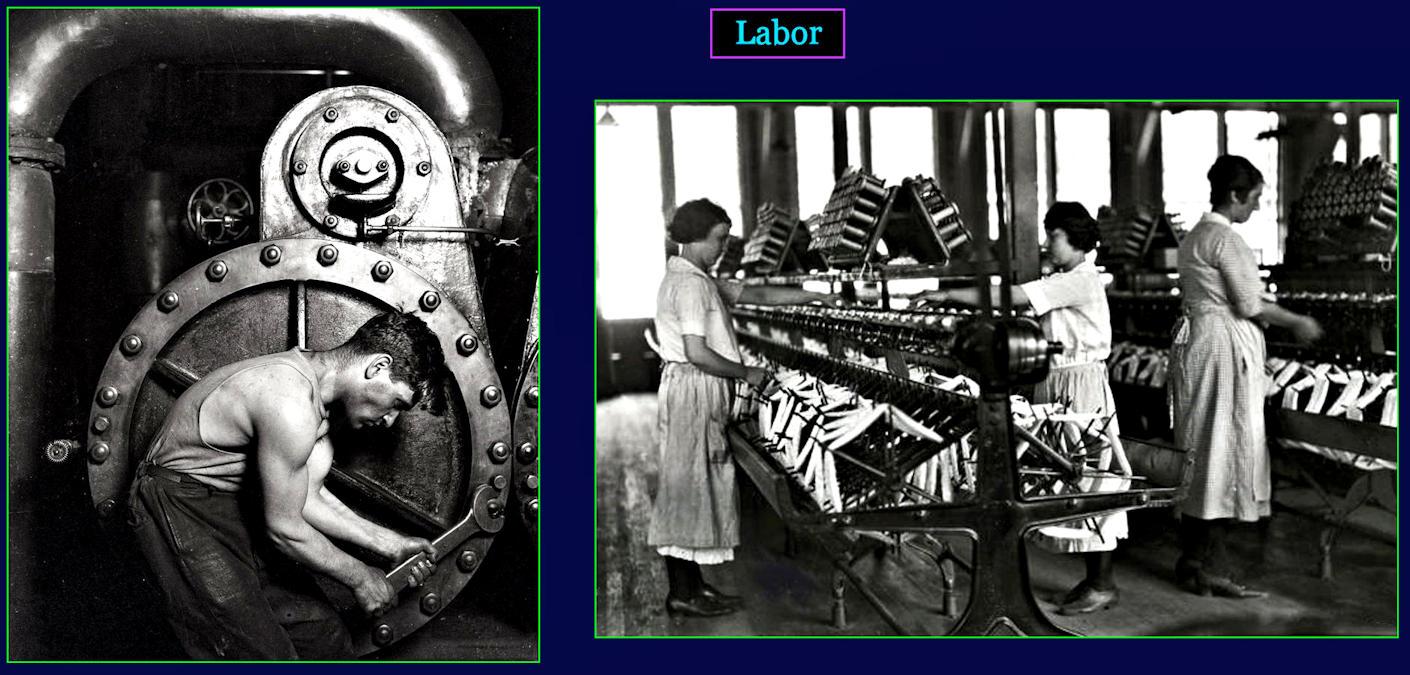
Keeping the Wheels TurningBefore the great tide of immigration, beginning in the 1840s, workers are a somewhat scarce commodity in most of America. In order to attract workers, the first big mills in Massachusetts offer free company housing. This is simple supply and demand at work, but the balance soon begins tipping towards excess supply. New immigrant workers are plentiful, and willing to work cheap. Manufacturing establishments absorb many of them. |
| ||||||||||||||||
| |||||||||
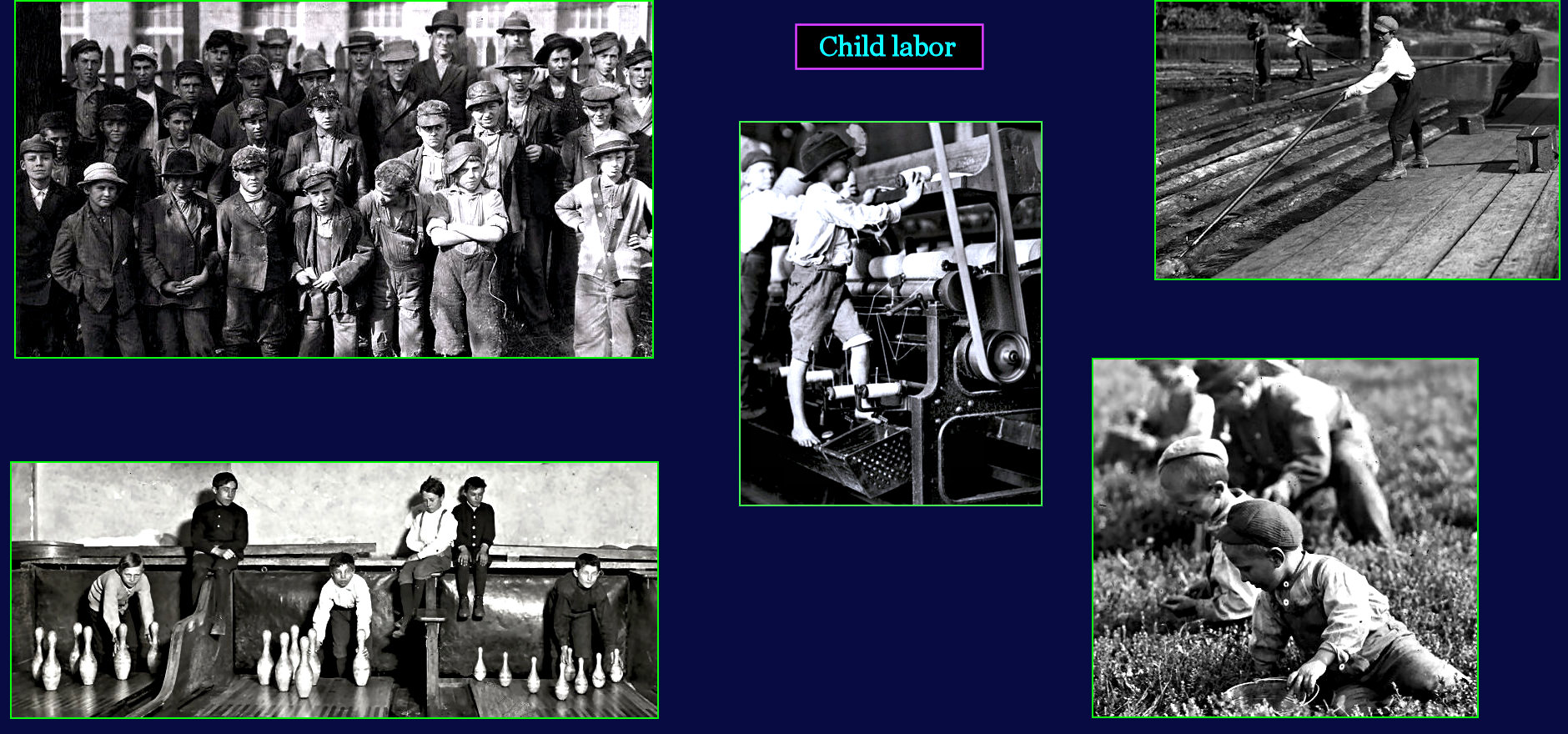
Helping out the Family Textile mills are notorious for hiring young girls to attend the spinning machines, but young boys are also being employed, almost everywhere. The issue begins to attract the interest of lawmakers, who try to deal with the worst offenders. Actually, the families themselves are often to blame, pulling their children out of school for the extra family income needed just to get by. | |||||||||
| |||||||||
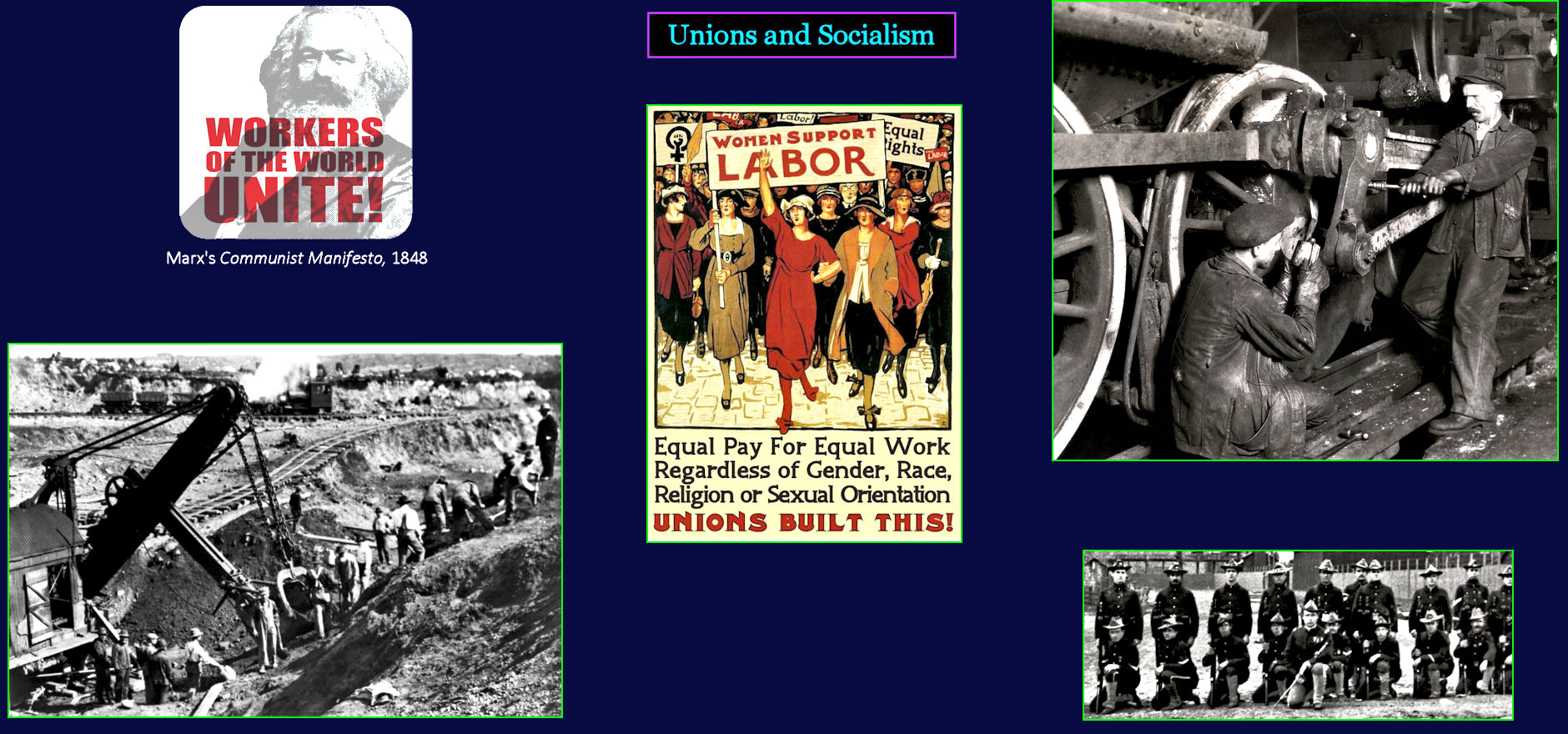
Not just Communists The start of the movement may be traced to the publication of the Communist Manifesto by Karl Marx. His thesis, which is later championed by Communists in Russia, reasons that the ills of industrialism are due to the concentration of power among owners of machinery, mills and factories. It argues for giving more power directly to the workers. There are 20 major strikes in America by 1910, but almost all fail due to intervention by the courts, or the deployment of troops. | |||||||||