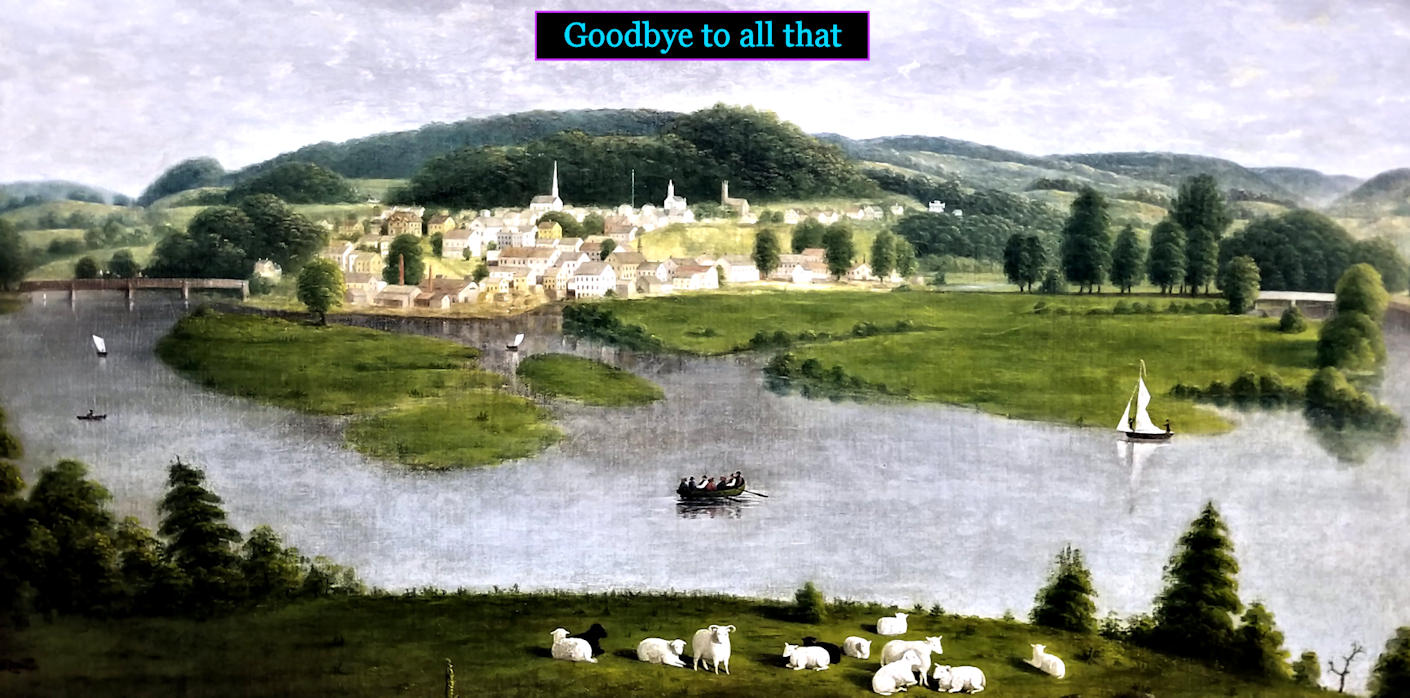
There goes the neighborhoodIndustrialism brings many advantages, but at a cost that is only starting to become apparent. There are many tradeoffs. Speed for noise. Shopping choices for bustling commercialism. Convenience for congestion. Sadly, the days of the small town, as seen here, are coming to an end. People still live out on farms, but are becoming increasingly aware of their isolation. Without the internet, there's not much to discuss but the weather. |
| ||||||||||||||||
| |||||||||
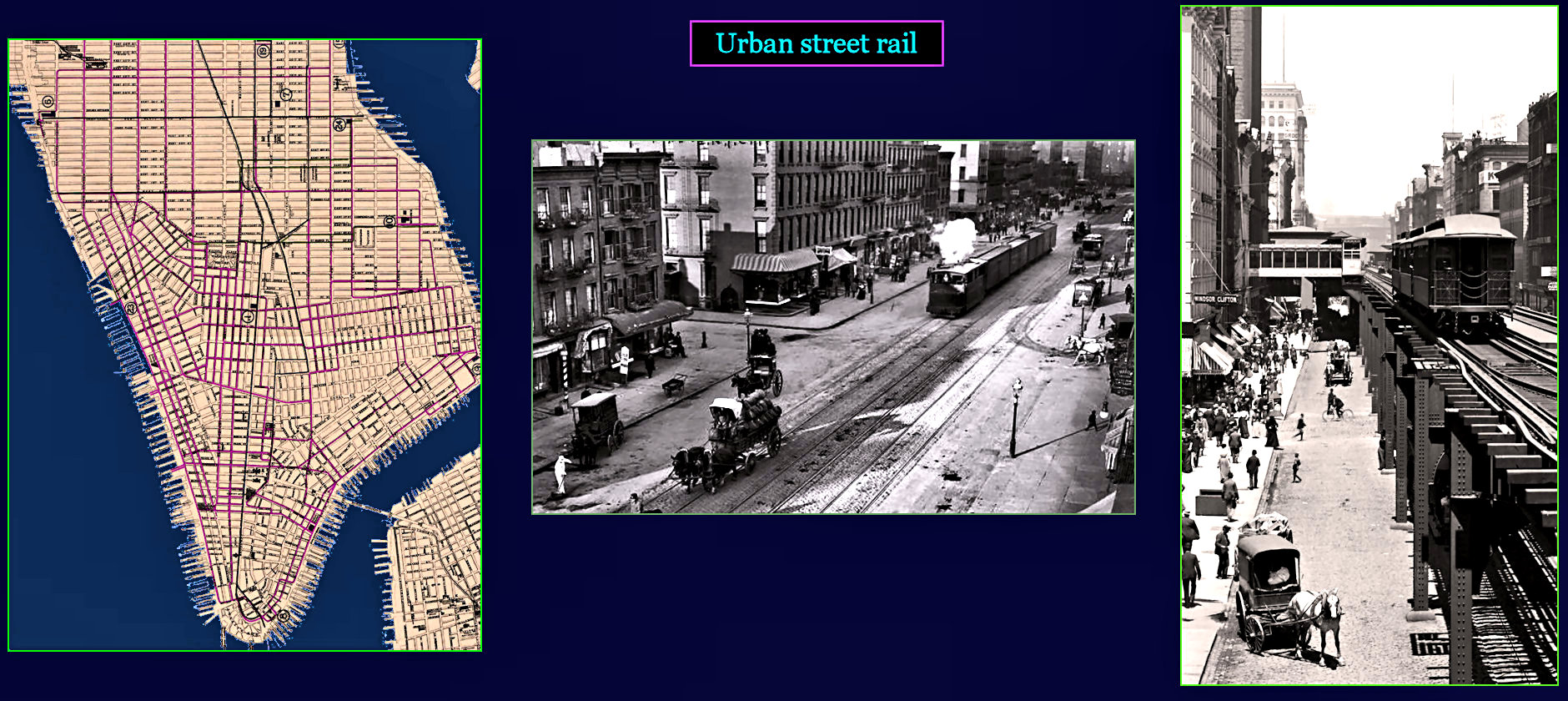
Downtown Rail Service The largest American cities are building out extensive networks of 'street rail,' starting with trollies. But the worst encroachment comes with the elevated railways (right), which not only blot out the sun for pedestrians below, but also bring noise directly into windows of upper floor apartments. The attraction of these rail lines is their speed, as elevated trains don't need to dodge through street traffic. They serve the same function as subways, which will gradually replace them as a means of getting downtown. | |||||||||
| |||||||||
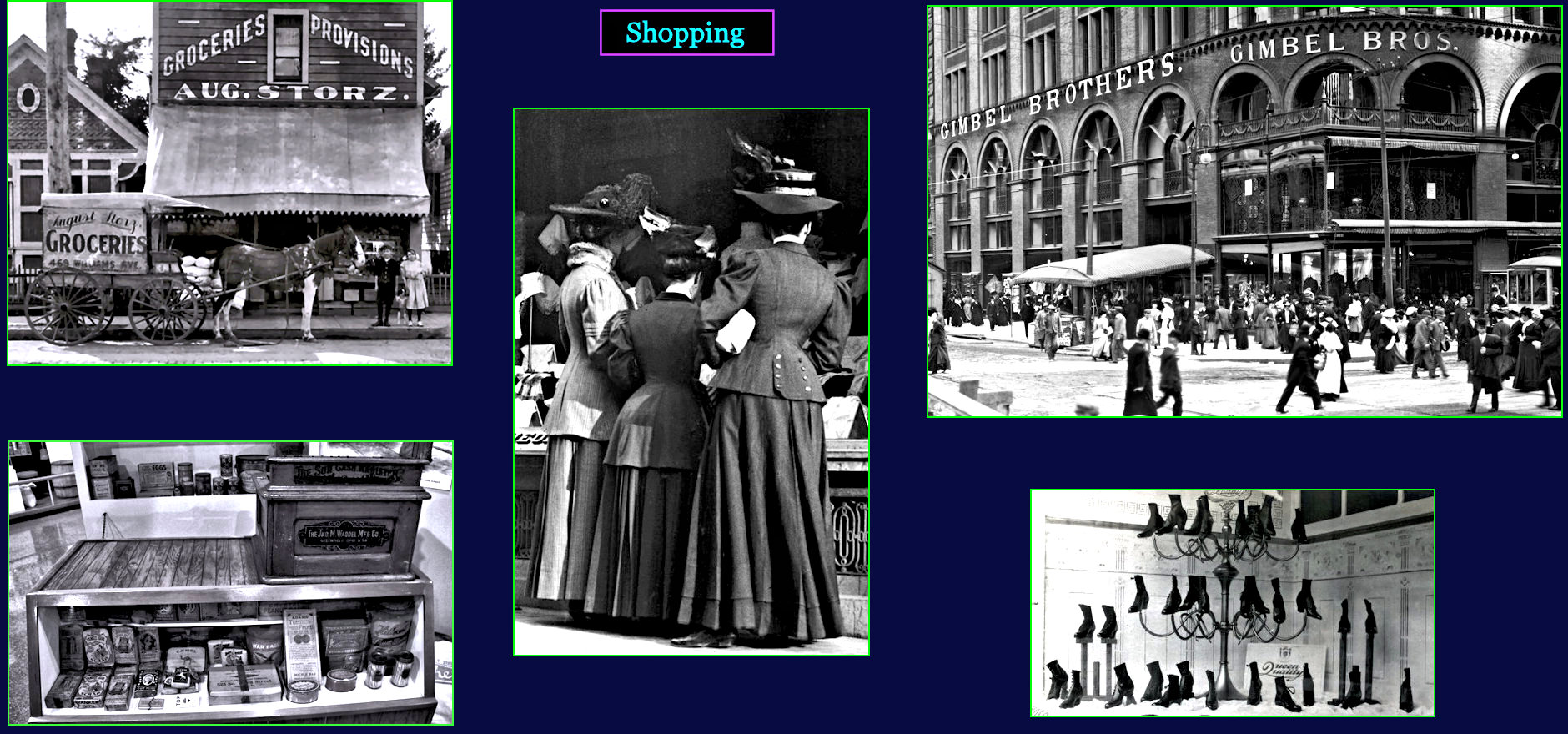
New Urban Recreation Few Americans are worried that the pace of life seems to have become slightly more frantic. Traffic problems are growing, and crowds are swarming the streets in the larger cities, but people are enjoying the benefits of a stylish new urban life. Nowhere is this more evident than in the stores. They're no longer limited to small storefronts selling mostly dry goods (lower left). Big department stores, like Gimbels in New York (top right), are bursting with attractive products, some imported from Paris and London. | |||||||||