| |
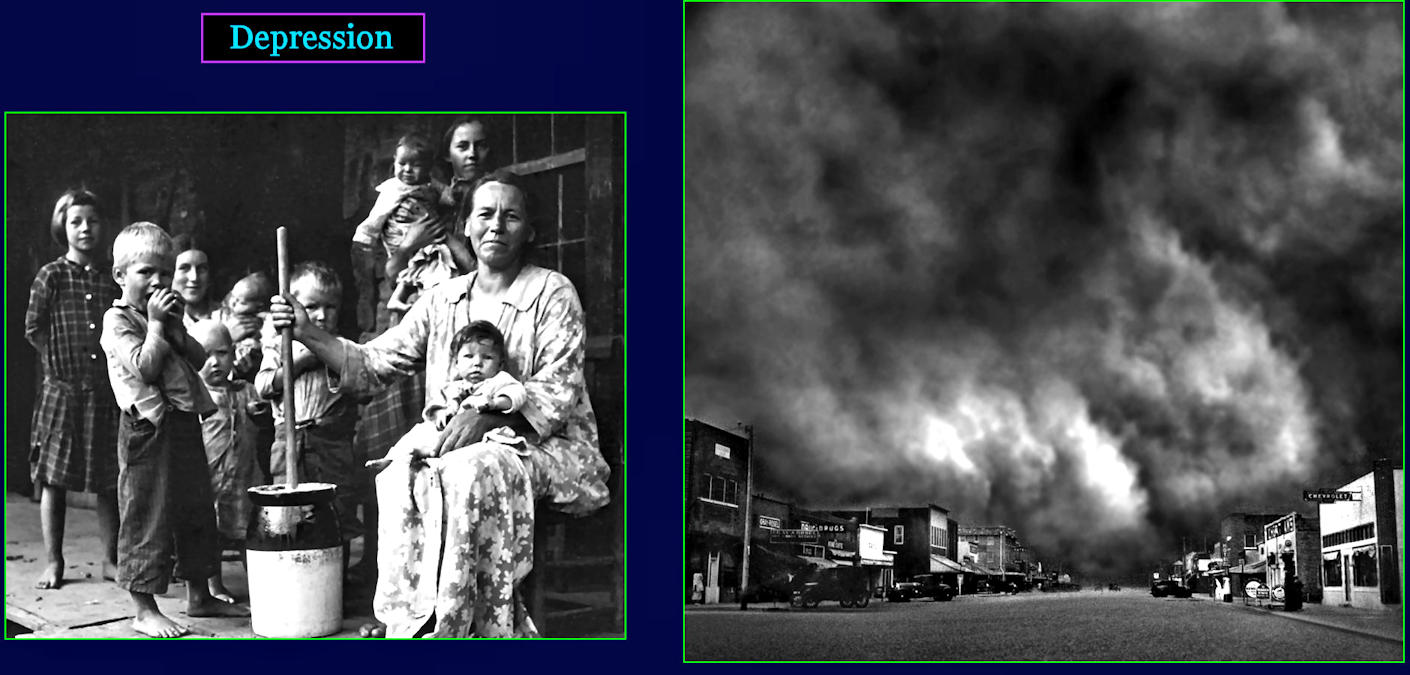
Optimism Fades Living through the Depression is like trying to drive a car with four flat tires. The 'air' that normally keeps the tires inflated is consumer spending. But people are now cutting back on everything. Rising fear drives people to withdraw meager savings from the bank, all at once. This leads to bank failures at a rate eight times higher than during any previous panic. |
| |||||||||
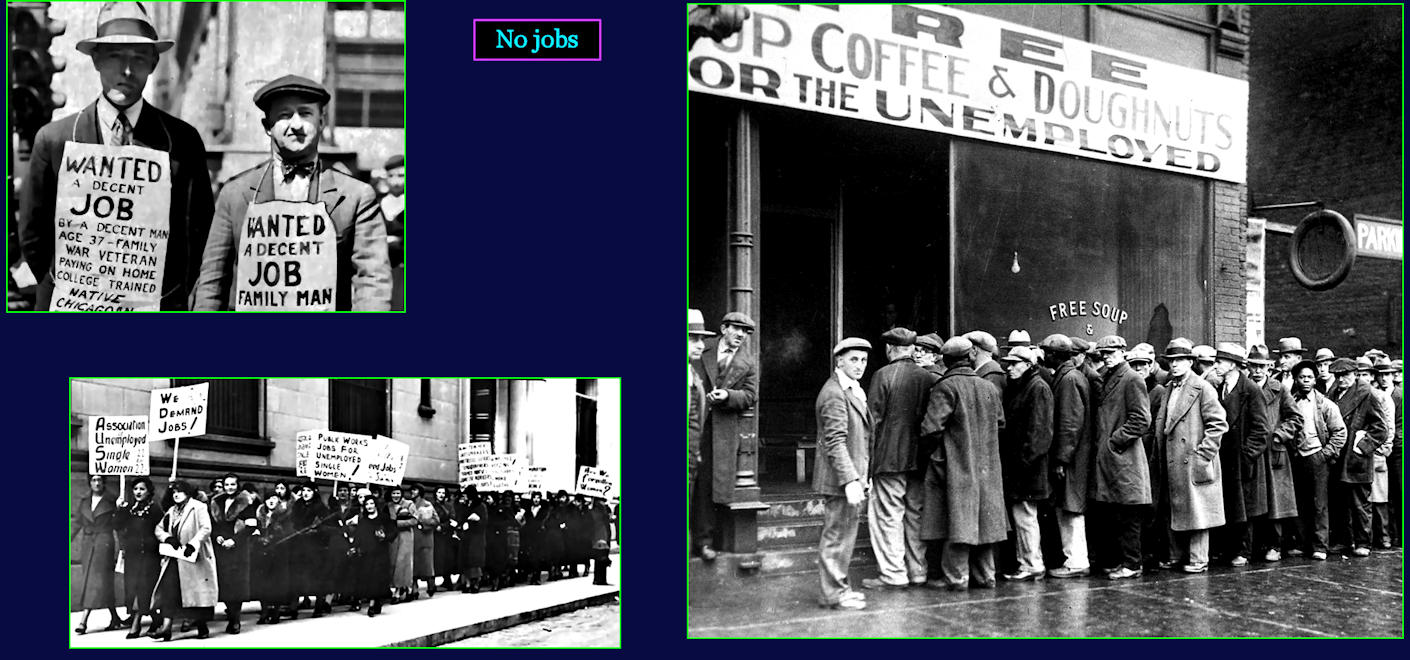
Armies of Unemployed The unemployment crisis is most visible in the cities, where the vast majority of manufacturing jobs are located. Normally, businesses begin re-hiring as soon as economic conditions start to improve. But this doesn't happen during the 1930s. Almost all measures of economic activity have begun to increase by 1933, but managers remain reluctant to restore lost jobs. Profits were totally wiped out two years earlier, and have recovered only slightly since then. No one is eager to begin rehiring. | |||||||||
| |||||||||
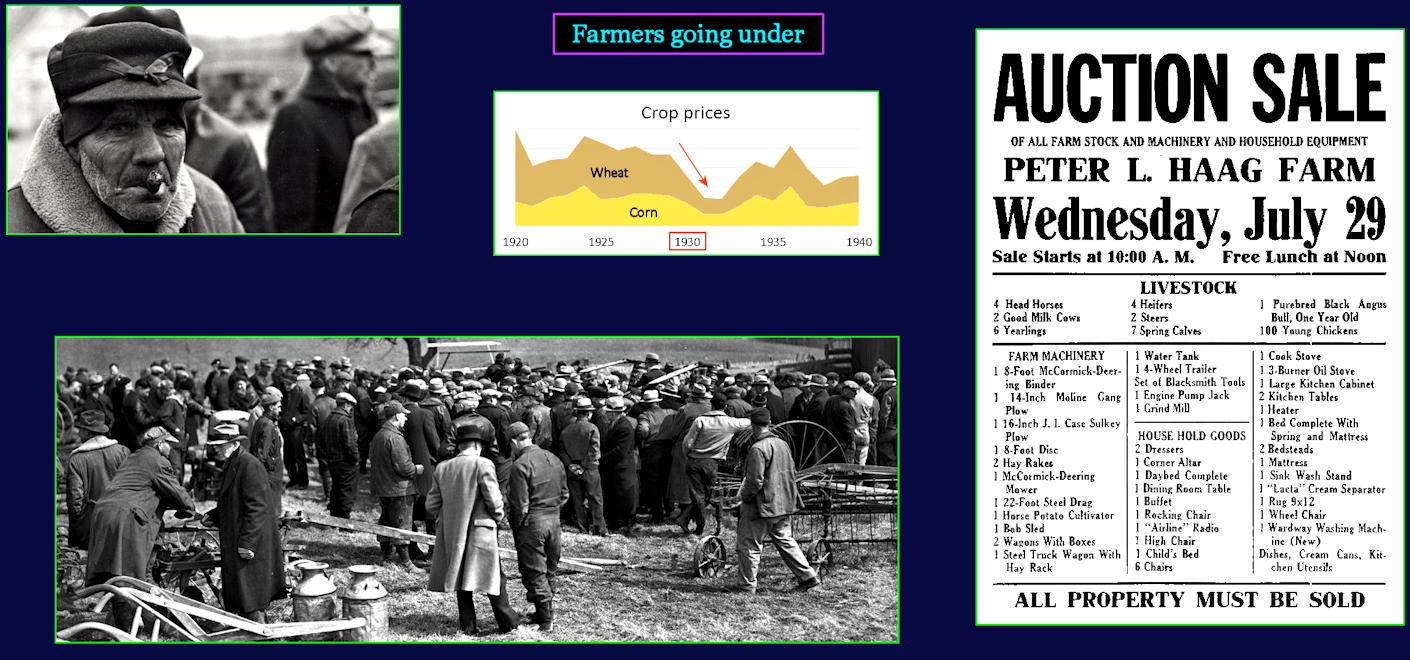
Foreclosure Auctions Farmers are hit by a double whammy. Prices for corn and wheat, their primary cash crops, plummet by well over half. At the same time, rural banks are failing, unable to cover sudden withdrawals from a pool of assets that now includes almost worthless stock and real estate holdings. Farmers are left stranded. They depend upon bank loans in the spring to tide them over until crops can be sold in the fall. Even when banks manage to stay open, they are sometimes forced to foreclose on failing farms. | |||||||||