| |
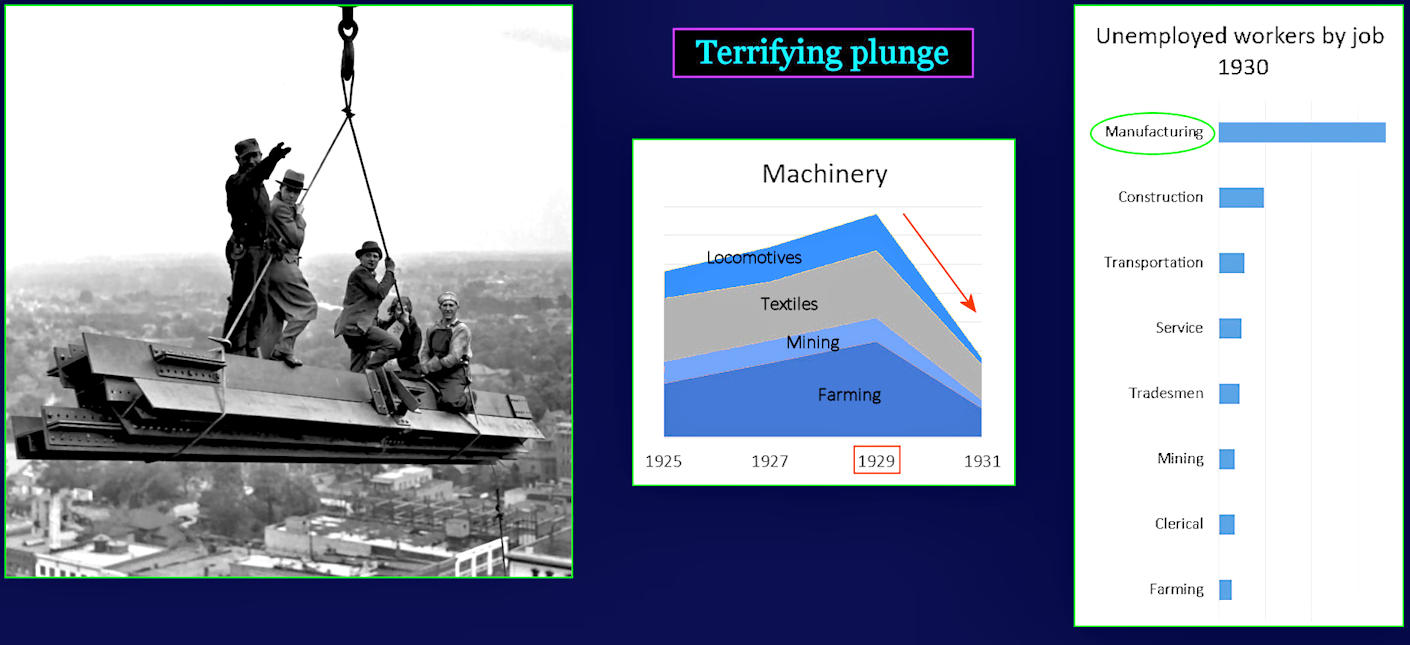
Just a Pause As 1929 is drawing to a close, people are understandably nervous. But when things seem to be settling back down in 1930, many breathe a sigh of relief. Just to be safe, however, anxious families are still cutting back on spending, here and there. With sales declining, managers do what they can to protect their businesses. They begin laying off workers. |
| |||||||||
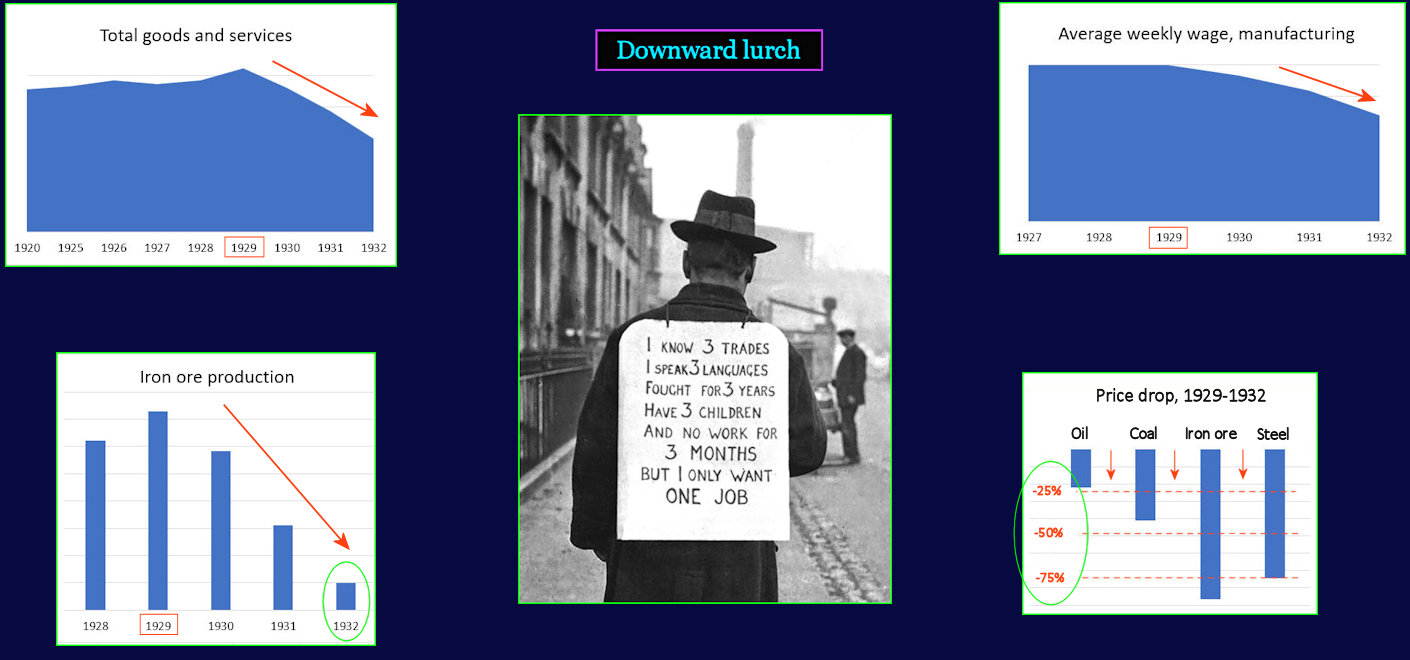
Renewed Decline By the end of 1932, it's apparent that things have definitely not returned to normal. Families which lost their entire income, due to layoffs, have been forced to cut back severely on all spending. There's no choice. This produces a continuing slide in business sales, causing managers to respond with even deeper job cuts. It's a classic vicious cycle. The overall result is a continuing slide in economic health (chart, top left). Production of iron ore, the bedrock of industry, is down an appalling 80% (lower left). | |||||||||
| |||||||||
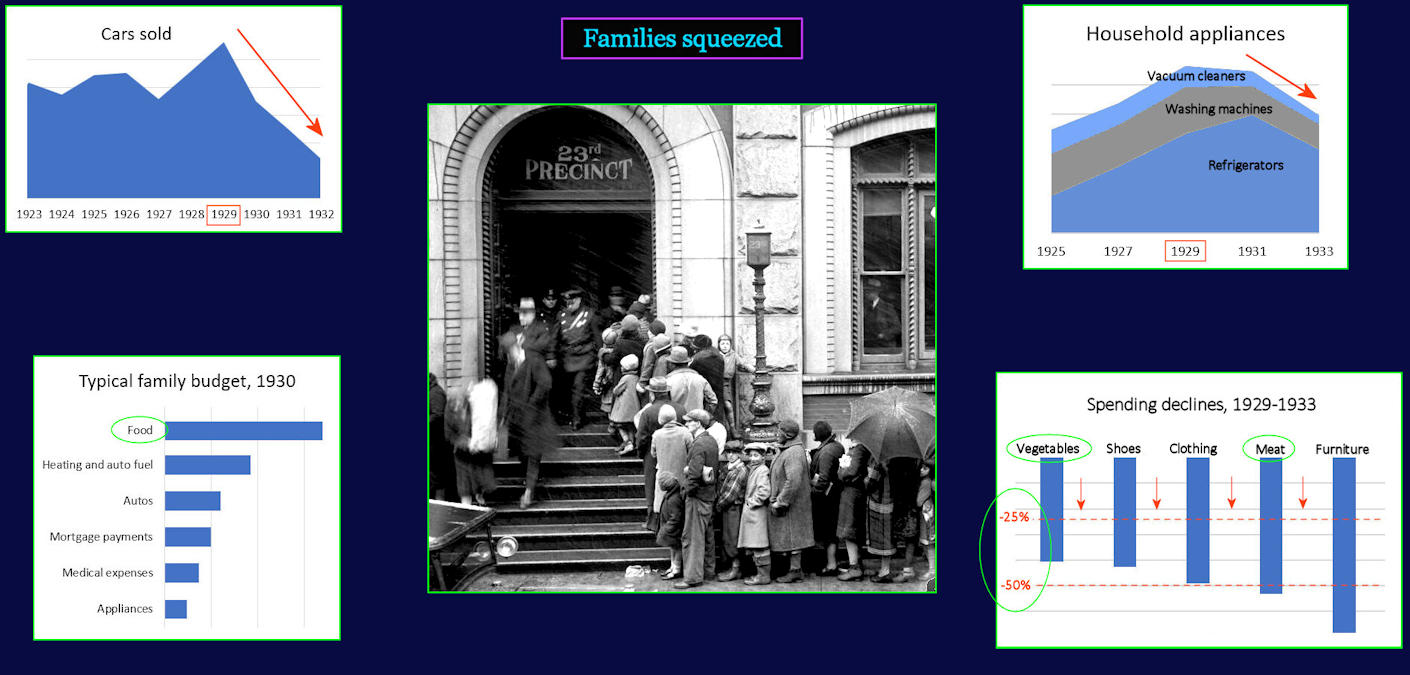
Crashing Hard The future looks bleak, indeed, as America stumbles into its fourth year of decline, in early 1933. In today's modern world, it's difficult to fully grasp what life must have been like during this period. We call a 10% slide in the stock market a 'correction.' A 20% decline is a full-blown 'bear market.' There isn't any term for an 80% plunge in the nation's primary industry, because it never happens. But it does, in 1932. The crash in car sales is also abrupt and dramatic (top left). Something is fundamentally wrong. | |||||||||