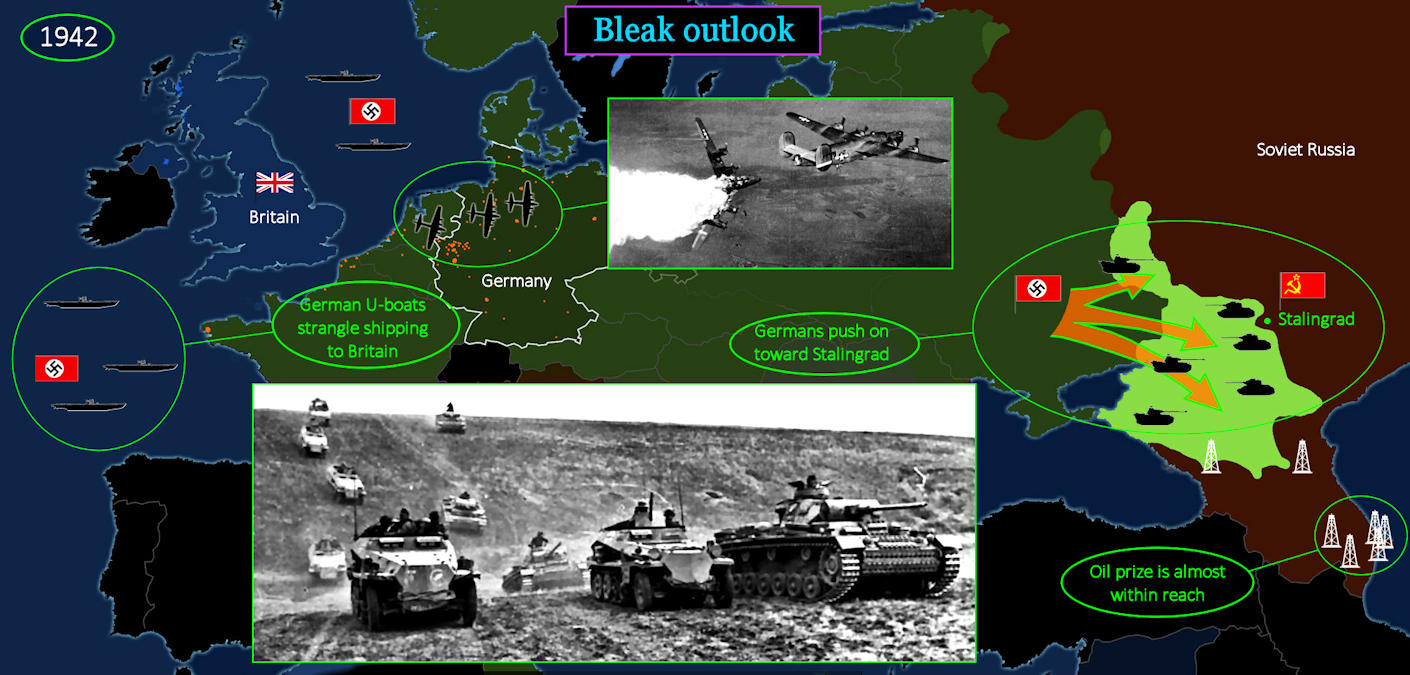
Big Job AheadAll the Allies can manage, in response, is a fairly disastrous bombing campaign. With only short-range fighter support, the loss rate for bombers approaches 50%. The Allies learn to mount larger missions, to overwhelm German radar. Meanwhile, it's open season for German U-boats now prowling all up and down America's eastern coast, sinking freighters and tankers at will. Early action in the Pacific favors the Americans, but not without loss. |
| ||||||||||||||||
| |||||||||
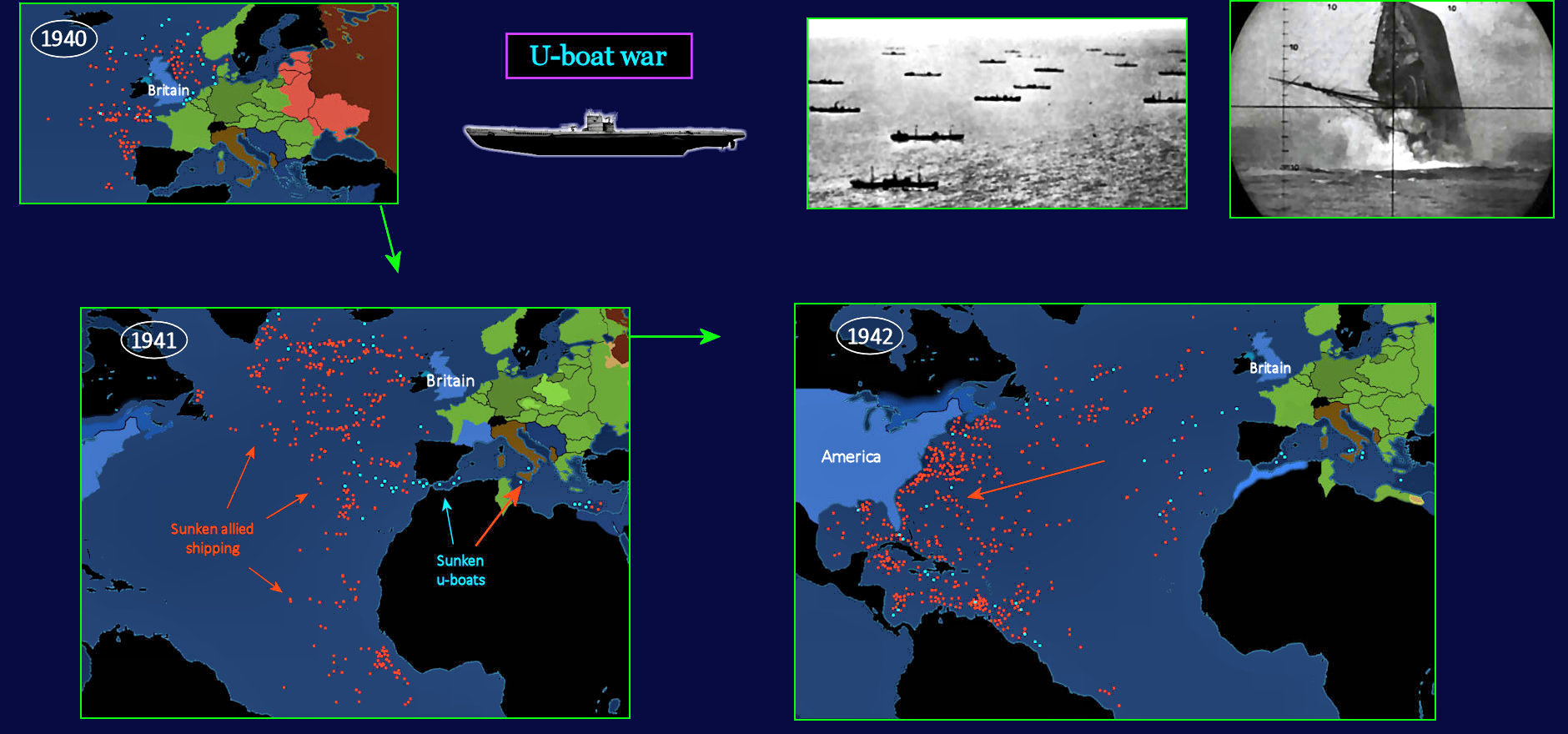
Submarines Surround America When America responds to Pearl Harbor by declaring war on Japan, Hitler promptly declares war on America, a move he previously resisted. This allows him to shift his submarine attack to the American East Coast (lower right). Almost all support for the Allied war effort is shipped from American ports, and German U-boats can now choke this off with almost no loss. U-boat commanders call it the 'happy time,' attacking boldly on the surface, using just the gun on the foredeck. They sink 600 vessels. | |||||||||
| |||||||||
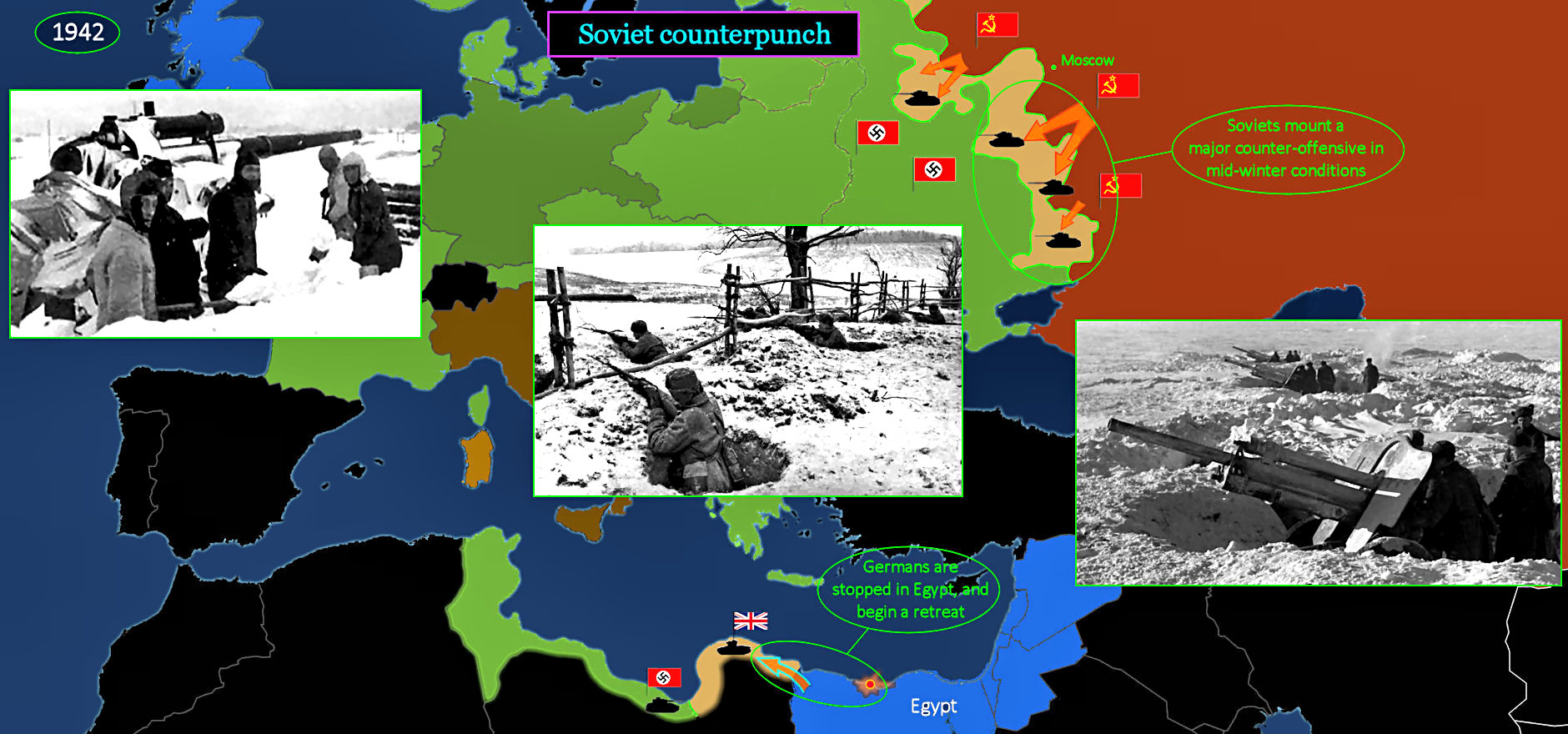
Germans Pushed Back The first really good news comes at the end of 1941, after Stalin is able to transfer large reserves of fresh forces from Siberia. The Soviets manage to stop the German offensive just outside Moscow, and then mount a powerful counter-attack in mid-winter. The exhausted Germans are pushed back all along the front (top right). The Soviet attack is eventually stopped after a moderation in the record-cold weather (-40° F). Meanwhile, the Germans suffer their first defeat in North Africa, in a decisive tank battle. | |||||||||