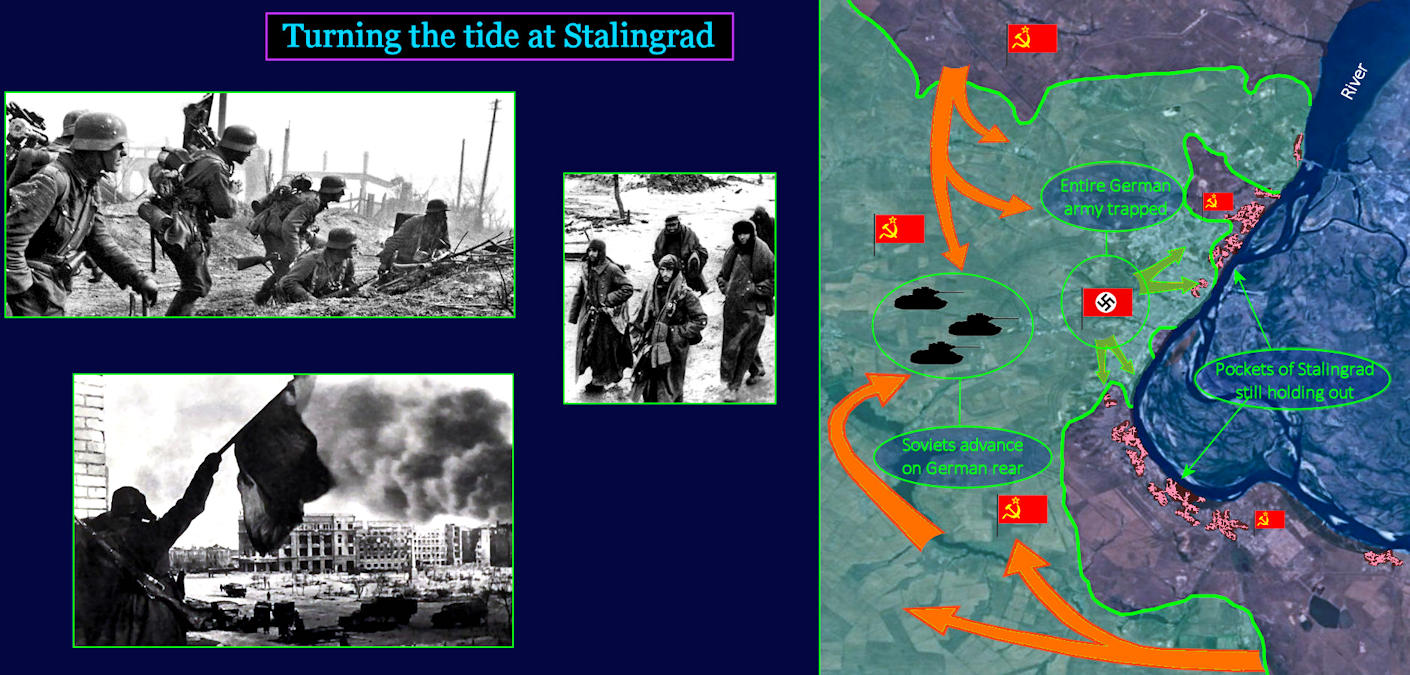
Germany on the RunHitler's army in Russia is exhausted, and stretched far too thin, with most of its heavy equipment destroyed. Things are also going badly in Italy, where the British and Americans are teaming up to drive the Nazis back north. The final blow is the Allied D-Day invasion of France, which catches the Germans off-guard. This is a proud moment for the Americans, who lead the assault. But Hitler's war machine has already been broken, by the Soviets. |
| ||||||||||||||||
| |||||||||
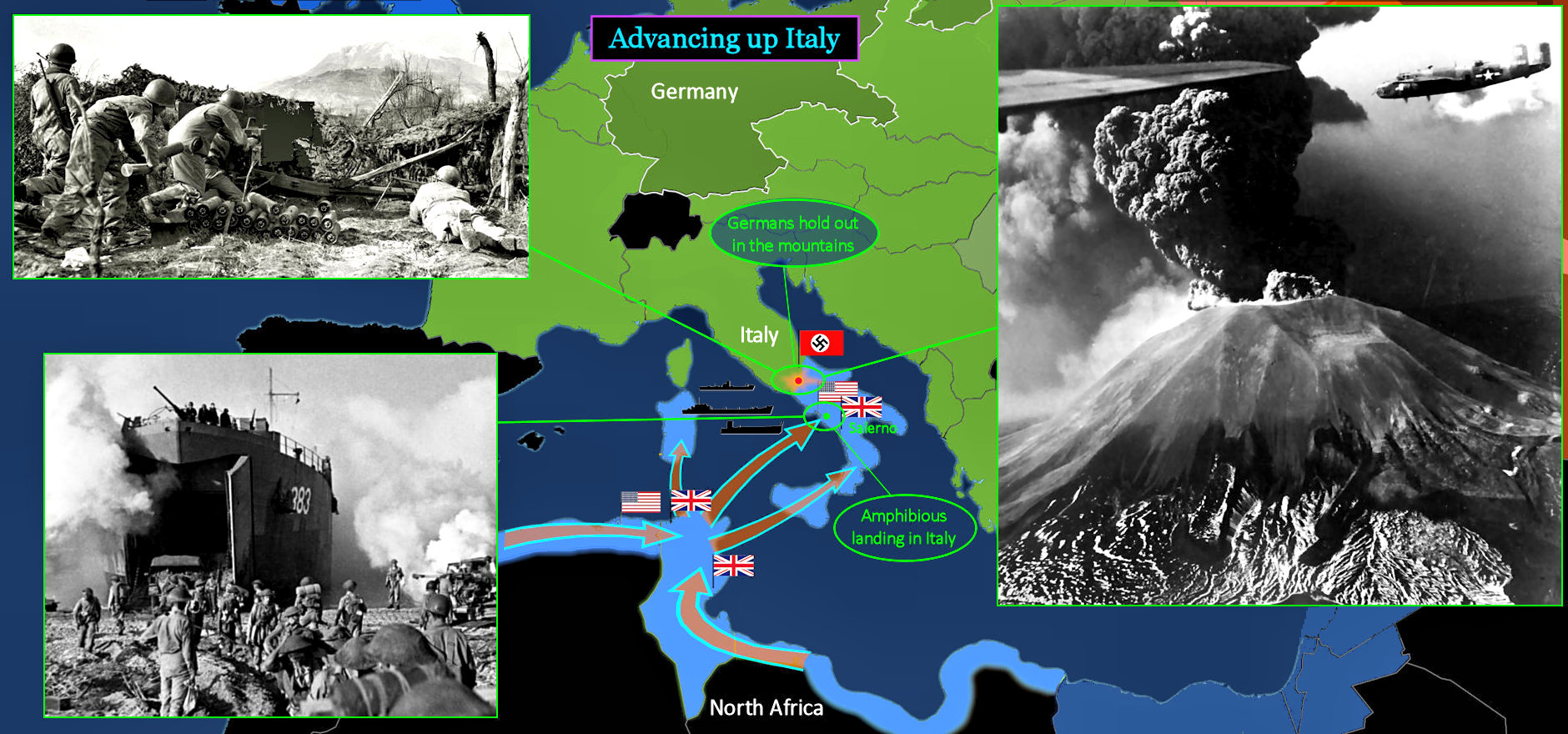
Up from the South The Allied advance up the Italian peninsula presents fresh concerns for the Germans. Starting from North Africa, the Allies first take the island of Sicily, then bypass much of southern Italy to land directly at Salerno (see map). They are stopped by strong German fortifications blocking the main road north, which are only overcome after four separate, costly attacks. The Italian campaign effectively pins down a large German force, preventing it from joining efforts to stop the D-Day invasion. | |||||||||
| |||||||||
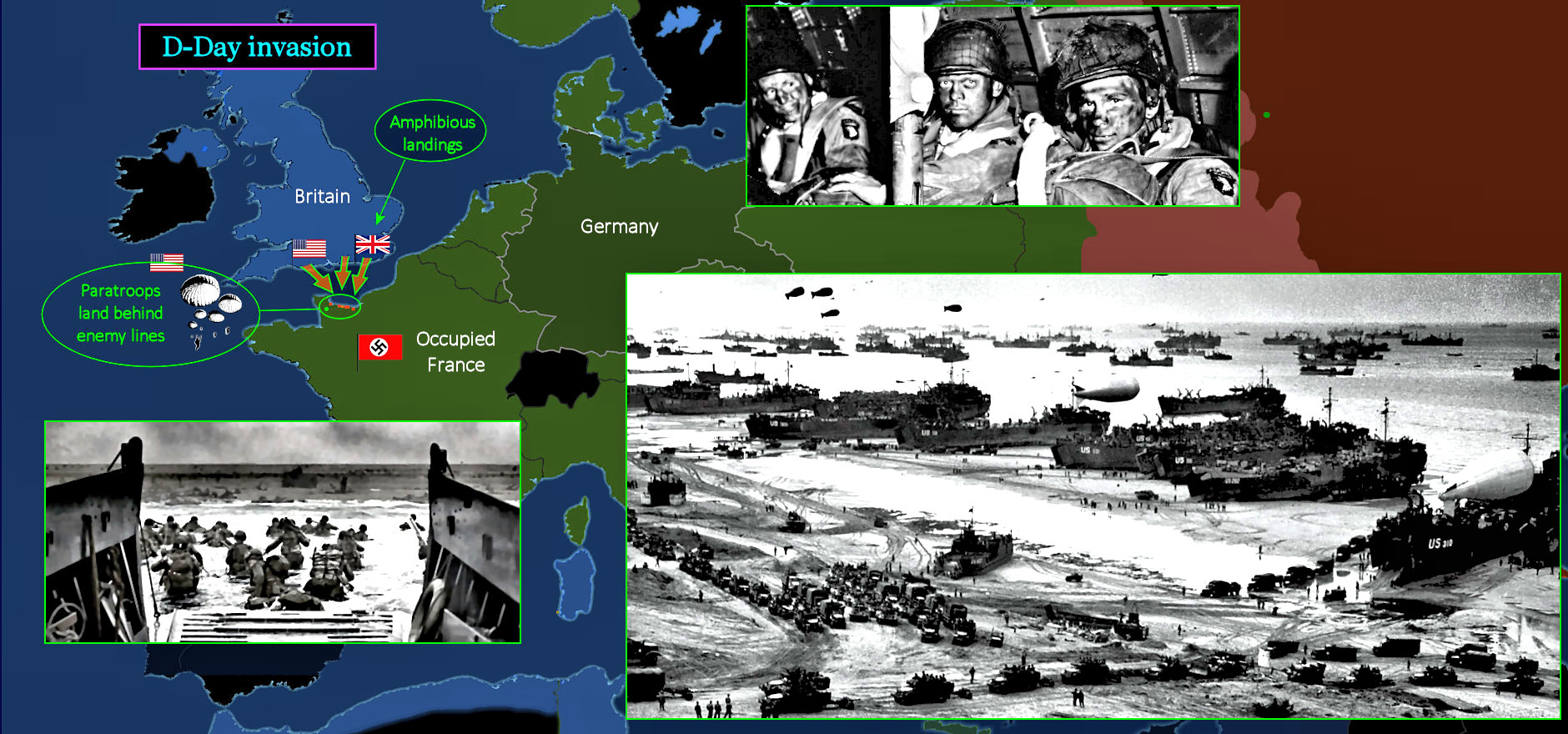
Amphibious Assault The D-Day invasion is a joint Allied effort, storming five beaches on the French coast. Total Allied forces are just one-tenth of those involved in the Battle of Moscow. Still, it's a grand spectacle, and a real nail-biter in the early going. The planned day of the assault comes in the last hours of a terrible Atlantic storm. General Eisenhower, the overall commander and future US President, hesitates until the last minute before giving the go-ahead. Landing craft have to operate in heavy, confused seas. | |||||||||