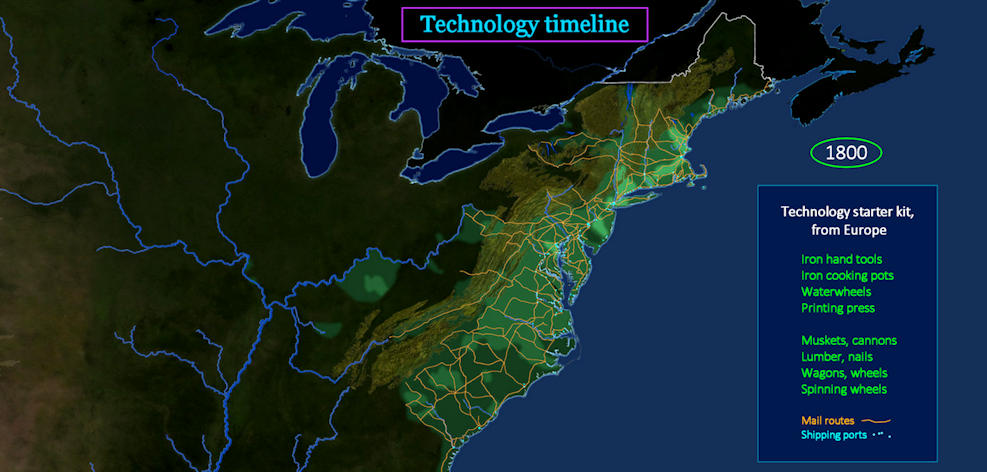
Summing UpAs Bill Clinton gears up for his 1992 campaign, he popularizes the slogan 'It's the economy, stupid.' In other words, don't get lost in smaller issues. Focus on the big one, which in 1992 is the economy. We can now substitute the word 'technology' for the word 'economy.' If there is a single dominant force at work in the world today, it is the influence of technology. Looking back, we can see this began abruptly, around 1800. |
| ||||||||||||||||
| |||||||||
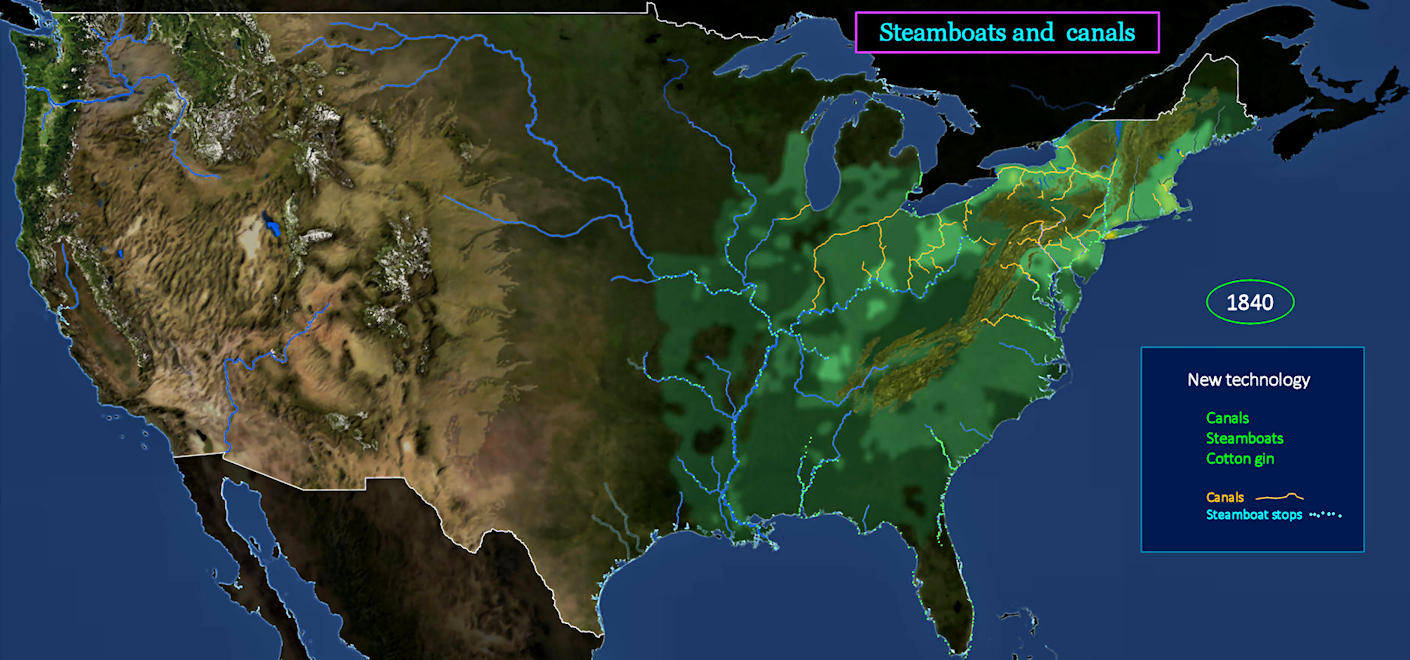
Arrival of Steam The next big event is the launch of the first successful steam-powered vessel, in 1806. They become an instant hit, arriving at precisely the moment that canals also begin to appear. A canal is a man-made ditch to create an artificial 'river' where none exists in nature. At this time, river transport is by far the dominant force in commerce, but navigable rivers don't exist in many places. Canals are dug to extend the reach of vessels, and to provide connections between the Great Lakes and Ohio and Mississippi rivers. | |||||||||
| |||||||||
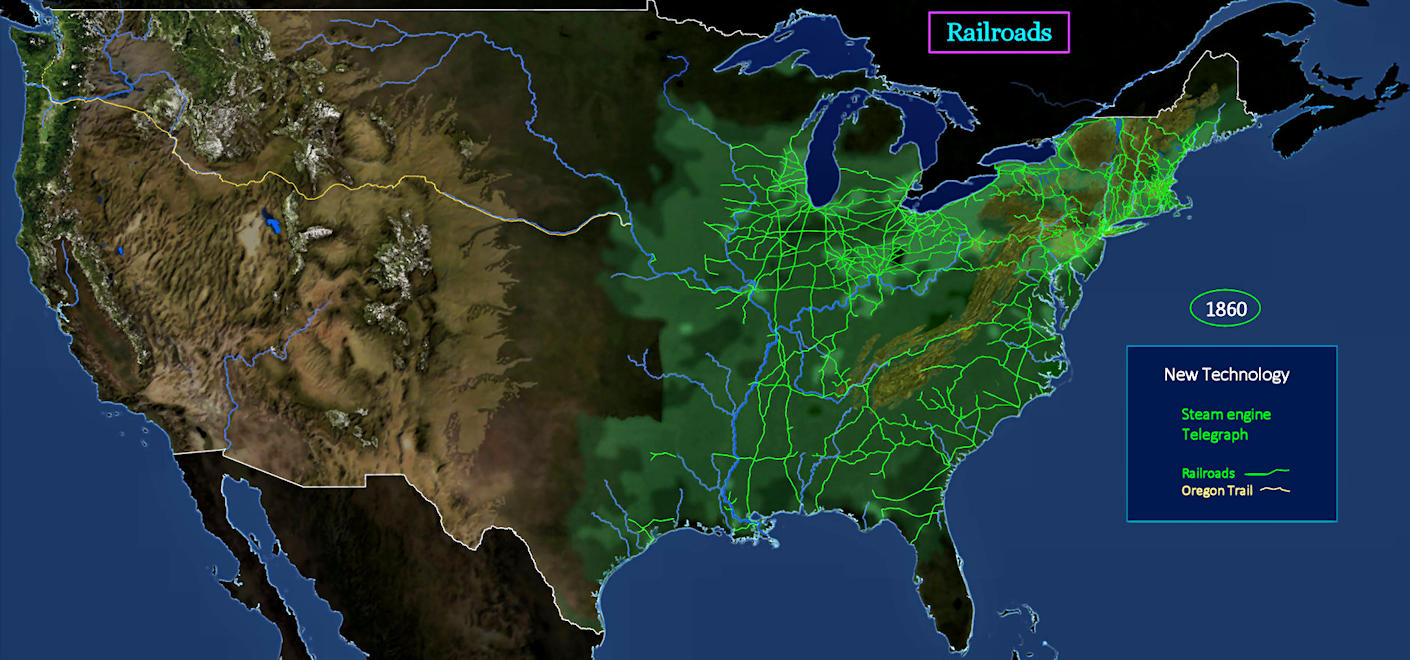
Railroads, the Main Event Steamboats continue to be important right up to 1900, but canals quickly lose traffic to the much faster, and more versatile railroads. Locomotives use a smaller, improved steam engine to pull rail cars on iron rails, and begin to displace canal traffic at about the time the canal era is peaking, in 1840. The map shown here is from 1860, the time of the Civil War, when rail lines extend all the way to the Mississippi River. By this time, telegraphs connect stations, allowing dispatchers to track train movements. | |||||||||