| |
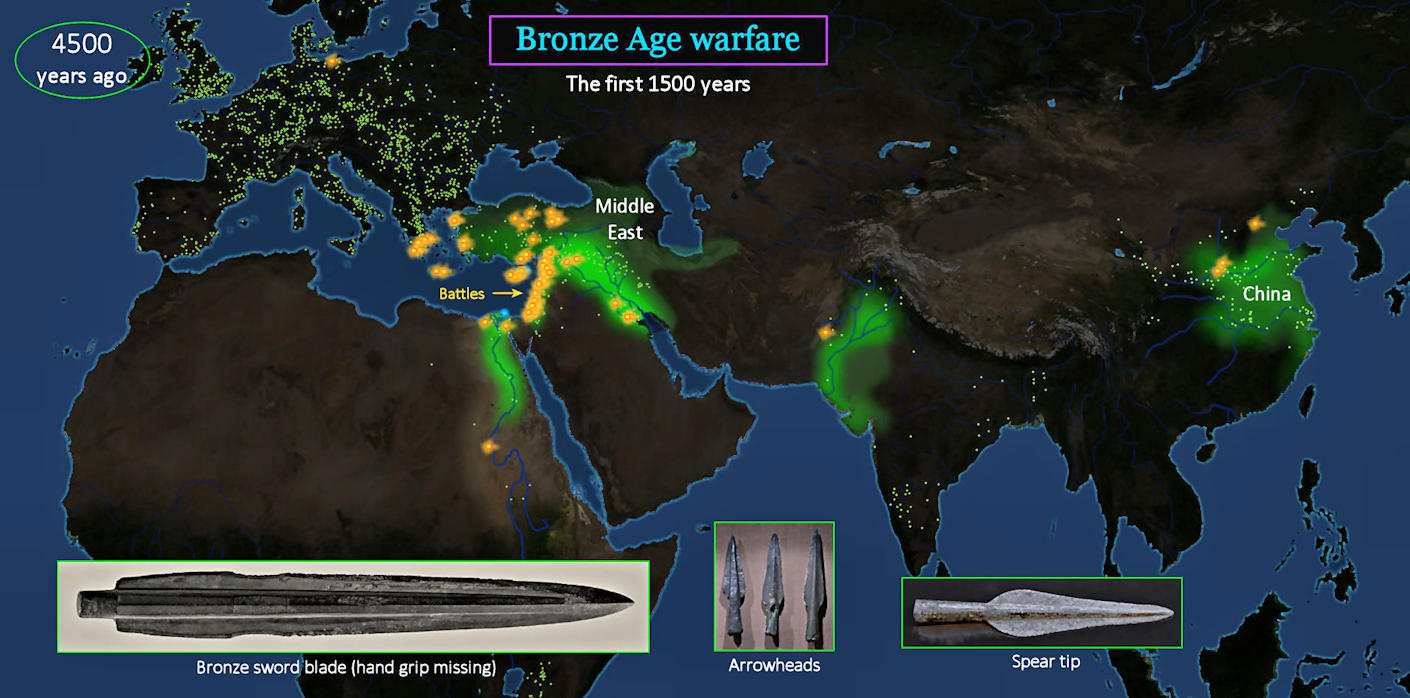
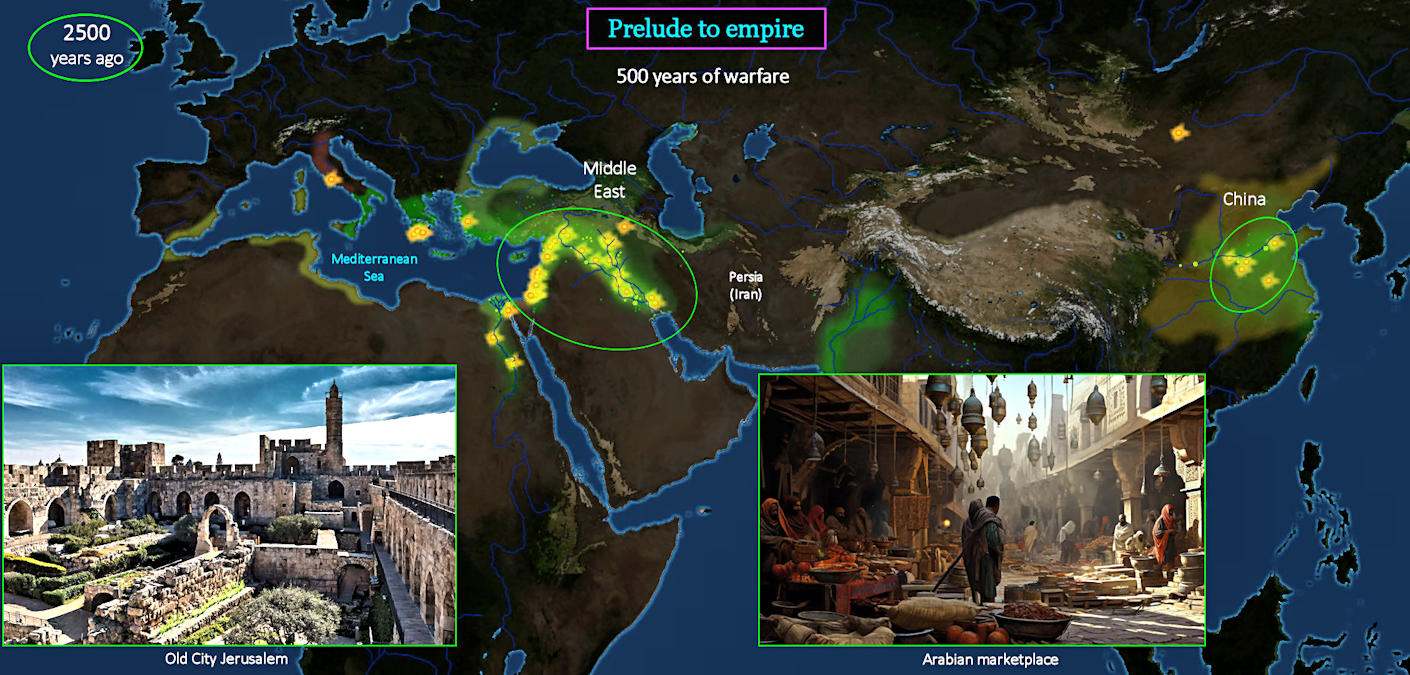
Bronze Age Conflict History does not record any notable conflicts occurring prior to the discovery of bronze. Great fights may have occurred before the development of written language, but there is almost no evidence of this. In any case, battles begin erupting with increasing frequency as soon as bronze becomes available. Most early battles are concentrated in the Middle East, with a much smaller cluster in China. Between these two zones lies a forbidding mountain barrier that keeps China isolated for the next 2000 years, until the mountain trail called the Silk Road is opened. |
| |||||||||
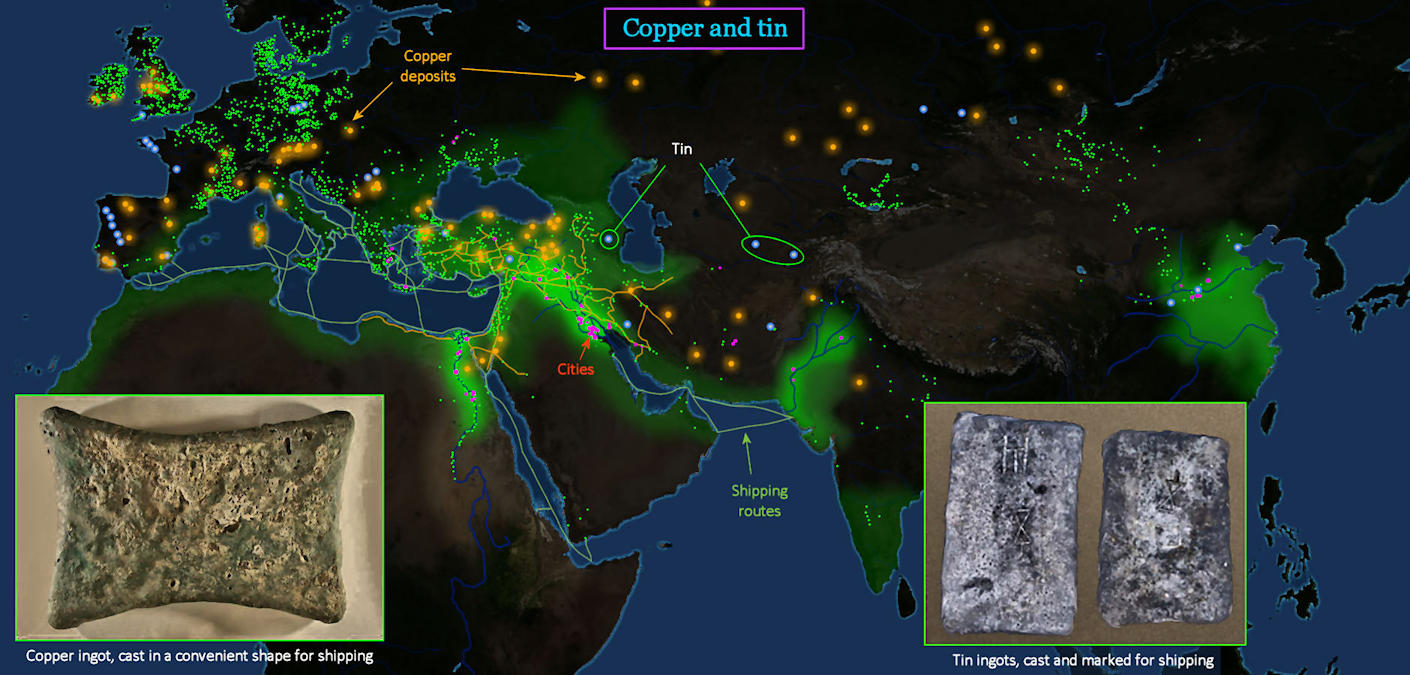
Copper and Tin It s amazing that bronze is discovered at all. It can't be mined directly from the ground, as it requires two separate ingredients. Copper and tin. Copper is fairly common, and can be found near the surface in many locations (ORANGE highlights on map). Copper can be melted and poured into a clay mold, like silver, gold and lead. But it's too soft to make a useful blade. The addition of tin (about 12% by volume) is required to achieve the hardness of bronze. Unlike copper, however, tin is found only in a few specific locations (WHITE dots on the map). People who live near deposits of both copper and tin have a big advantage during the emerging age of conflict. Greece is one such place. | |||||||||
| |||||||||
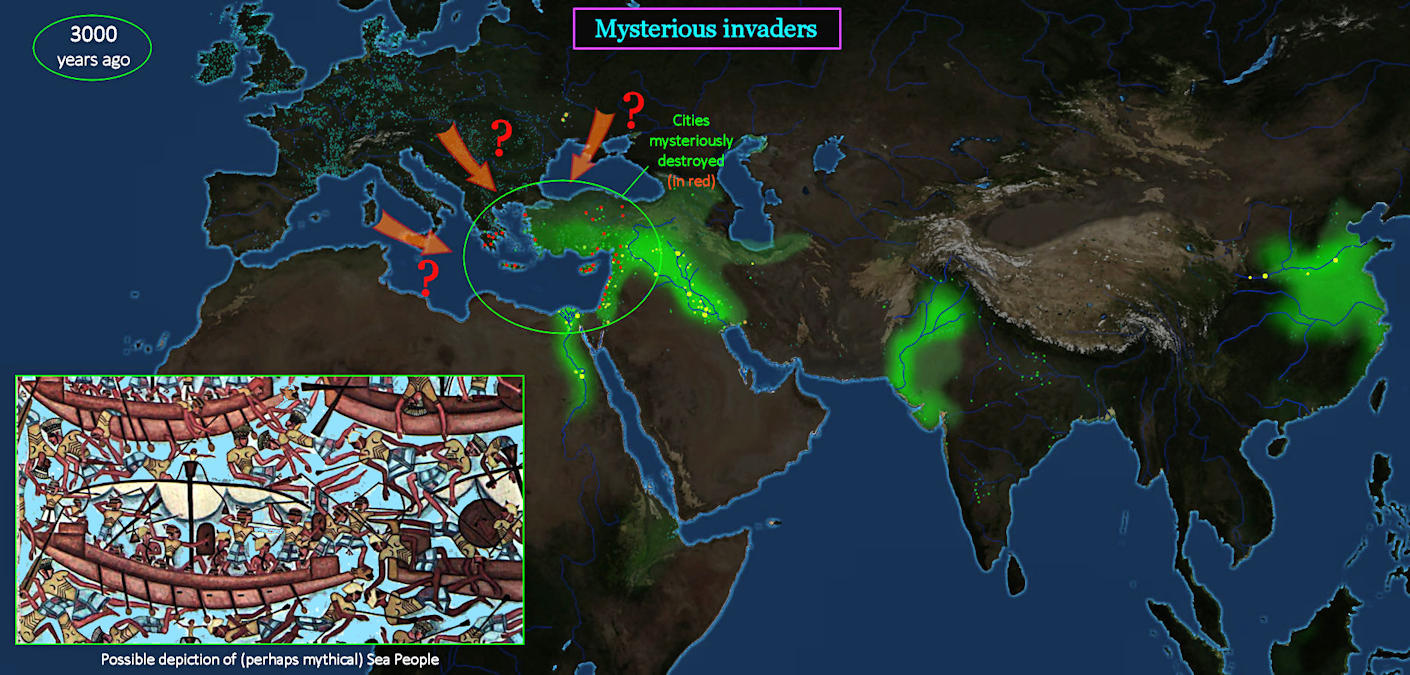
Bronze Age Collapse One of the enduring mysteries of history is the brief period during which many Bronze Age cities in the Middle East are suddenly destroyed (RED dots). Who or what causes this destruction remains unclear to this day. It may have been invaders sweeping down into Greece from the relatively uncivilized areas to the north. It may have been (perhaps mythical) 'Sea Peoples,' arriving in boats to raid and pillage, in a manner similar to the Vikings 1000 years later. In any case, it will take organized civilization hundreds of years to recover. The population of Greece, in particular, declines dramatically. Some previously existing cities are never rebuilt. | |||||||||
| |||||||||
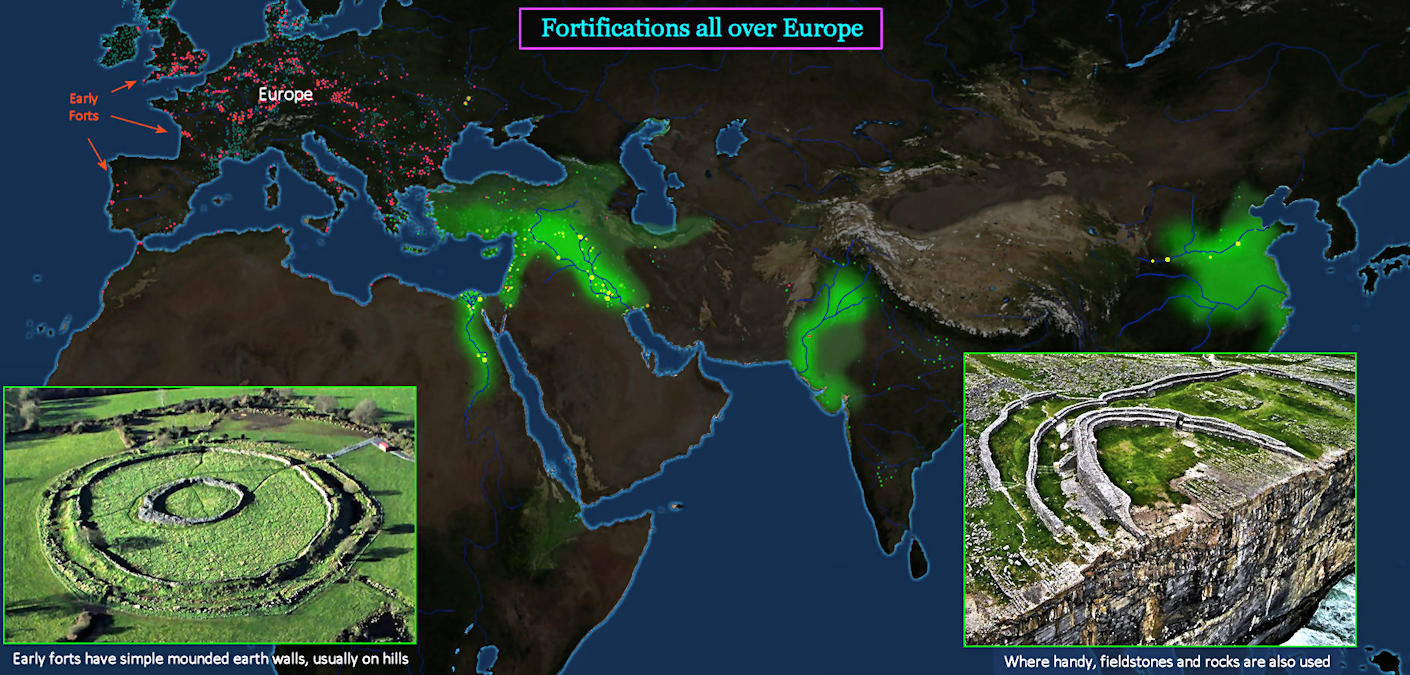
Early Forts One natural consequence of widespread conflict is widespread fear. Throughout the Bronze Age, people apparently find the danger alarming enough to begin building hilltop forts all over Europe, especially in the north (RED dots). These are generally built on hilltops by mounding earth into a defensive perimeter, with some kind of wooden barrier fencing on top. This is tedious work, but the fear of violent intruders is clearly a strong motivator. In the Middle East, almost every city has impressive defensive walls built of stone. Later on, as weapons improve and warfare spreads, Europeans also turn to stone as a more durable building material for walls and castles. | |||||||||
| |||||||||
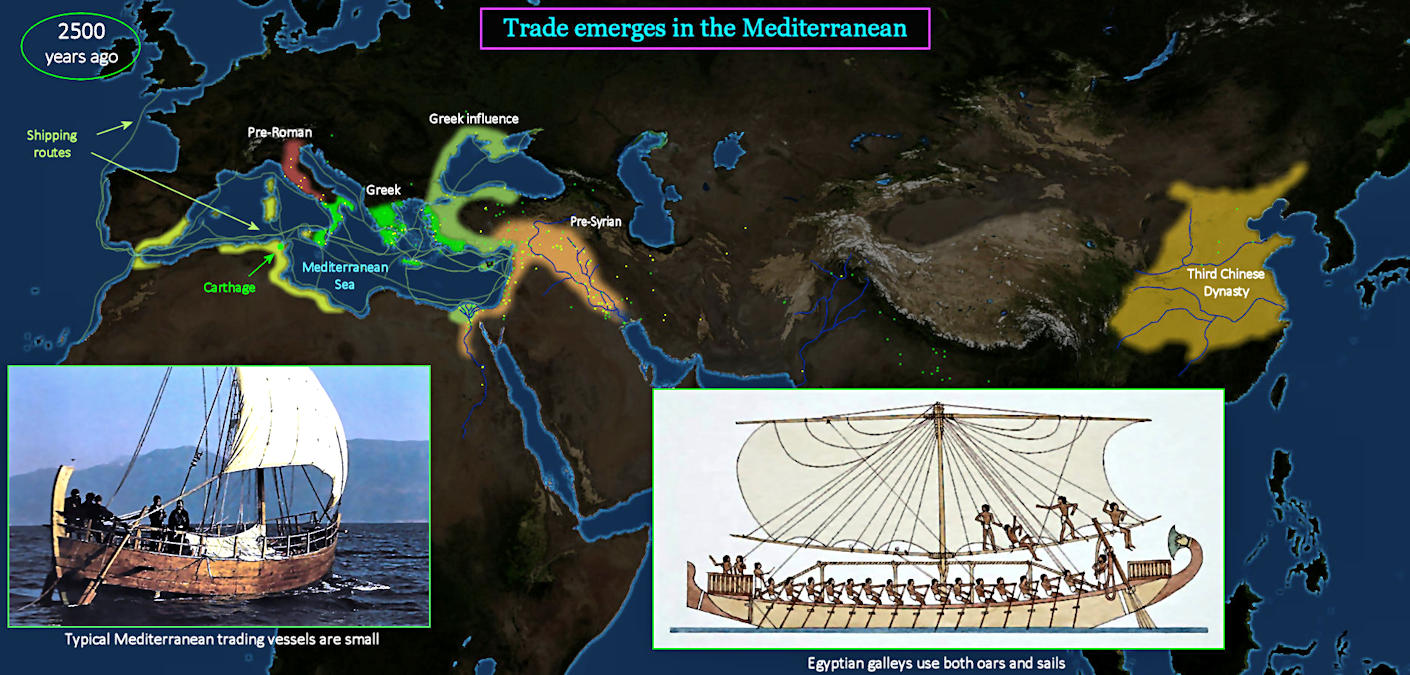
Mediterranean Civilizations After the period of destruction subsides, civilization again begins to spread. Several distinct cultures are maturing in the area surrounding the Mediterranean Sea (above, left). Each has ethnic cohesion resulting from closely related languages. Overland travel is dangerous and difficult, but small vessels are becoming increasingly seaworthy. Major trading routes crisscross the confines of the Mediterranean Sea. The Greeks, with settlements spread all over surrounding islands, are good seamen by necessity. But the sailors of Carthage are dominant. They leave their homeland in modern Lebanon to create a growing trading empire along the northern rim of Africa. Meanwhile, the great Zhou Dynasty flourishes in China, despite internal conflict. | |||||||||
| |||||||||
Trade Wars As civilization spreads, neighboring cultures naturally come into conflict. Trade routes are especially valuable, as they allow the gradual accumulation of wealth. Greek and Carthaginian sea routes dominate the Mediterranean. A separate network of trade routes is developed by Arabs in the vast land-locked area beginning in Syria, and stretching east into Persia (modern Iran) and beyond. Conflict heats up in the Middle East, where these two networks meet to exchange goods, some arriving by sea and others by land. The entire area remains a tinderbox to this day. Meanwhile, civil conflict erupts in China between rival factions fighting for control. | |||||||||