Quest for EmpireApproximate height of influence: The Persian Empire 500s BC Alexander the Great 300s BC Classical Greece 200s BC Rome vs Carthage 100s BC Classical Rome 200s AD Roman Wars 300s AD Roman Collapse 400s AD |
| ||||||||||||||||
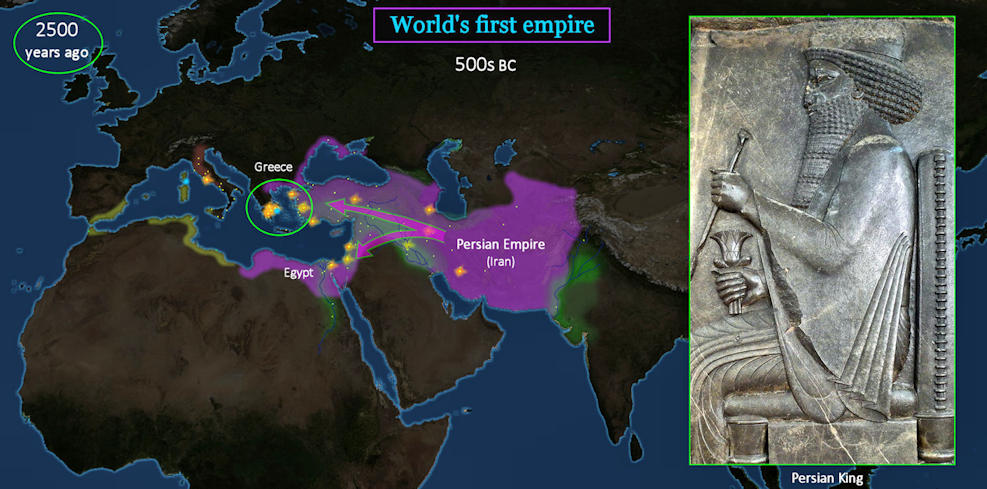
| |||||||||
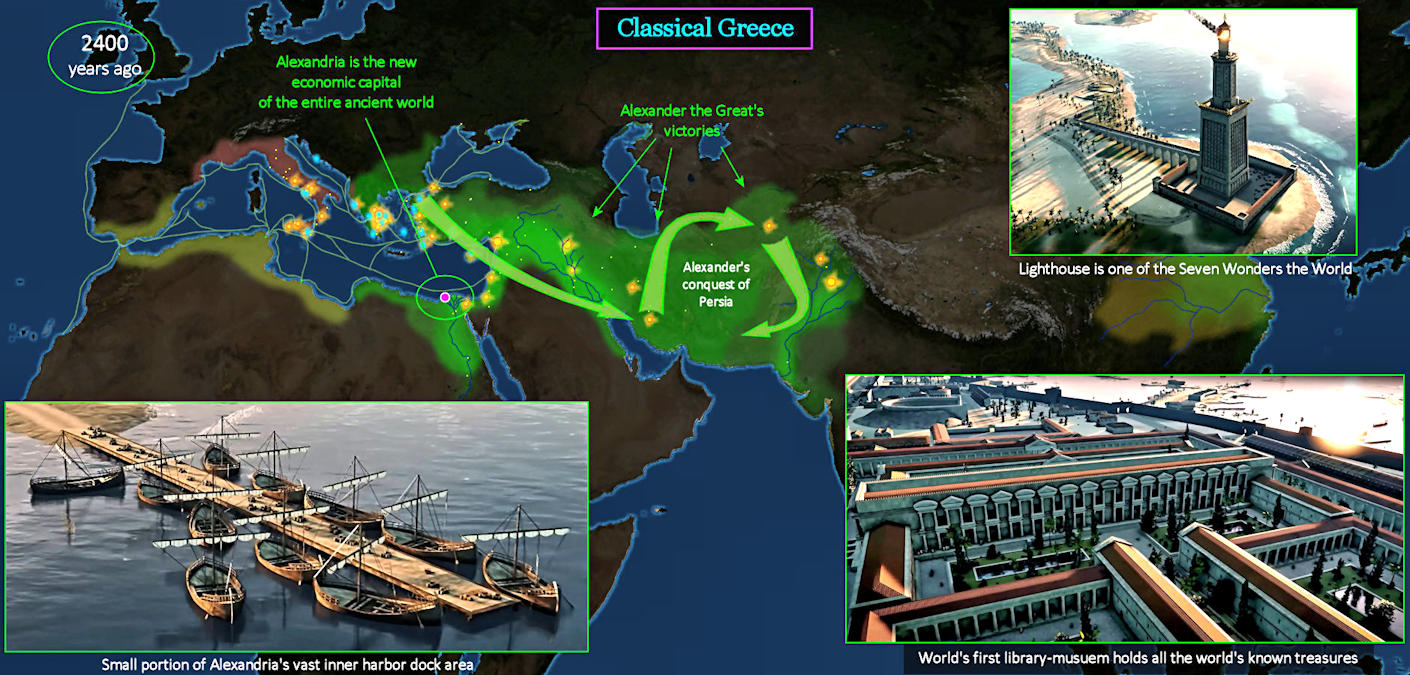
Greeks in Egypt 150 years after Persia's conquest of Greece, Alexander the Great sets out to avenge the Greek losses with his historic invasion of the Persian heartland. It takes Alexander 10 years to traverse and subdue the entire Persian Empire, defeating the Persians in every battle, despite being outnumbered. In two instances, after long and difficult sieges, he executes all military-age males in the defeated garrison, selling the women and children into slavery. This is typical during most of ancient history, when long sieges eventually succeed. On his way back to Greece, however, he dies in mysterious circumstances. The great wealth he sent back to Greece during his conquests are used to construct the greatest civilization so far, based in northern Egypt. The capital is Alexandria. | |||||||||
| |||||||||
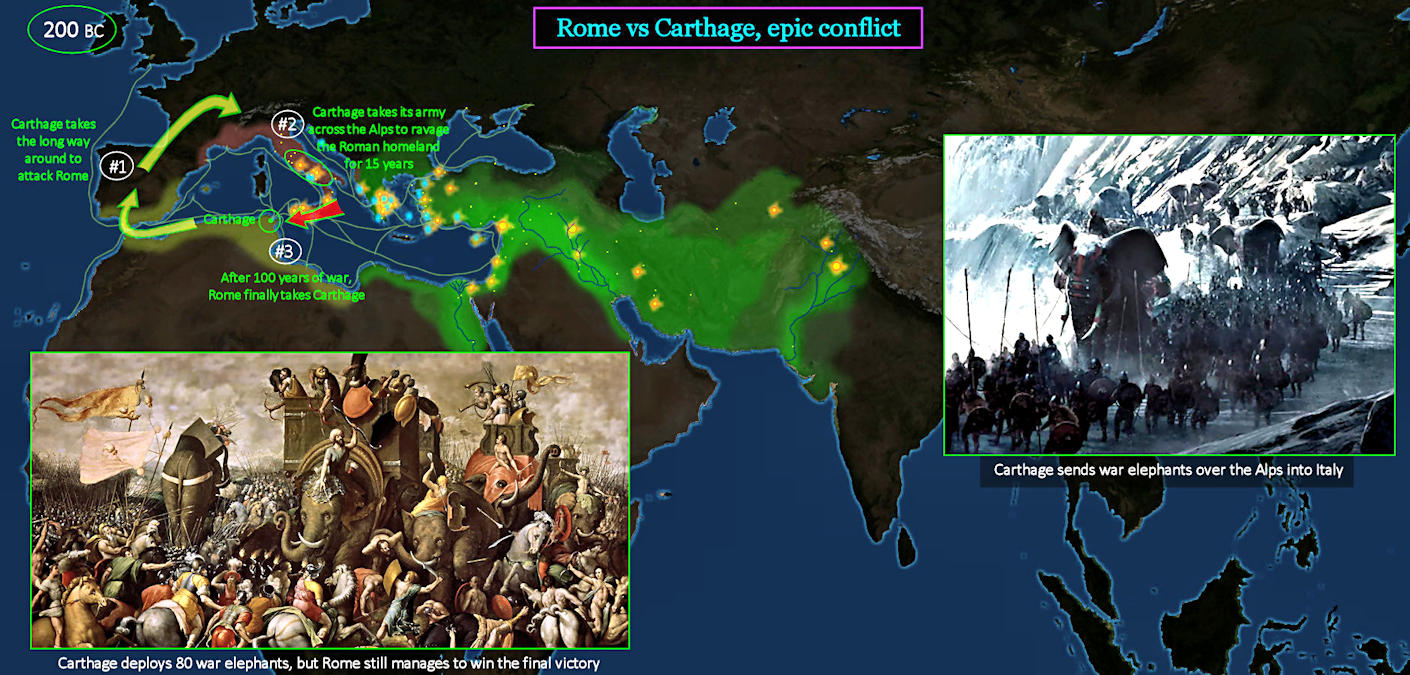
Rome vs Carthage The conflict between Rome and Carthage is an extended contest between two major civilizations, and the first clear instance of a war almost purely over trade. Shipping has always been a primary source of wealth, and Carthage has built a near monopoly on Mediterranean shipping over the previous 500 years. They are known as the best ship-builders and sailors. The island of Sicily is an important hub for their operations, located right in the middle of the Mediterranean, but separated from the Roman mainland by just two miles of open water. The Romans have grown increasingly confident in their power, and decide to seize the island. It takes 100 years, but Rome finally manages to overthrow Carthage, and take control of Mediterranean shipping. | |||||||||
| |||||||||
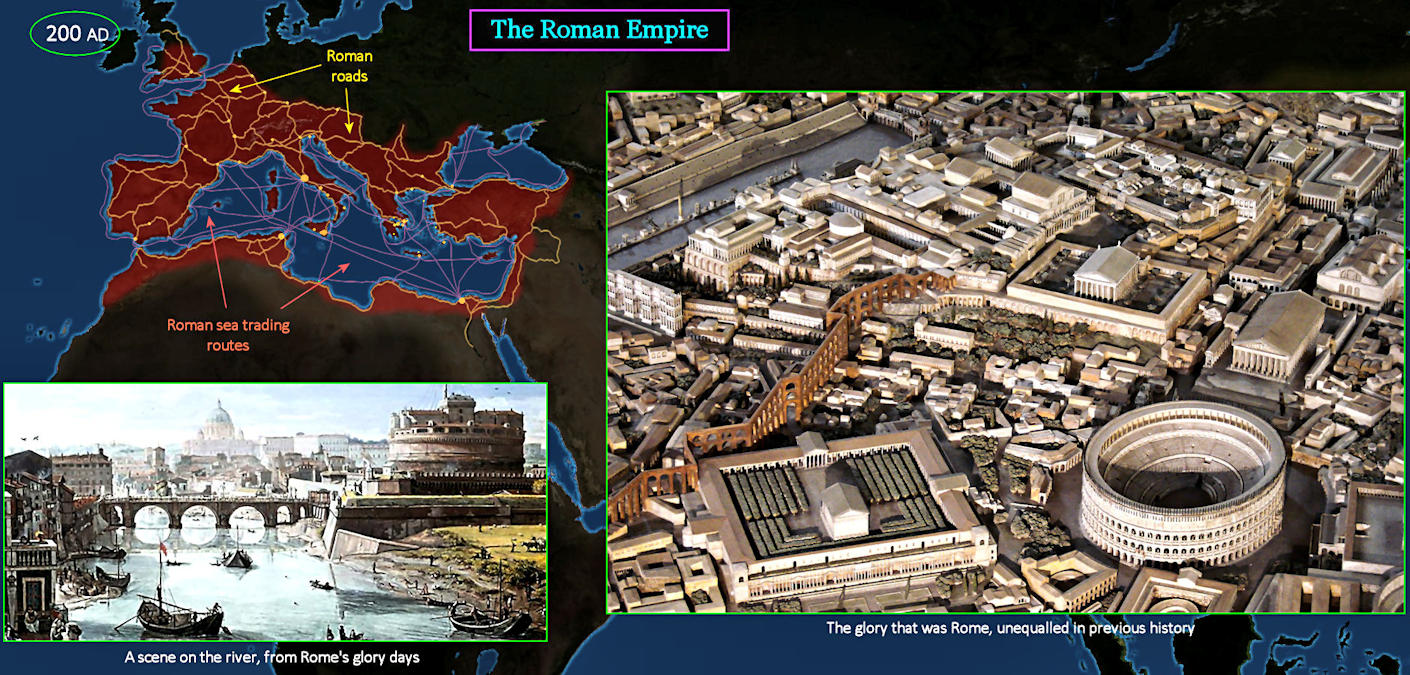
Roman Empire Unchallenged Rome begins as a republic, meaning that the will of the people is transmitted to the government by representatives, chosen by the people. All this changes when its most successful general, Julius Caesar, defeats his major rival to become Dictator. Five years later he takes the title of 'Dictator for Life,' which doesn't sit well with his critics. He is assassinated shortly thereafter by a group of jealous Senators. Caesar dies, but not the Empire. His successor, Augustus Caesar, adopts the title of Emperor, and a succession of later Emperors keep Rome on top for the next 400 years. This period is largely free of conflict with competing civilizations, and produces many significant engineering accomplishments, including the world's first system of paved roads. | |||||||||
| |||||||||
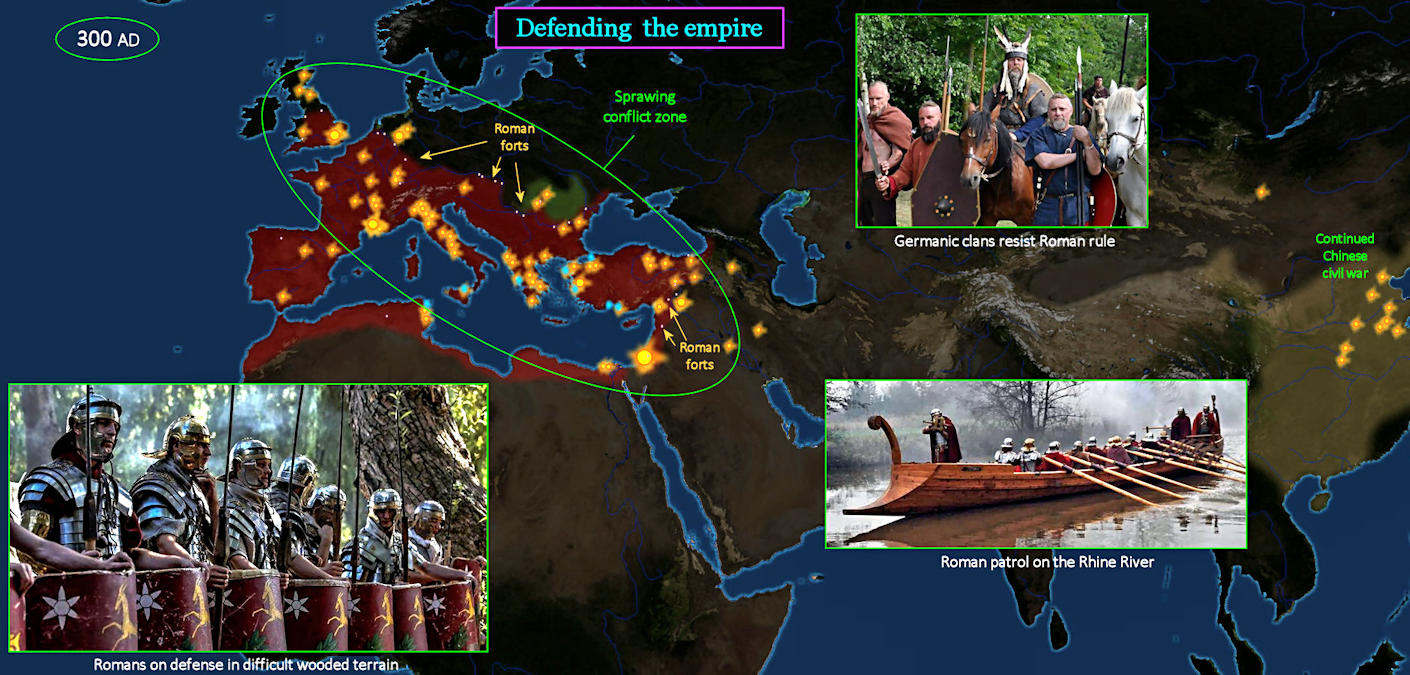
The Cost of Control It's one thing to conquer neighboring cultures to create an empire. It's a different thing to maintain one. To control extensive regions, it's necessary to establish permanent armed garrisons at strategic points. The Romans build forts along the edges of their Empire in Northern Europe and The Middle East, offsetting the costs by attempting to tax the conquered regions. But people will only pay taxes when forced. If there is no permanent garrison, there is no means of enforcing taxation. The map above shows the battles that are required to keep the Roman Empire in control over a 200-year period. These battles are not fought against a neighboring power, but instead are mainly required to quell regional uprisings and revolts. | |||||||||
| |||||||||
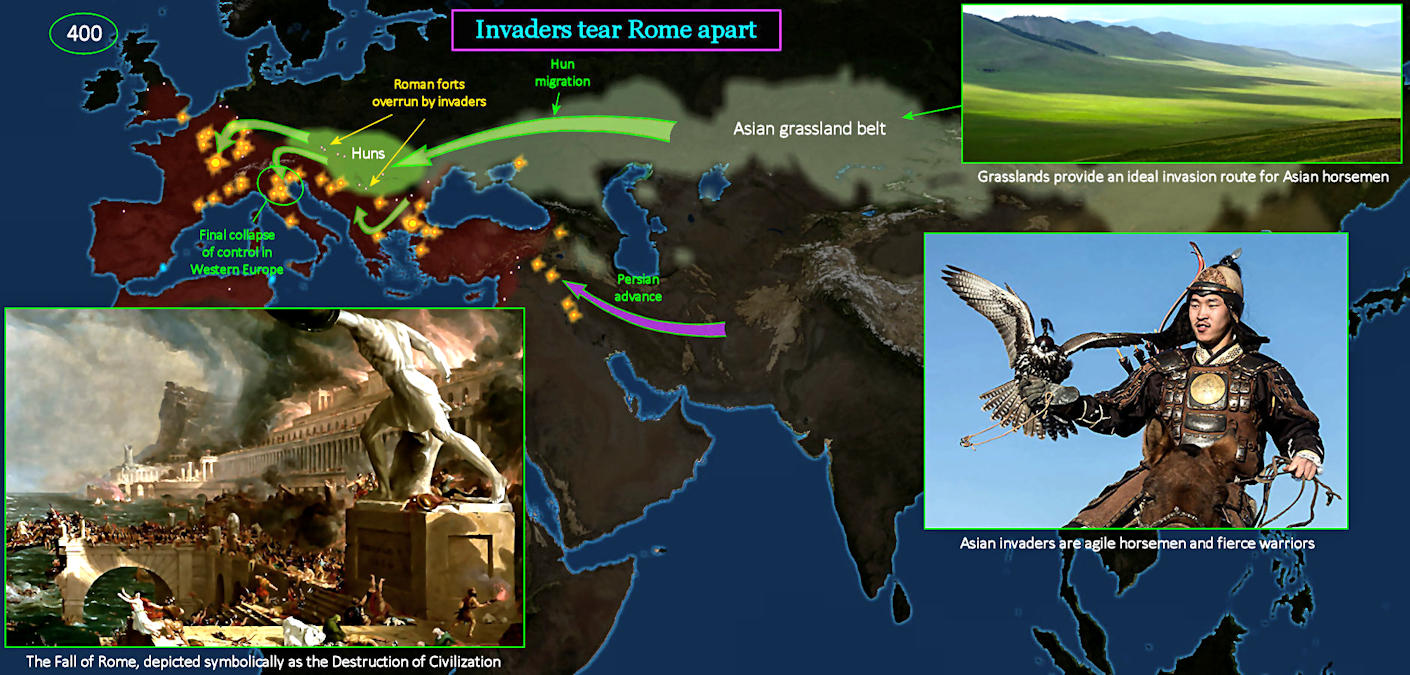
Asian Invaders Over time, the effort required to maintain the Roman Empire leads to exhaustion. Meanwhile, a new group of people, called the Huns, are gathering along the northern fringes of the Empire in the area now known as Hungary. These people don't look like the native inhabitants of that region. Instead, they display distinctive Asian features, having migrated from their original homeland in the vast, desolate region far to the east. They followed the semi-arid grassland belt that stretches all across Asia, just below Siberia, traveling thousands of miles to finally arrive in Eastern Europe. Slowly gathering strength, the Huns begin to overpower the weakened Roman defenses. In the end, the entire empire based in Rome just collapses. | |||||||||