| |
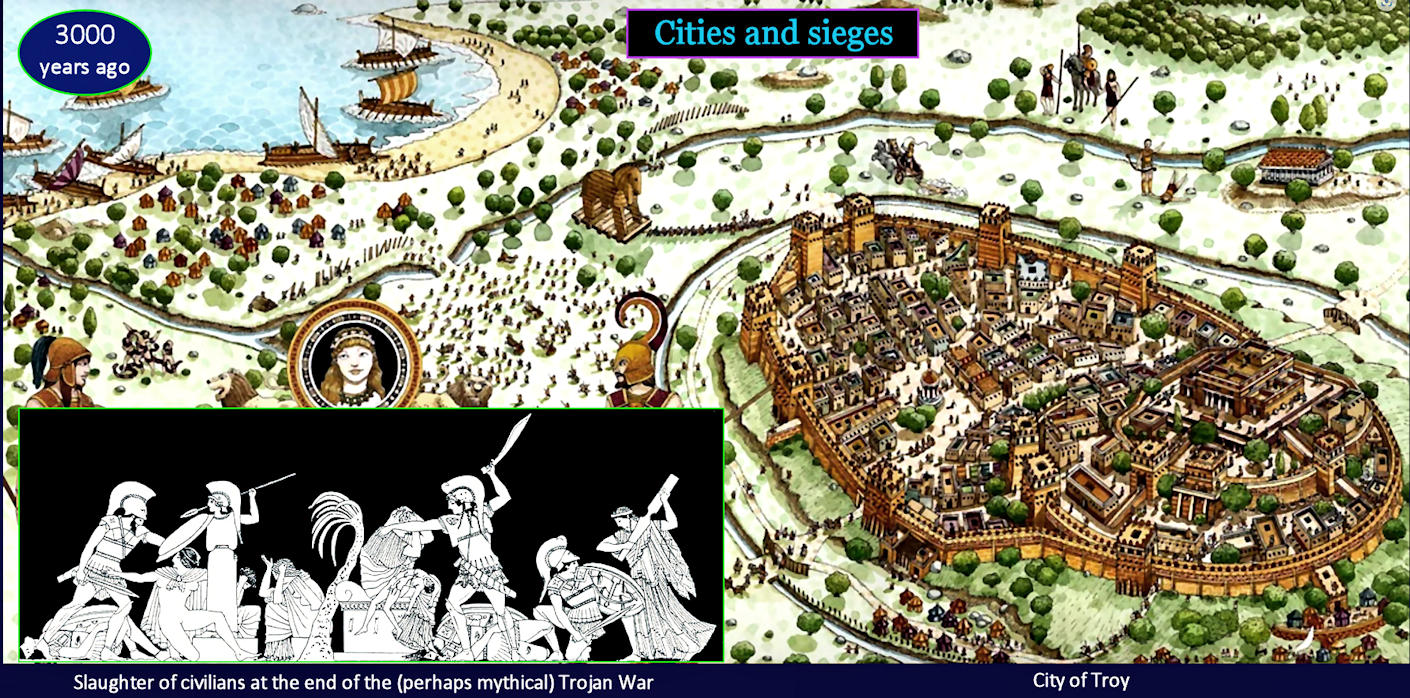
The Trojan War One sure measure of the wealth of a city is the height of its walls. The Trojan War was one of the earliest wars in history, amounting to a single ten-year siege of the city of Troy. While portions (or perhaps even all) of the story of the Trojan War may be more legend than history (including the famous Trojan Horse, shown on the map above), we can be fairly certain that the Greeks came for plunder. After sacking and burning the city, they took its wealth and left. They weren't interested in the city itself. Just its accumulated wealth. |
| |||||||||
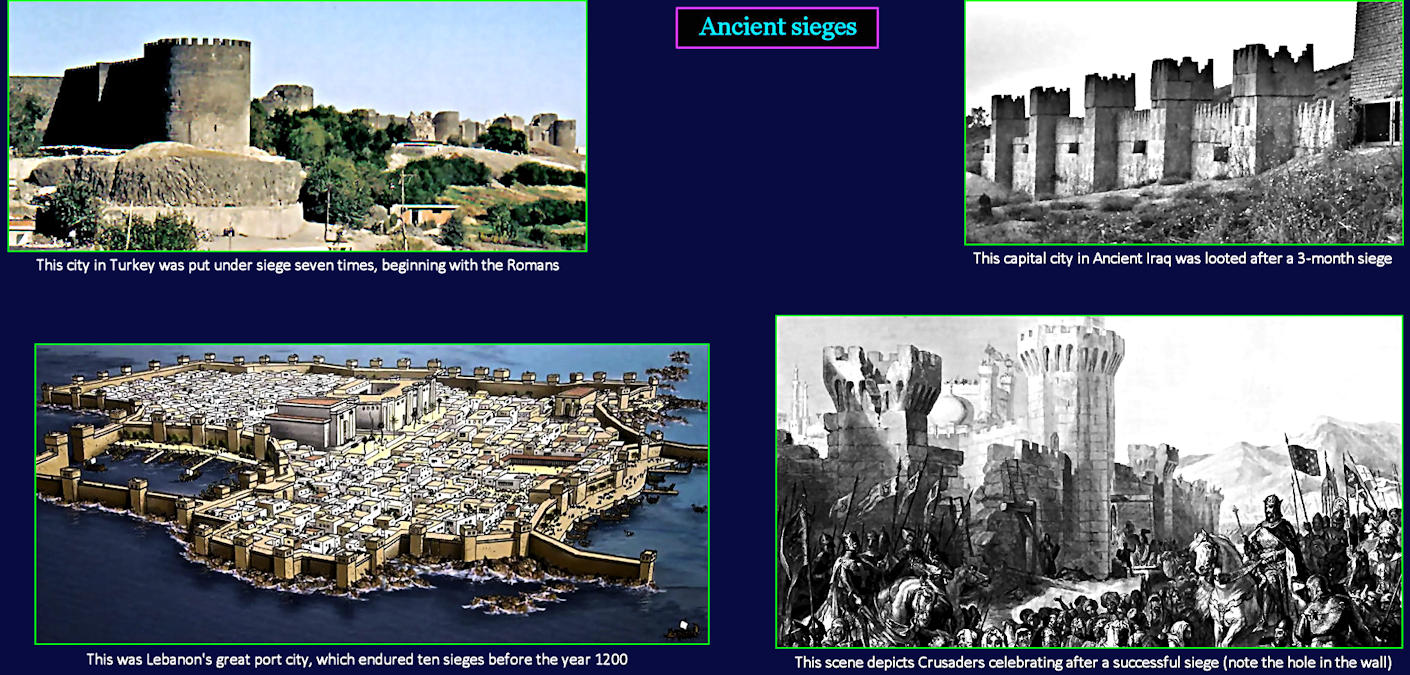
Siege Warfare Sieges are as old as warfare itself. Conquering the capital of a kingdom usually resulted in surrender of the kingdom itself, so many invasions were aimed directly at a foreign capital. Cities of any importance along the route of march would likely also be taken by siege, because it was relatively easy. Few cities could hold out more than a few weeks, or perhaps months, before food and water were exhausted. Many surrendered with barely any fight at all, as the consequences for standing and fighting, and then losing, were usually grim. If the city had to be taken by storm, the men were often killed, with women and children sold off as slaves. It is estimated that a quarter of all people living in the Roman Empire were slaves. Most were the spoil of war. | |||||||||
| |||||||||
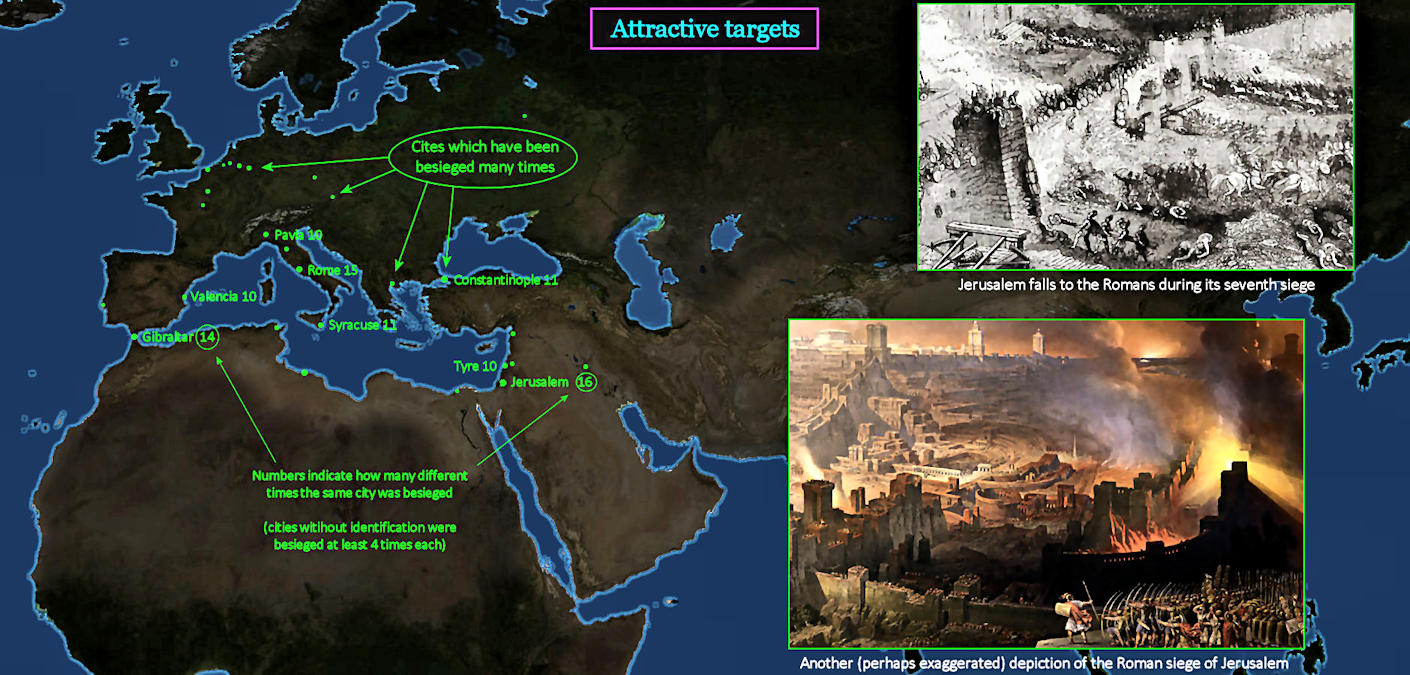
Cities are Juicy Targets Even though many cities are looted, and even burned at the end of a siege, most are rebuilt. Even when the invaders remain to occupy the city, and enjoy the palaces, they eventually lose interest or succumb to infighting, and the city is restored to its original owners. If the city is located at a natural harbor, or important crossroads (as is almost always the case), the location itself is the original source of its wealth. It's natural to rebuild in the same location. As a consequence, many cities are besieged more than once. The cities shown above endure at least four sieges each, while many are targets of at least 10 separate sieges. Jerusalem holds the record, with 16. | |||||||||
| |||||||||
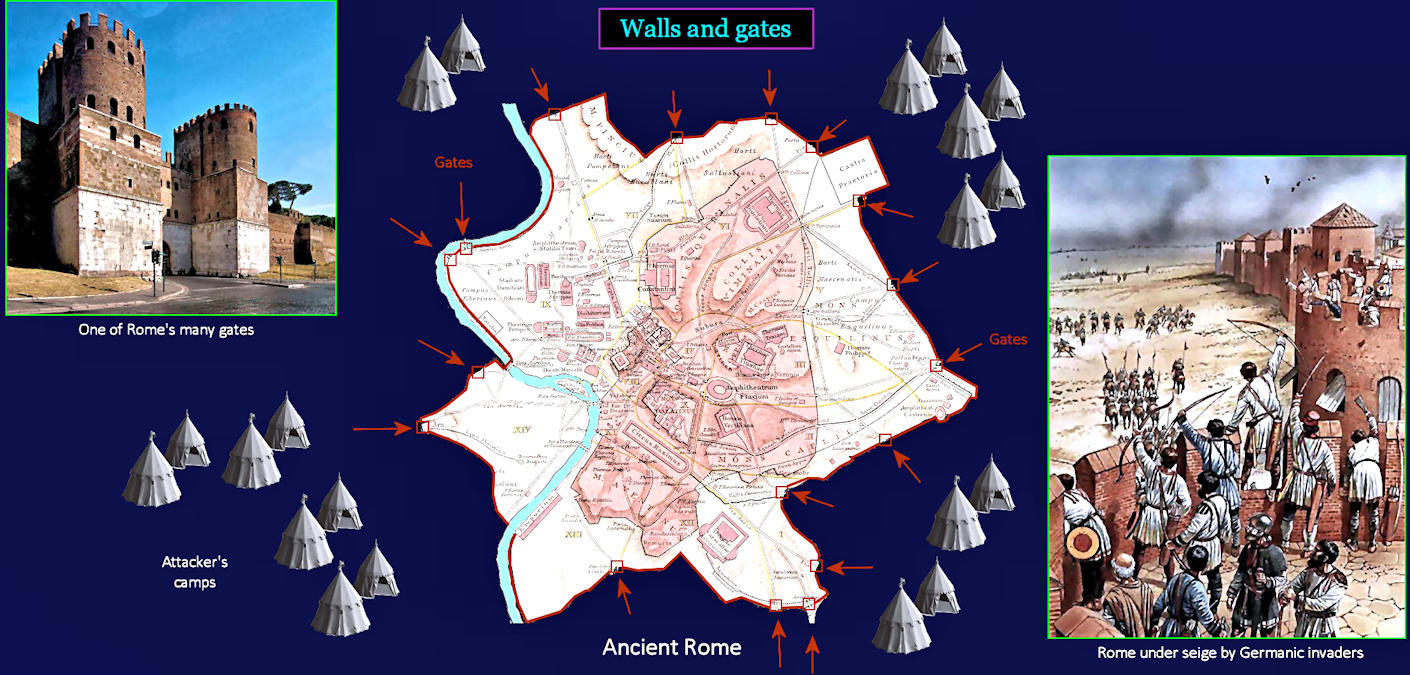
Defending the Gates Defending the city gates, which could be numerous for larger cities, is the first priority. If the enemy gets inside the walls, it's all over. Attackers need time to set up their equipment, which sometimes includes battering rams, siege towers and catapults. The machines are slowly advanced up to the walls, often using ramps built for this purpose. Early cannons might be used to wear down the defenders, although cannons big enough to actually penetrate the stonework are not generally available until the 1500s. The entire besieging army camps out in tents surrounding the city, hoping the defenders will give up before a final assault becomes necessary. Rome is besieged three times by the Barbarians before it's finally taken and sacked. | |||||||||
| |||||||||
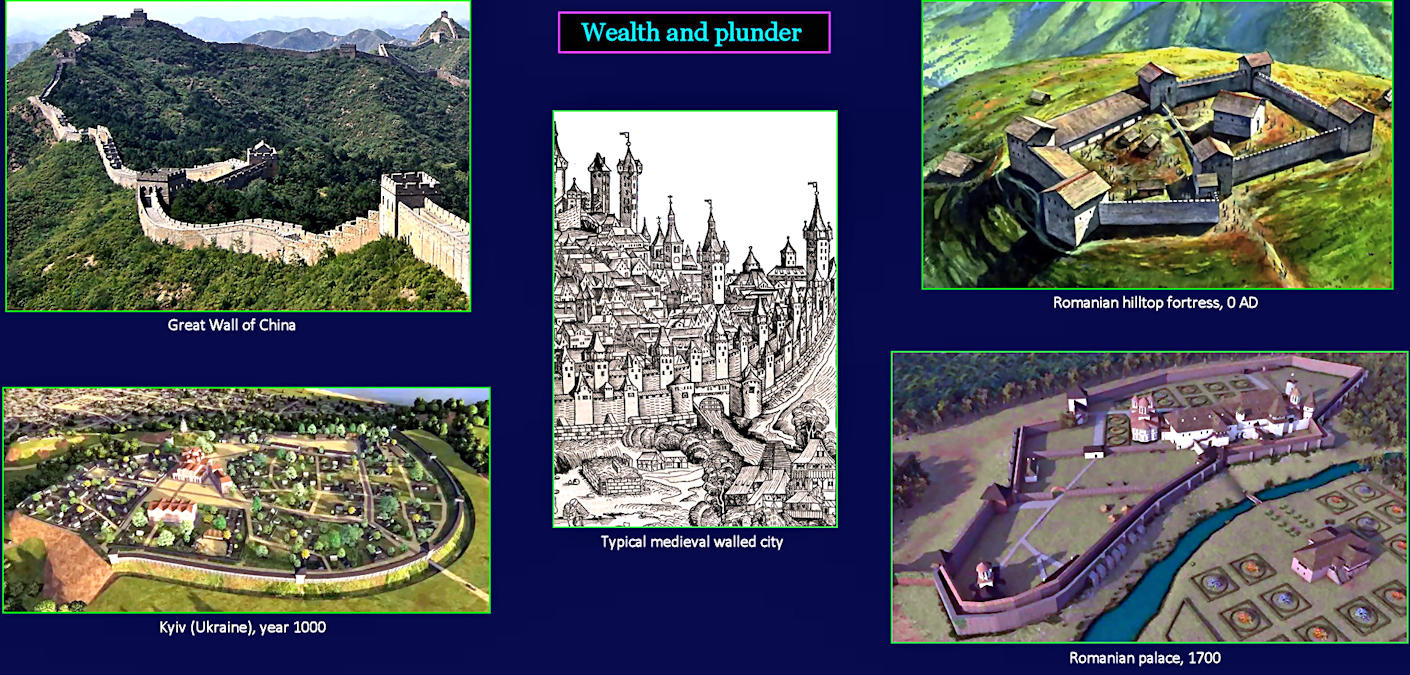
Walls are a Necessity For most of human history, wealthy civilizations have found it necessary to erect imposing defensive walls, to fend off invaders. The most impressive of these is the Great Wall of China, which is built shortly after the Mongols sweep down from the north, and massacre the defenders of the capital, at Beijing. But almost every city finds it necessary to build a walled enclosure. As cities grow in size, additional rings of walls are often added outside the original wall. | |||||||||
| |||||||||
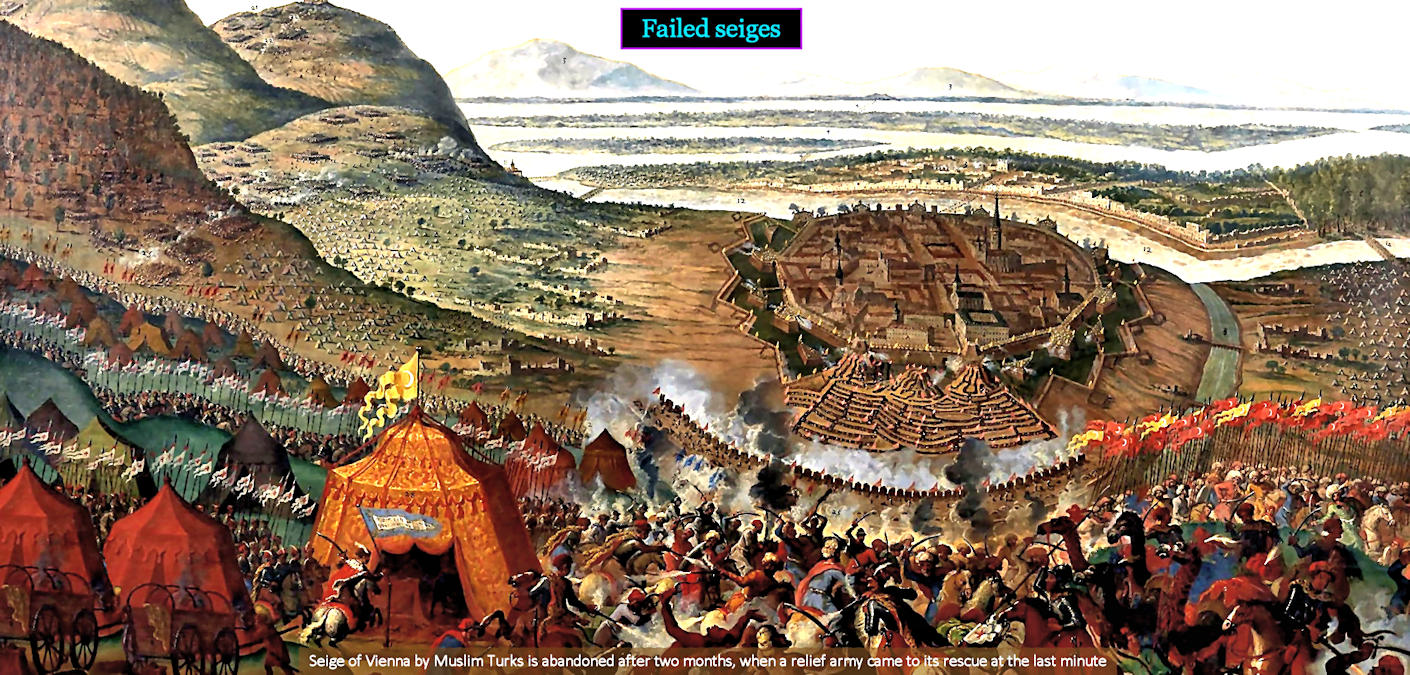
Surviving a Siege Not every siege succeeds. If it's late in the season, the besieging army might give up and leave, rather than face a winter in camp. Sometimes, a relief force might be raised elsewhere, that would come to attack the attackers. Vienna, the capital of the Austrian Empire, is besieged four times, but only the first siege succeeds. The final one involves a huge Turkish army, with 100,000 men and 150 cannons (above). After two months and near starvation, a relief army arrives just in the nick of time, with a roughly equal force. A great battle takes place, during which the Turks continue to try to take the city. In the end, they're driven off with a final cavalry charge of 18,000 horsemen, the largest in history. | |||||||||