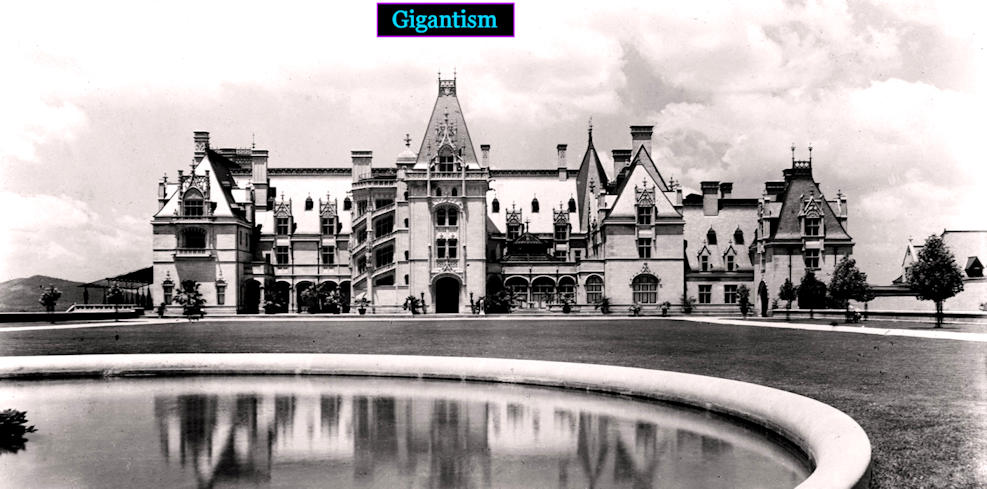
Going BigNowhere is this more evident than in the homes of the truly rich. Wealthy elites have always lived in the finest houses, in the finest neighborhoods, but never before have there been such mansions, festooned to the hilt. Their owners sit atop great railroad, steel and oil empires that are bigger than anything previously seen in America. This matches the scale of the new cities, hotels and bridges. Everything, it seems, is now gigantic. All this enormity creates an almost festive atmosphere, especially in big-city downtown areas. Chicago boasts the first crop of skyscrapers, but every city has at least one grand hotel, and many also have fancy opera houses. |
| ||||||||||||||||
| |||||||||
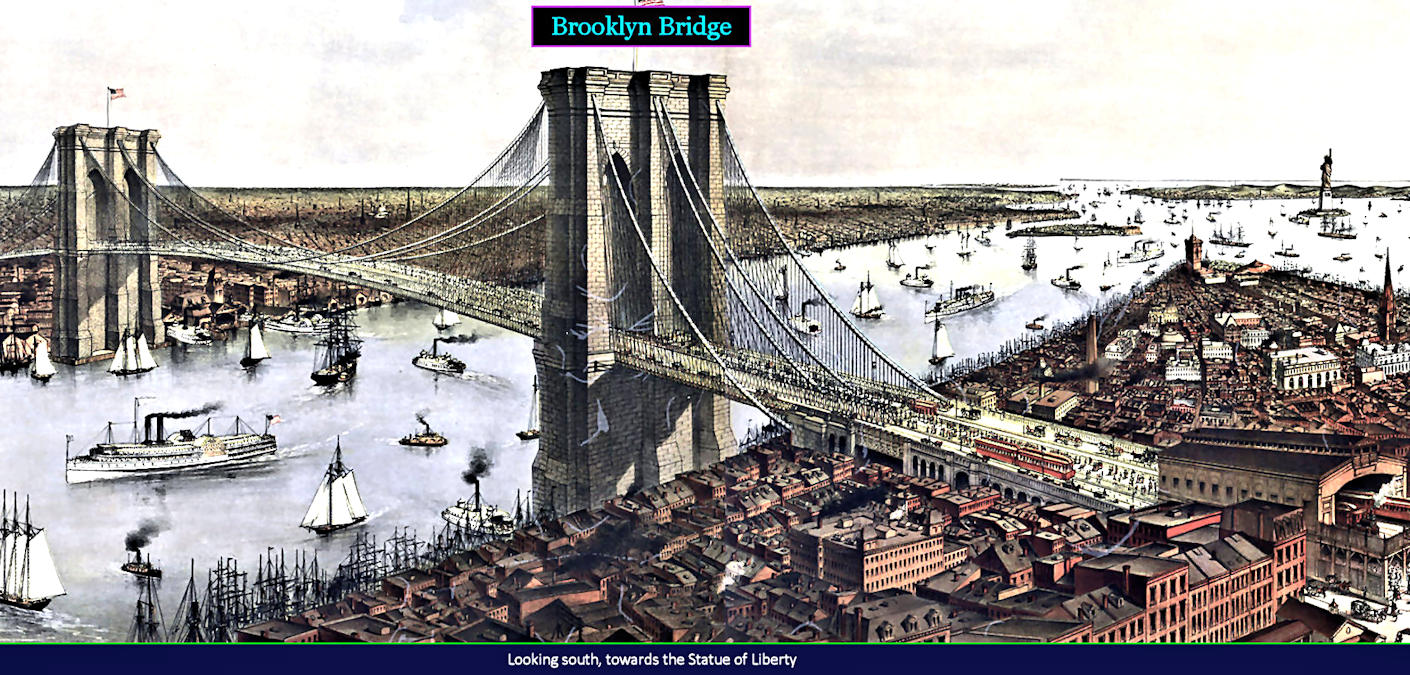
Going Up Just as the Vanderbilt mansion dwarfs other houses, the Brooklyn Bridge surpasses all existing structures in sheer size. The main span is three times longer than that of the new bridge crossing the Mississippi. The bridge's stone towers stand twice the height of the tallest skyscraper in America. Fully-rigged sailing ships can pass under the great bridge deck, which accommodates railroad tracks, a roadway, and central pedestrian promenade. The view above shows ships crowding docks which line the shore on both sides of the bridge. Today, the South Street Seaport occupies just a tiny fraction of this immense and bustling waterfront. | |||||||||
| |||||||||
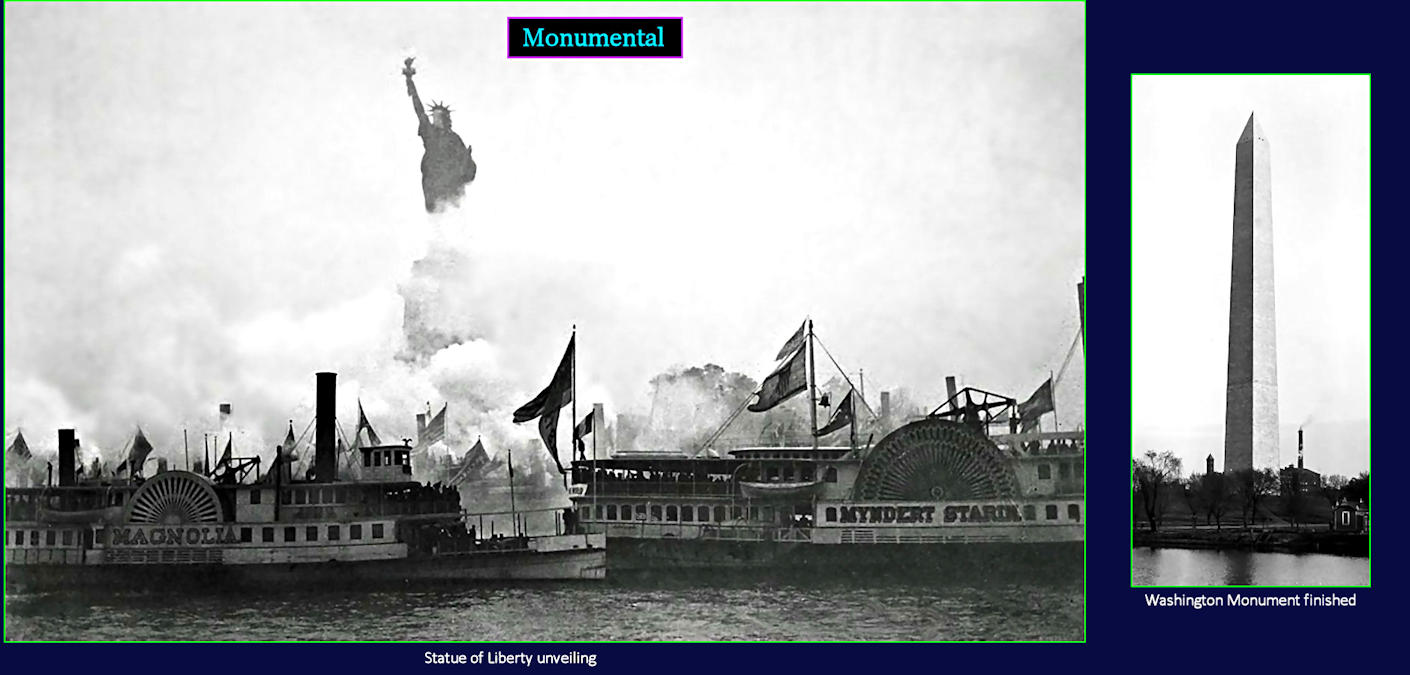
Towering Achievements Two more enormous monuments are completed within two years of the Brooklyn Bridge. The Statue of Liberty is built in France by a Frenchman, but shipped to America to be erected at the entrance to New York Harbor. Symbolizing the welcoming embrace of democracy and freedom, it's the first thing immigrants see as they arrive in New York, in record numbers. Meanwhile, the Washington Monument is finally completed, rising fully twice as high as the Brooklyn Bridge towers. | |||||||||
| |||||||||
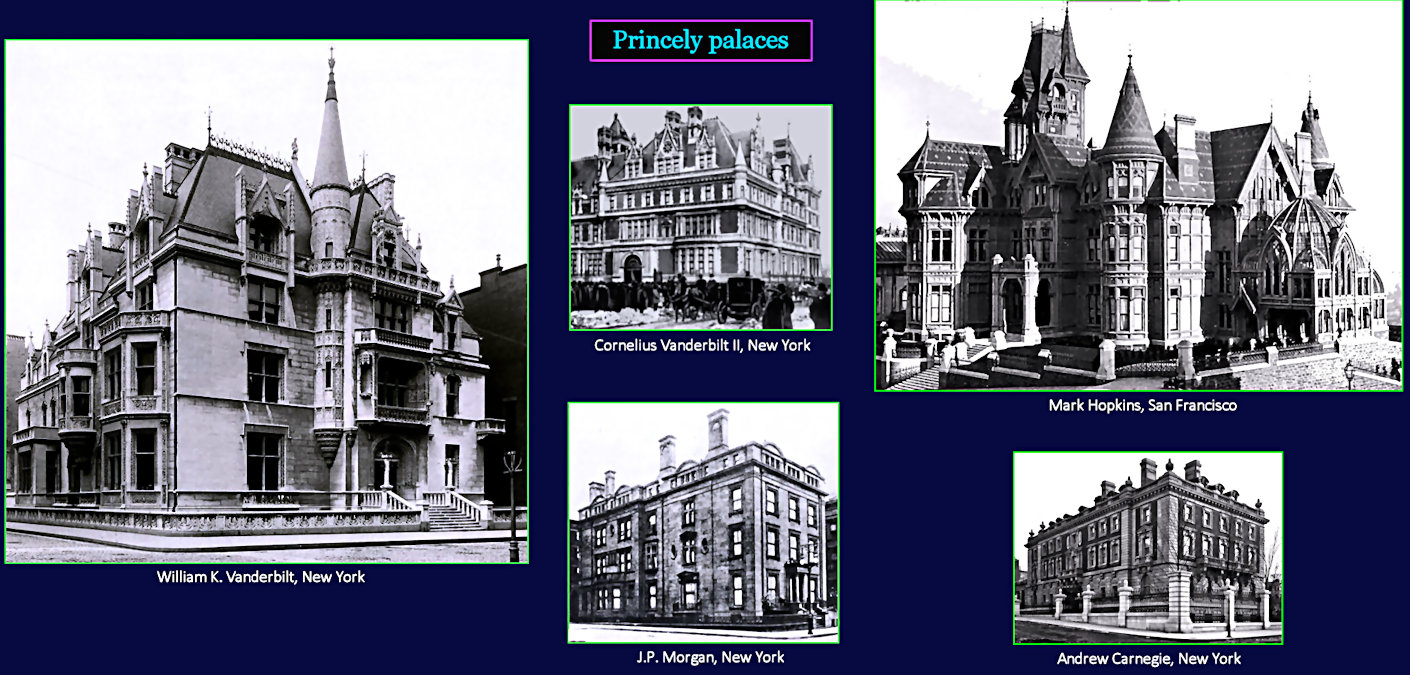
Filthy Rich The Biltmore mansion is an undeniable masterpiece, but it's really just an oversized country retreat, far from any city. For real financial warriors, you haven't made it until you build your dream castle in New York. Of the mansions shown here, only the Hopkins residence (top right) is not located in Manhattan. Financed by a railroad fortune, it briefly dominates San Francisco's Nob Hill before the 1906 earthquake reduces it to rubble. | |||||||||
| |||||||||
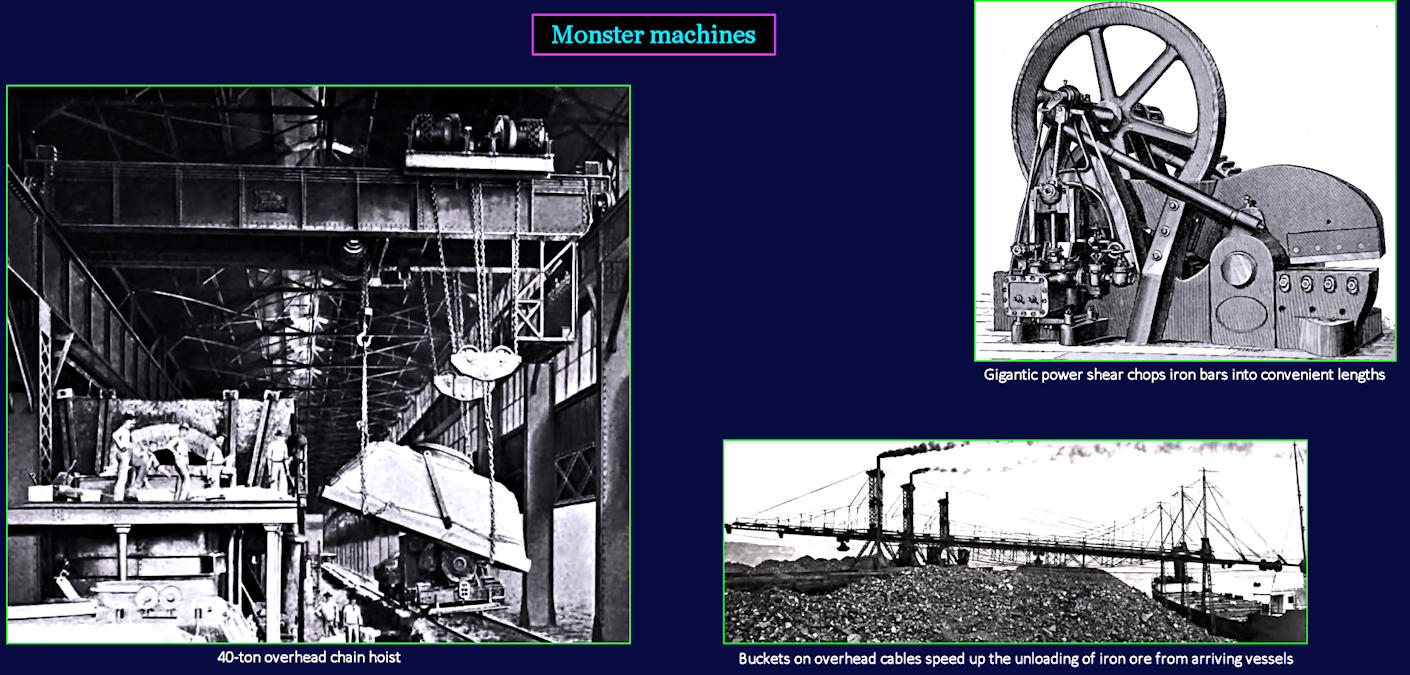
Bigger and Bigger As everything gets bigger, so do the hoists and cranes which are needed to move heavy loads. The chain hoist at left is moving a huge ladle. A whole new type of equipment is needed to speed up unloading the millions of tons of ore arriving each year from Lake Superior. Giant ore boats have a long row of hatches running down the centerline of the deck. Gangs of ungainly machines (lower right) drop metal buckets on cables down each hatch, reaching into the hull to extract the contents. The buckets have metal jaws that open sideways to grab material. They are then hauled back up, and transported sideways to dump into waiting rail cars, or just huge heaps for later shipment. | |||||||||
| |||||||||
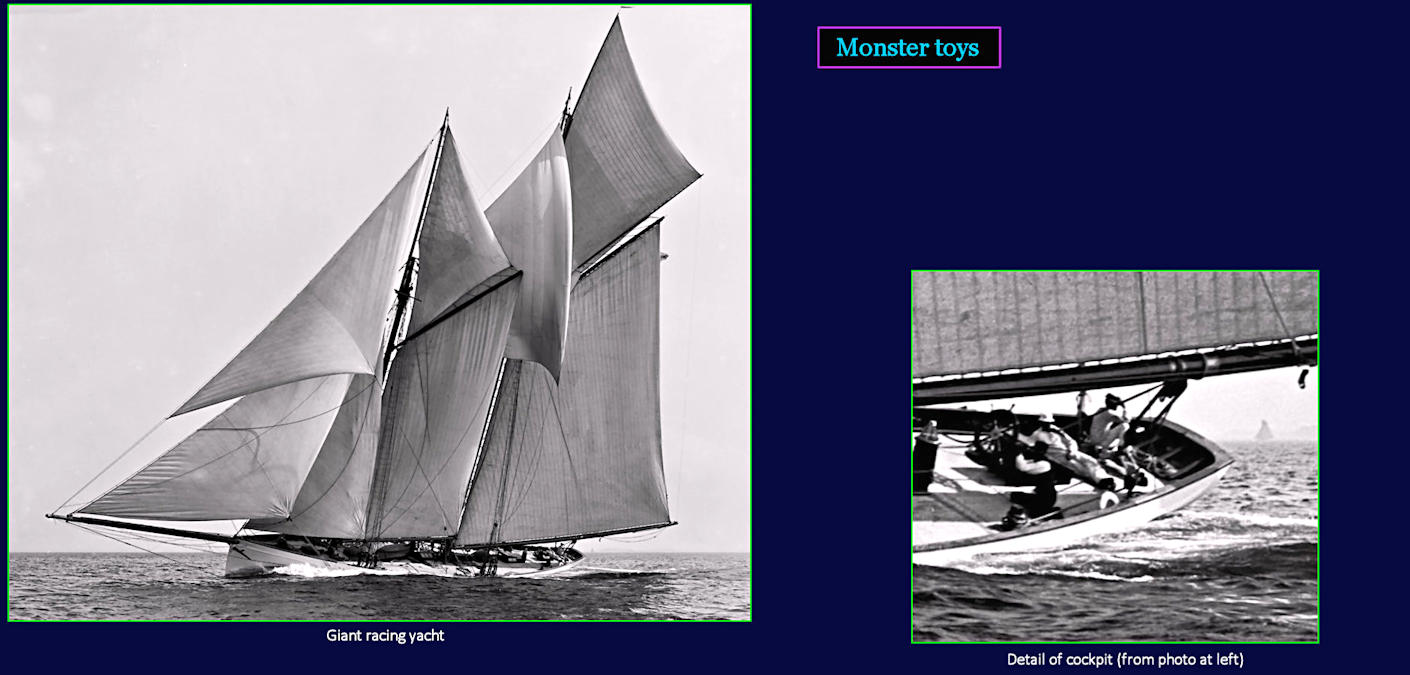
Just Having Fun With so much money being made in railroads and steel, it's something of a challenge to find ways to spend it all. The New York Yacht Club provides a fun way to channel small fortunes into sporting events. Every summer, the yachting elites take the train up the coast to Newport, on Narragansett Bay in Rhode Island. There, they get together, put on their captain's hats, and challenge each other to races, often in preparation for the next America's Cup challenge from Britain. America's Cup yachts are schooners with two masts until 1881, when the rules are changed to favor sloops with a single towering mast. Still, the old schooners are a delight to the eye, and a tribute to American engineering excellence. | |||||||||