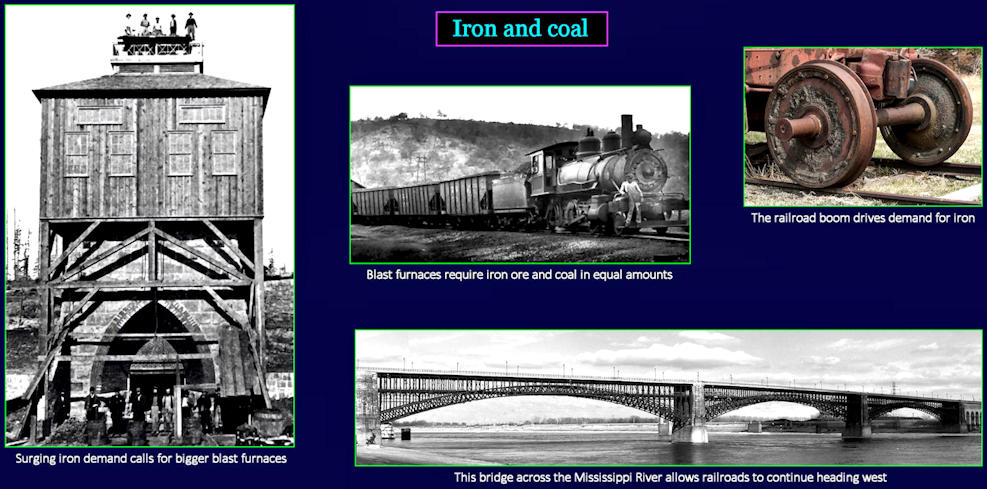
Iron and coalAs railroads continue to spread ever westward, they generate a continual need for more iron. By 1870, railroads are the biggest consumers of iron, by a wide margin, while coal has become the dominant fuel. Surprisingly, it takes equal amounts of coal and iron ore to feed a blast furnace. Luckily, however, the more iron that's consumed building railroads, the easier it becomes to ship the ore and coal back to the blast furnaces. By rail. Some of the earliest railroads are built in Pennsylvania, to improve access to the coal located there. Without the rail connection, iron production would have been far lower. Costly charcoal is the only substitute fuel. |
| ||||||||||||||||
| |||||||||
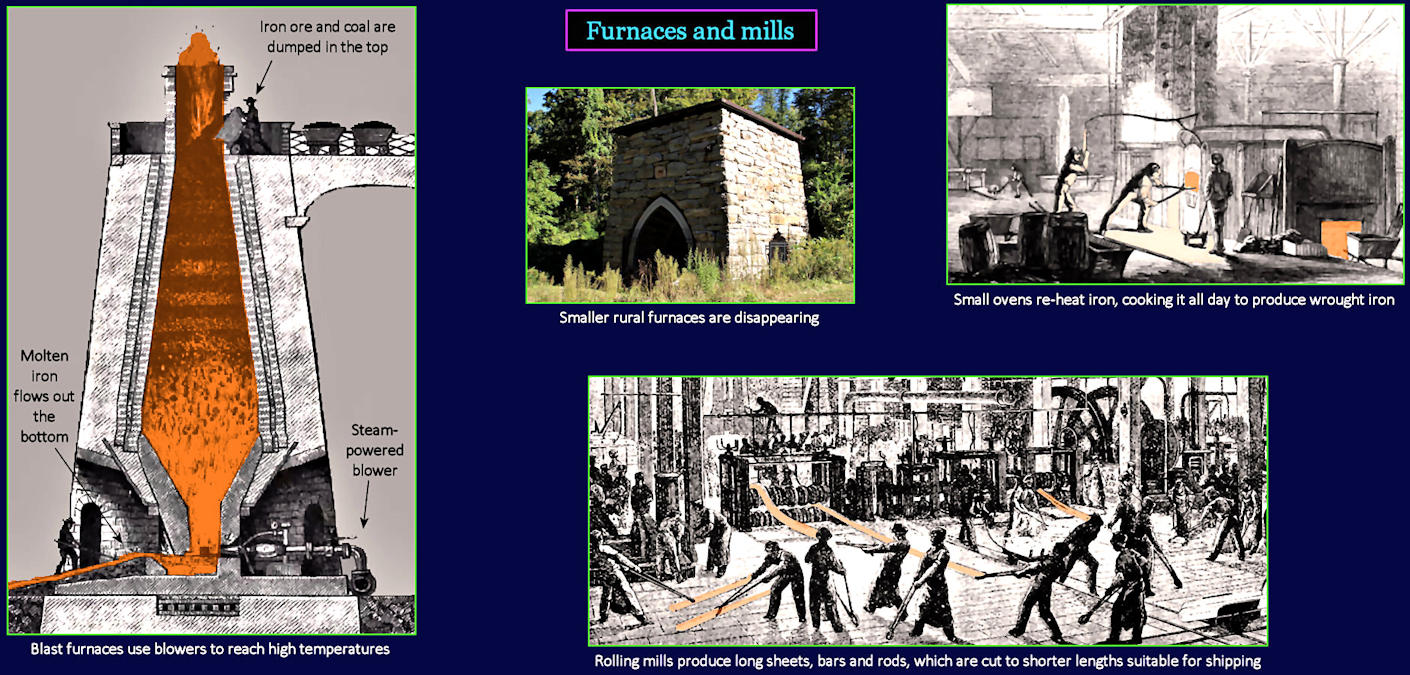
Furnaces Everywhere The surging demand for railroads drives improvements in iron-related technology. Bigger blast furnaces use steam-powered blowers, rather than bellows, for the blast of air (now sometimes pre-heated) that is required to raise temperatures. This produces a sudden proliferation of iron rolling mills which, in turn, creates a new demand for the smaller furnaces needed to transform simple pig iron into wrought iron. | |||||||||
| |||||||||
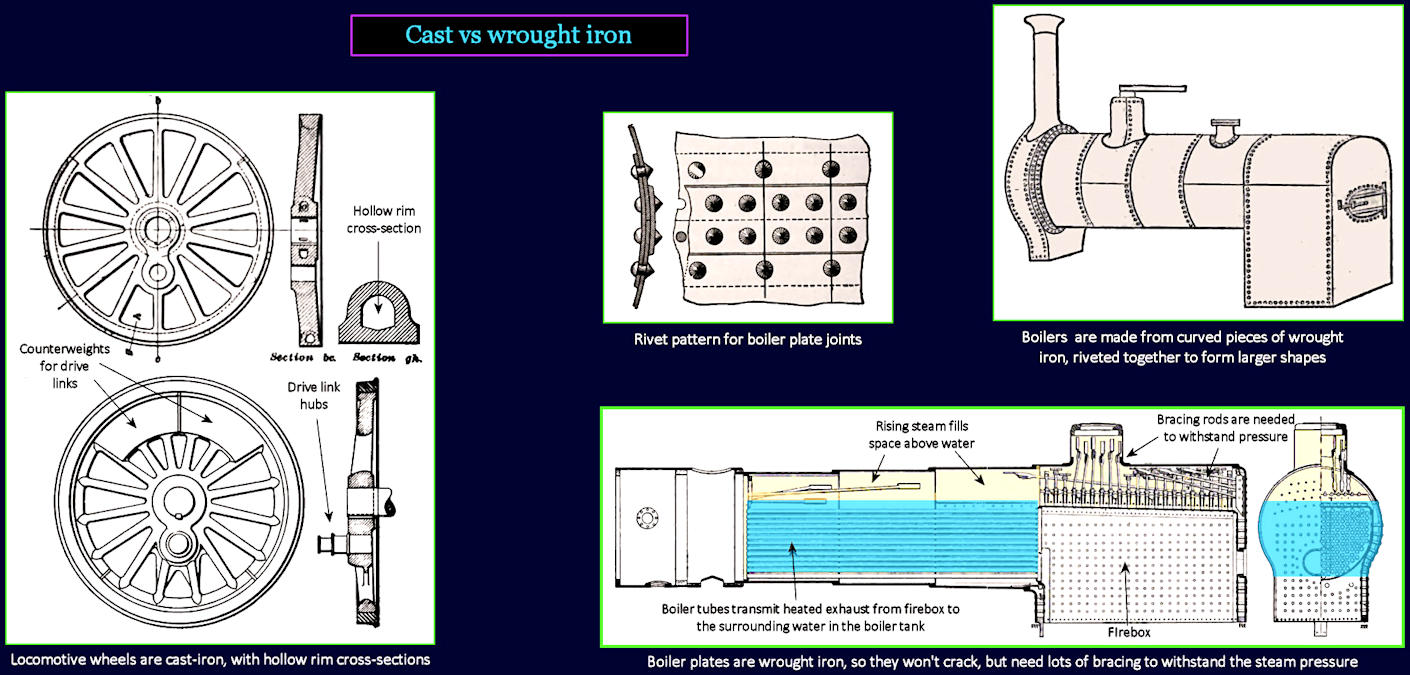
Controlling Carbon Content The iron that pours out of a blast furnace (called pig iron) has a high carbon content, making it brittle. It's useful only for items that aren't expected to flex in service, like locomotive wheels. Any iron that requires rolling or bending, such as the plates used to form boilers, needs iron containing a much lower, precisely-controlled carbon content. This magically transforms the structure of the iron into something called wrought iron, which can withstand stress without cracking. | |||||||||
| |||||||||
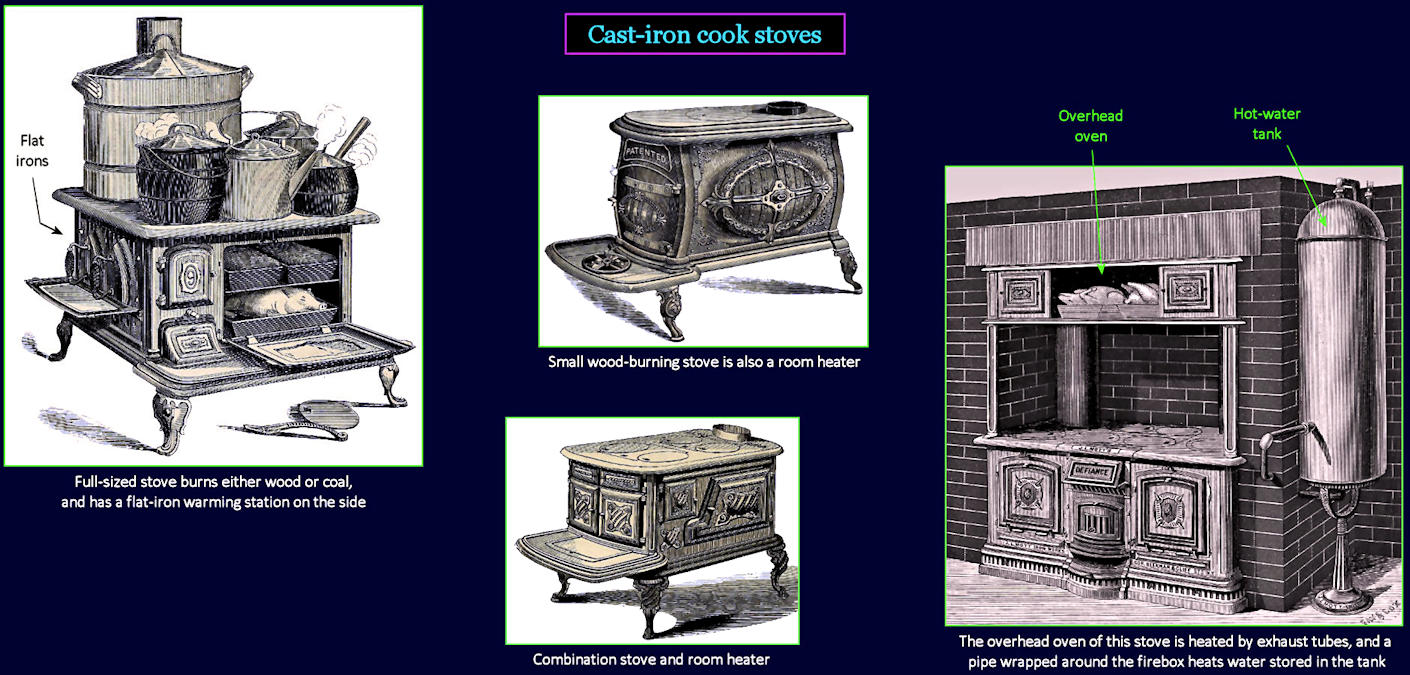
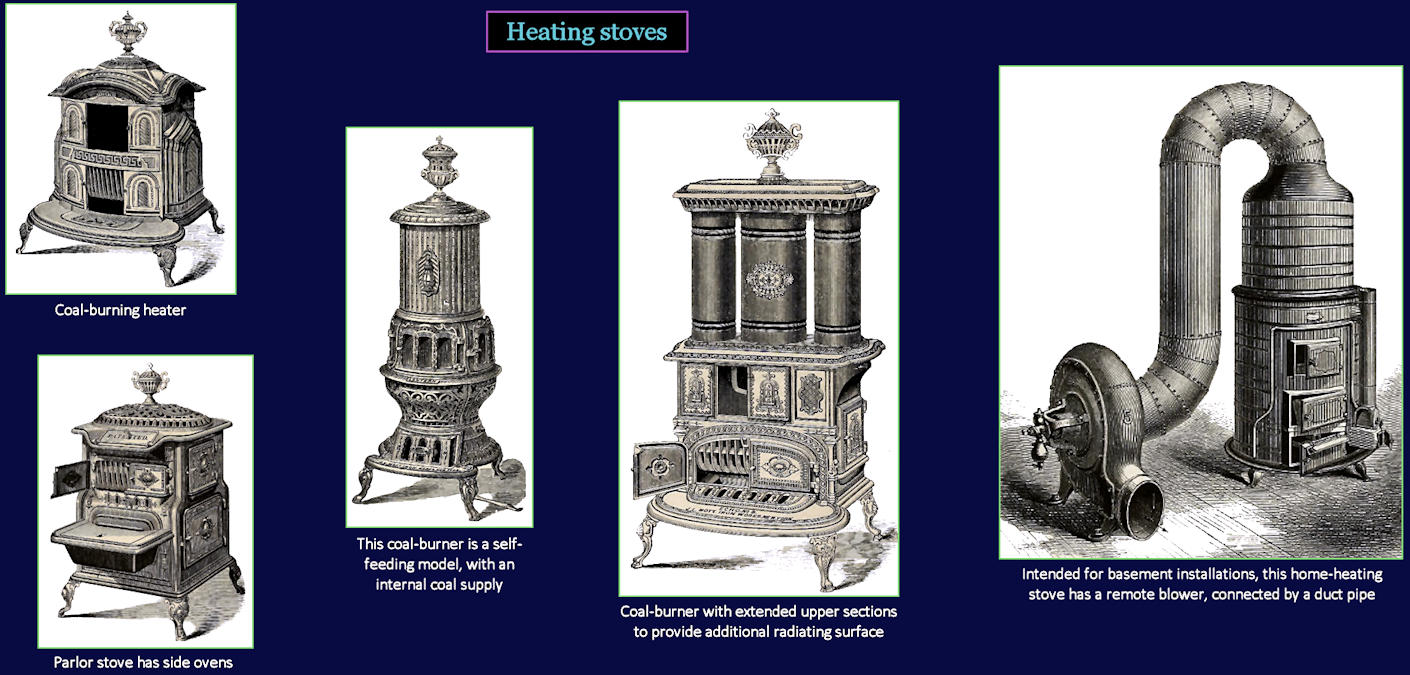
Iron Castings Pig iron that hasn't been converted into wrought iron can't be shaped by rolling, but it's still well-suited for casting. It just needs to be re-melted and poured into a mold. This can produce parts of considerable complexity, with elaborate decorative surface features that can be included with almost no additional effort. Cookware and stoves are made completely from this lower-cost iron. Separate panels for the sides, tops and bottoms of stoves are simply bolted together, along with features like legs. | |||||||||
| |||||||||
Many Styles Many stoves are used primarily as room heaters. Those with a vertical central tower are self-feeding models. The central chamber is filled with coal, which gradually falls down to the firebox under gravity, as the fire consumes coal at the bottom. | |||||||||
| |||||||||
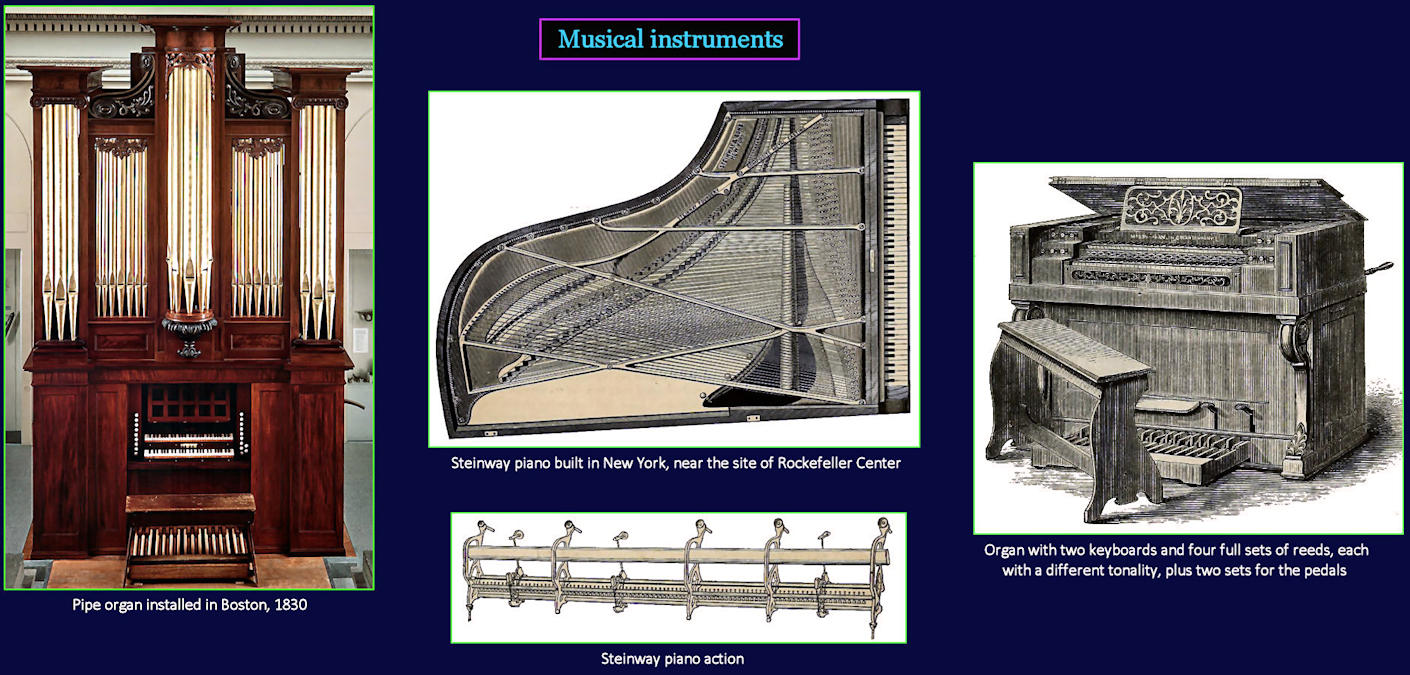
Elaborate Designs Pianos, and even organs, are made in surprising numbers during the later 1800s. Mostly wood on the outside, these complicated devices use metal parts in various ways to actually produce the sound. Organs normally require a steam-operated bellows in the basement, to provide forced air to the pipes. | |||||||||