| |
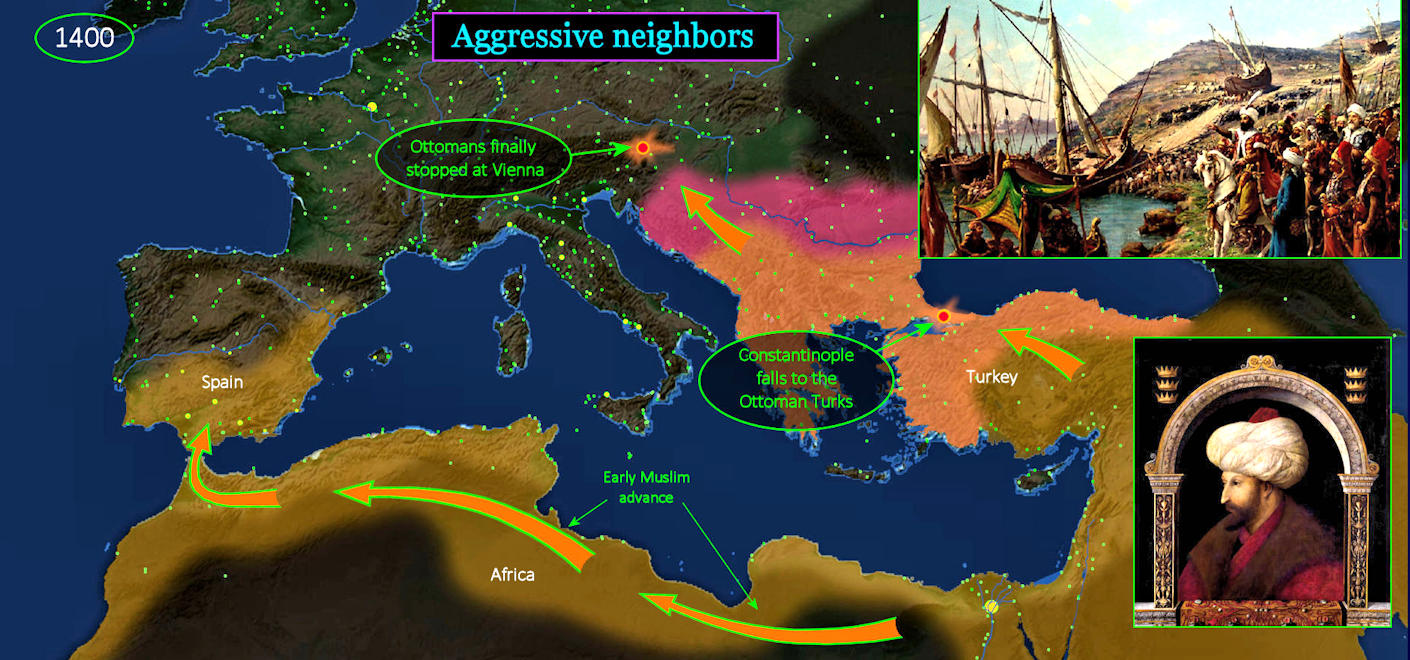
Muslim Invasion This is Europe in the mid-1400s, when the Ottoman invasion is at its height. The sultan who leads the assault means business. When he reaches Constantinople, which has repelled all previous attacks, he drags part of his large invasion fleet overland. Ships are hauled on log rollers for two miles, to surround the city (top right). The strategy works, and Constantinople falls. |
| |||||||||
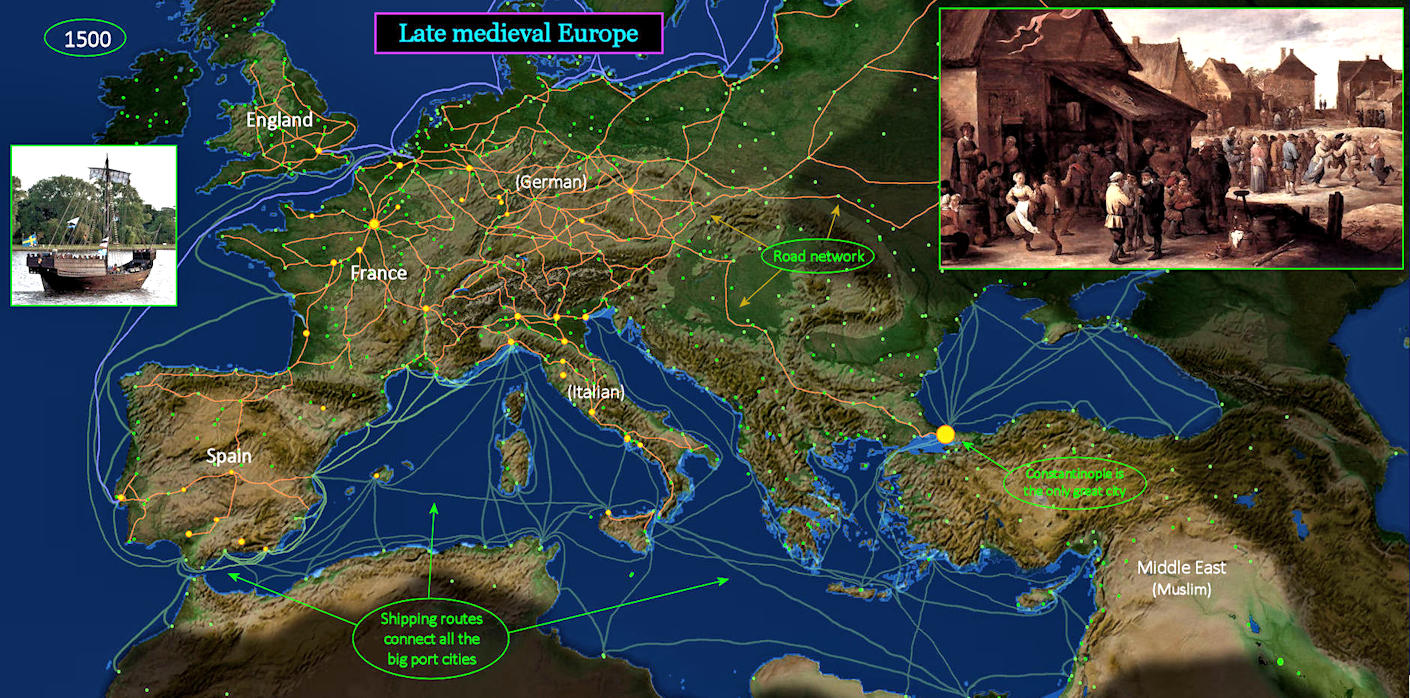
Medieval Commerce After the Muslims are safely pushed back, medieval Europe becomes a bustling hive of business activity, supported by complex shipping networks on both land and sea. Italians control shipping in the Mediterranean, and most of the Atlantic trade up to England. The Middle East, with extensive shipping connections to India and China, remains firmly under the control of Muslim Arabs, who are traders by long habit. | |||||||||
| |||||||||
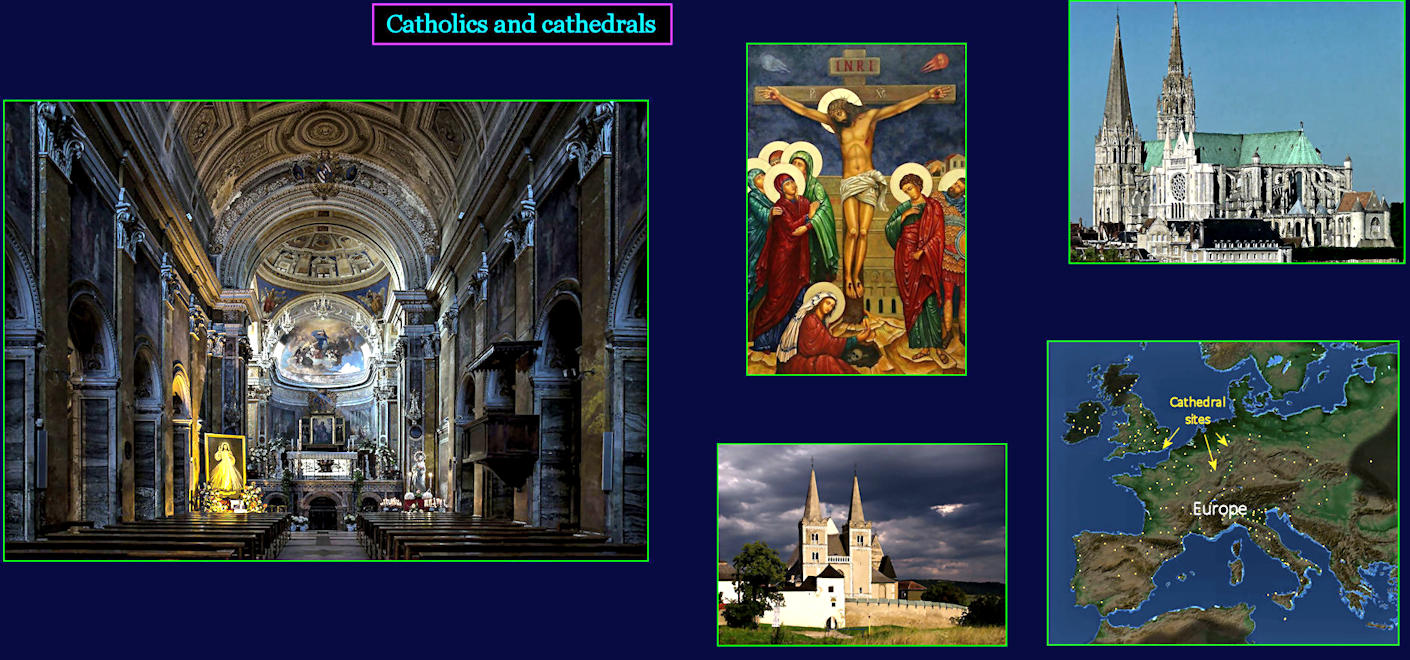
Medieval Cathedrals Until the mid-1400s, the only real church in Europe is the Catholic Church, ruled by the Pope in far-distant Rome. Even kings sometimes need the Pope's blessing. This gives the Church great power, and with it comes great wealth. The Church builds magnificent cathedrals all over Europe, and some smaller ones as well (center bottom). Protestants will eventually become dominant in England and Germany, after the introduction of the printing press, but Catholics remain in control elsewhere in Europe. | |||||||||