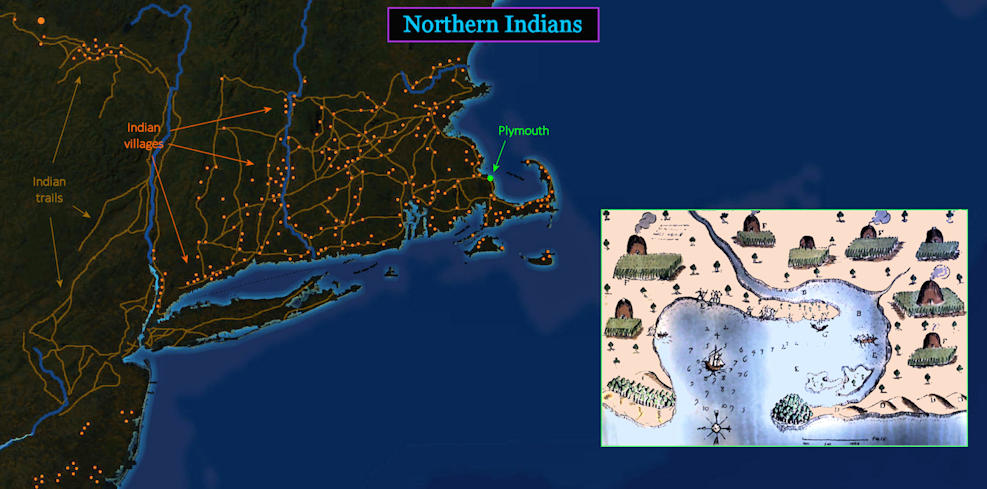
Peaceful NeighborsIn fact, the Plymouth site should have been bustling with Indian activity, but a terrible European disease has just ravaged the entire shoreline. Many villages are so devastated that the remaining survivors simply leave. The shoreline around the Indian village at Plymouth is particularly hard hit, and is completely wiped out. Badly weakened, the Indian tribe in the surrounding area wants no trouble, and seeks peace with the new English arrivals. |
| ||||||||
| |||||||||
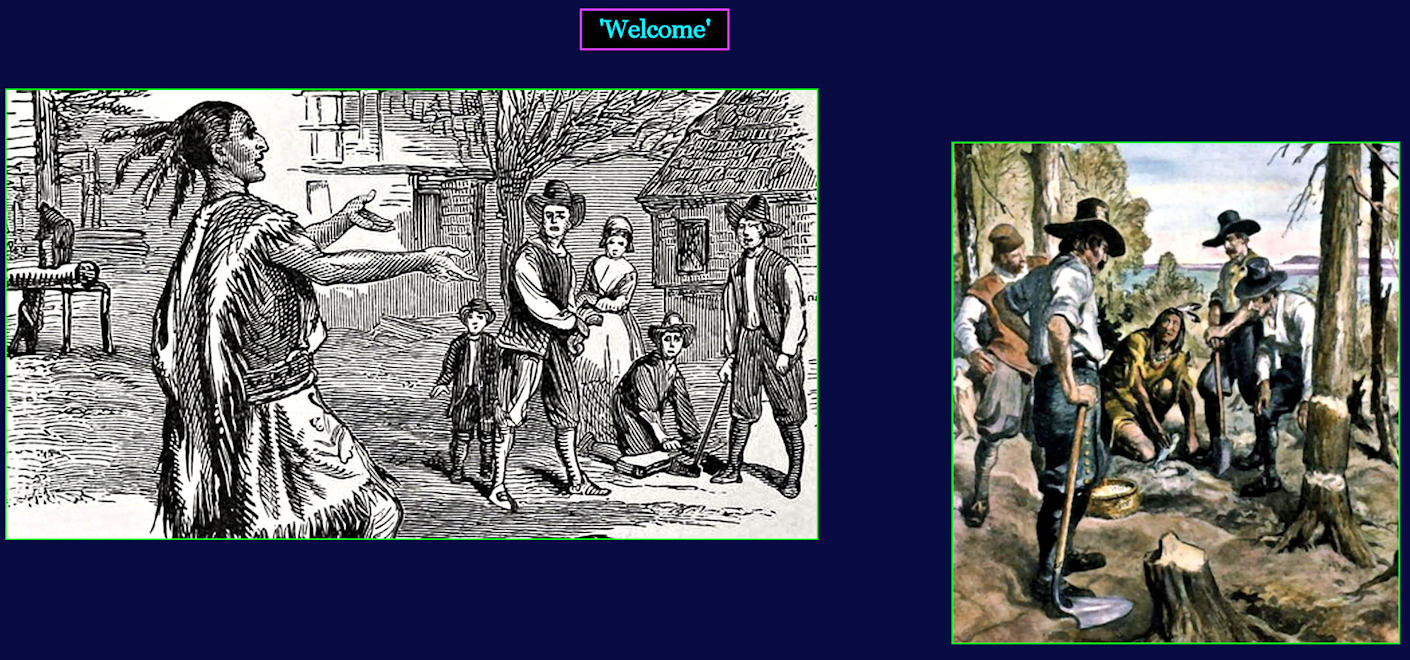
Meeting the Neighbors Three months after landing at Plymouth, the Pilgrims are startled by a solitary Indian walking right into their settlement. This is the first Indian they have seen, which is amazing enough. Then the Indian says 'Welcome,' in English. He has learned a little English by talking with captains of English fishing vessels, who have been coming each spring for many years to fish the waters off the Maine coast. A week later, the local Indian chief arrives to arrange a peace agreement, which lasts for 50 years. | |||||||||
| |||||||||
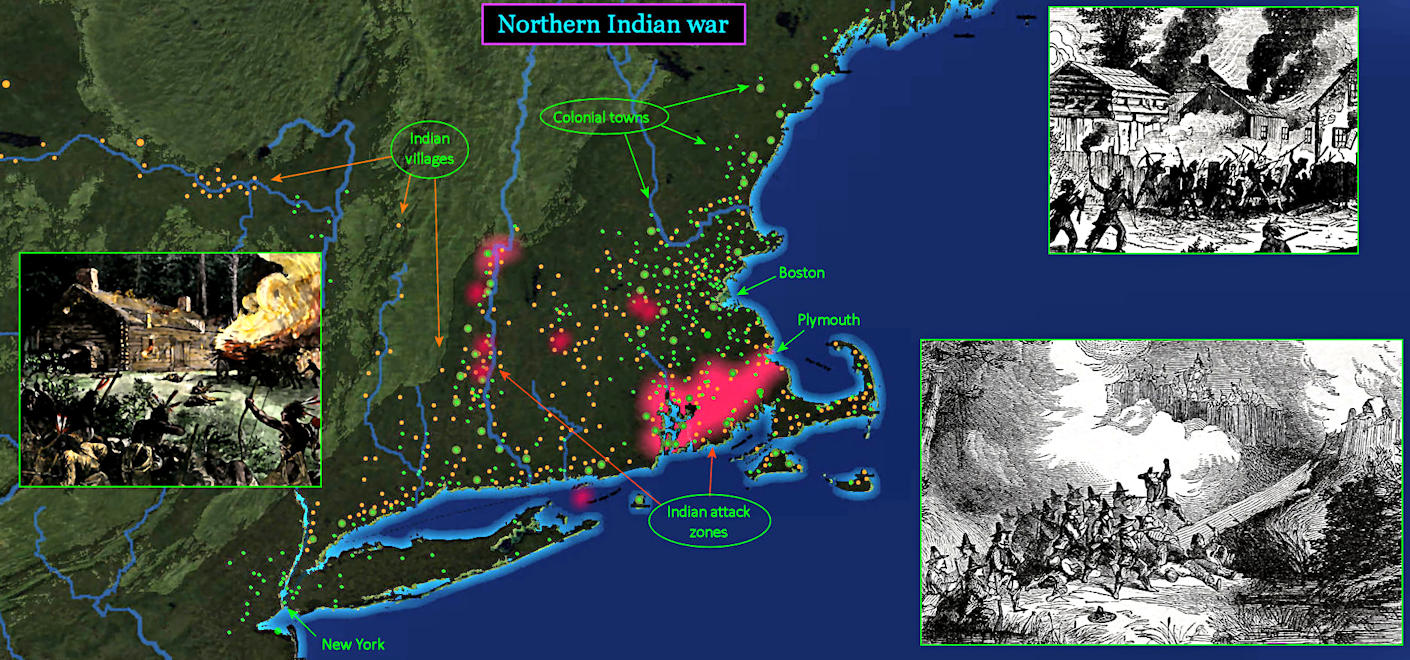
Too Late By 1675, English towns (GREEN dots) already outnumber Indian villages (ORANGE dots). As the English continue tightening their grip on former Indian territory, Indians begin retaliating with hit-and-run raids (RED highlights). The growing conflict spreads to many areas, but is centered in the hotly contested area between Rhode Island and Plymouth. In the end, there are just too many English, and the three-year Indian effort collapses. The Indian population is decimated, and many Indians are sold off as slaves. | |||||||||